
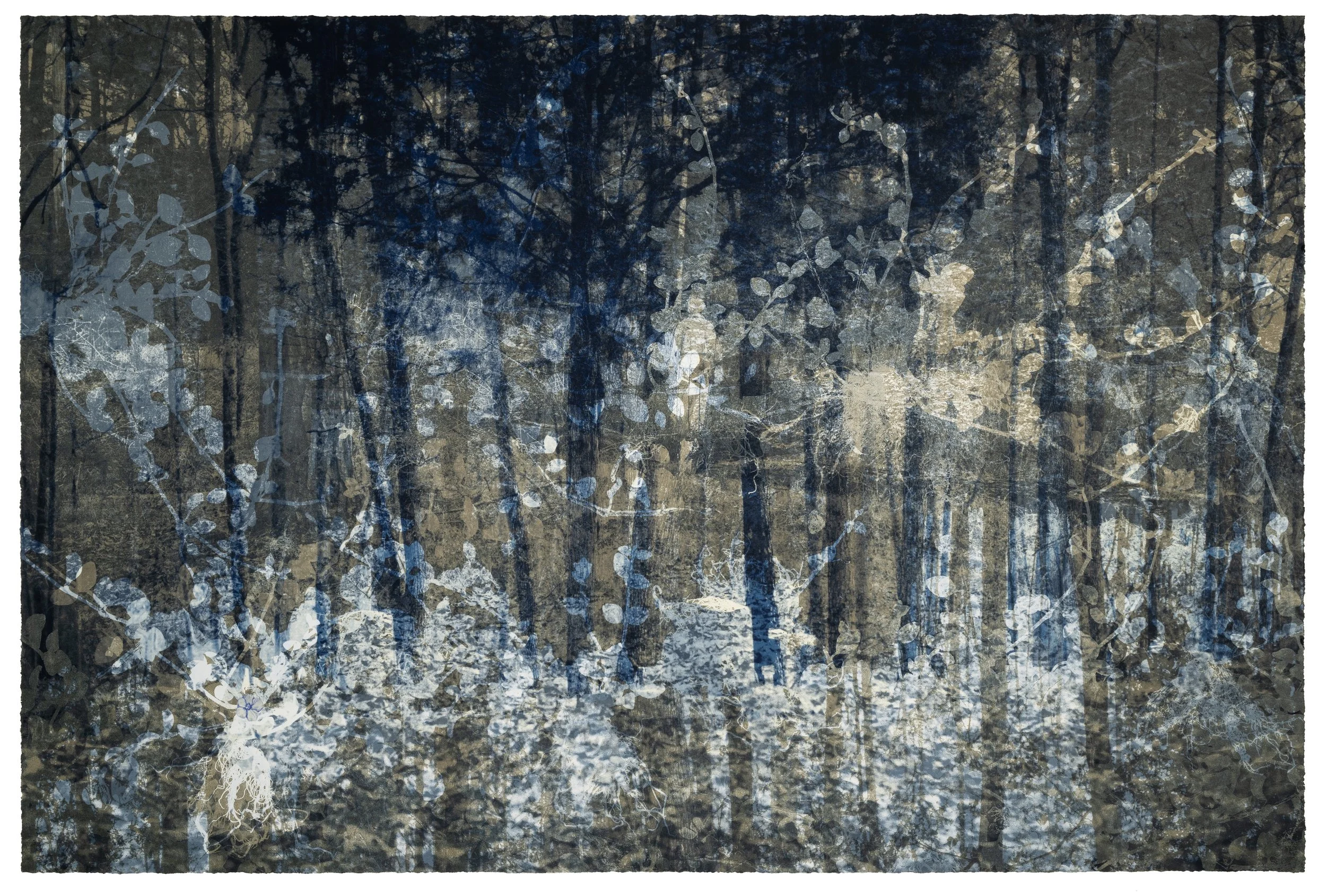
Periwinkle
Adebunmi Gbadebo, 2026
Cyanotype, screenprint with handmade inks, lithograph, and collage
Edition of 20
29 ½ x 44 ½ inches
$4,800 unframed
Highpoint Editions is honored to release Periwinkle, a new print by artist Adebunmi Gbadebo. This new print combining cyanotype, screenprint, and lithograph pushes the materiality of contemporary print by incorporating hand gathered soil and raw indigo to create an image where land, memory, and material speak together.
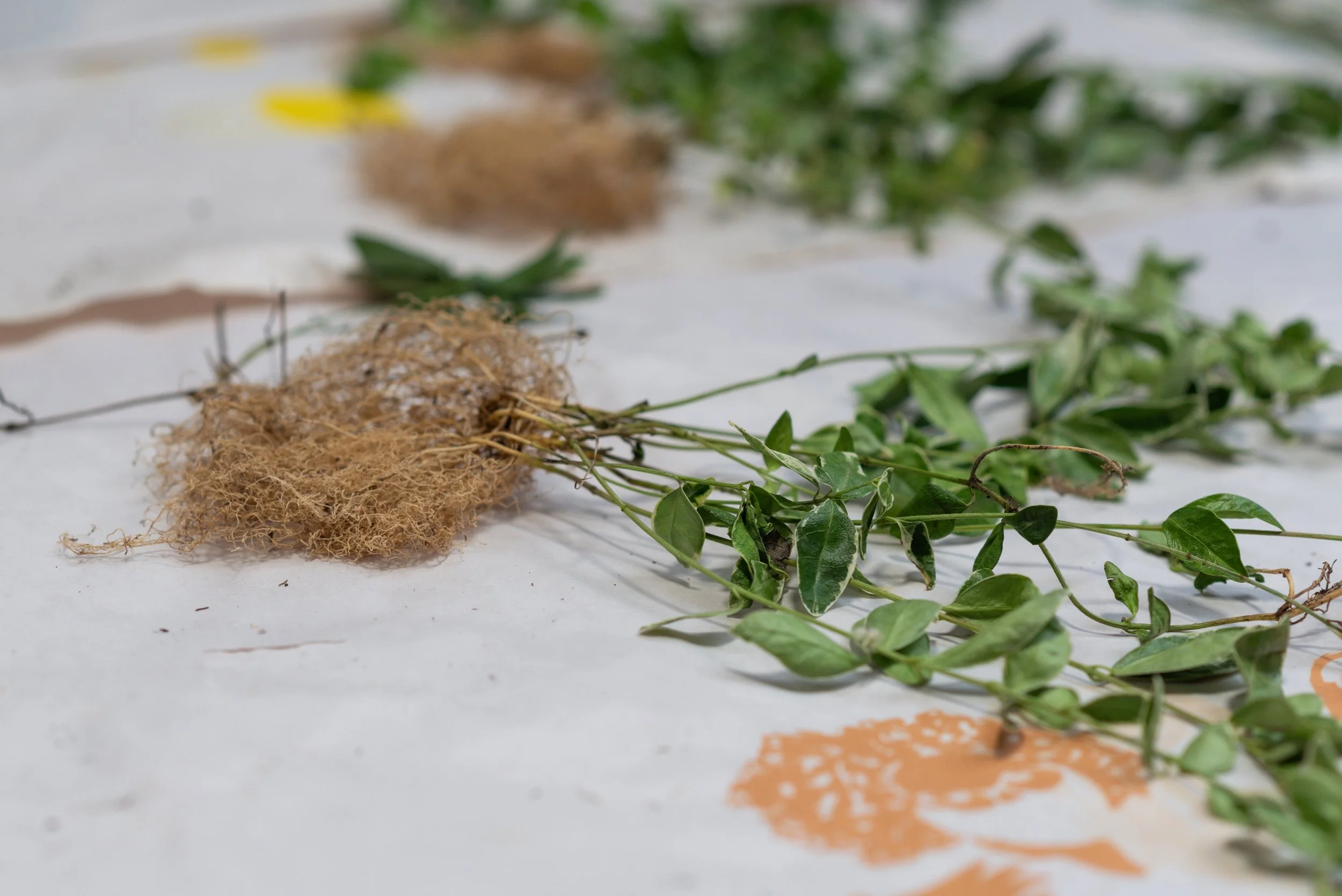
Periwinkle plants in the Highpoint Editions studio during Gbadebo’s visit
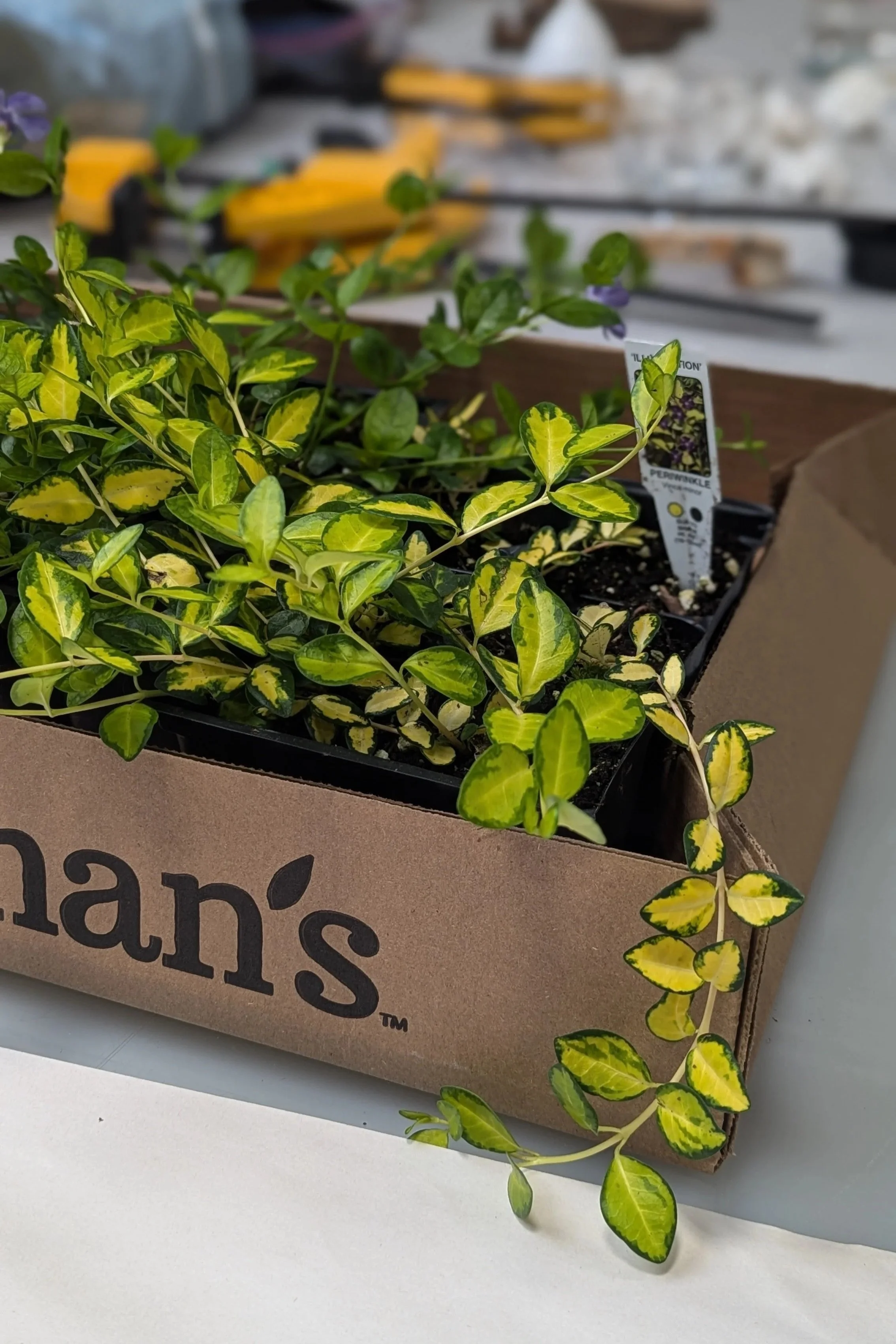
What began as a conceptually simple intention, to make a print of a flower, quickly unfolded into something far more layered, rigorous, and alive. When Adebunmi Gbadebo entered the Highpoint Editions studio in Minneapolis, the flower became a portal rather than a subject, a way to return to True Blue Plantation in Fort Motte, South Carolina, where her maternal lineage was enslaved and where the land itself still carries memory. The periwinkle, chosen for this work, is not ornamental. It is a witness. Thriving in acidic soil altered by decomposed bodies, it has long served as an informal grave marker, especially in forgotten or overgrown burial grounds of the enslaved. Descendant communities, anthropologists, or archaeologists frequently look for periwinkle as an indicator of human remains lost within the earth and at True Blue Cemetery, a seven acre site now largely reclaimed by woodland, these small blooms signal the presence of a hidden history.
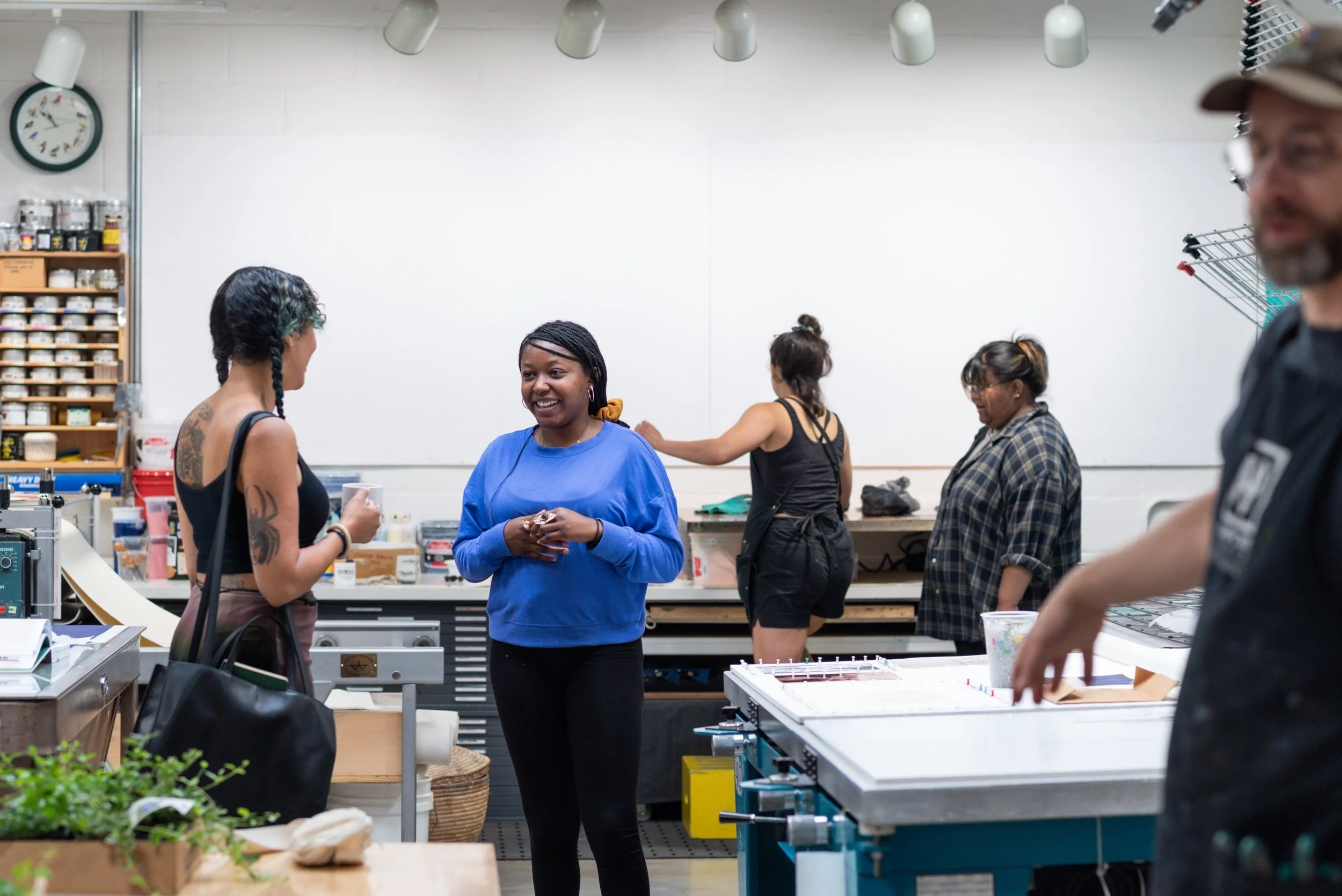
Adebunmi Gbadebo in Highpoint Editions studio with fellow HPE Artist Leslie Barlow
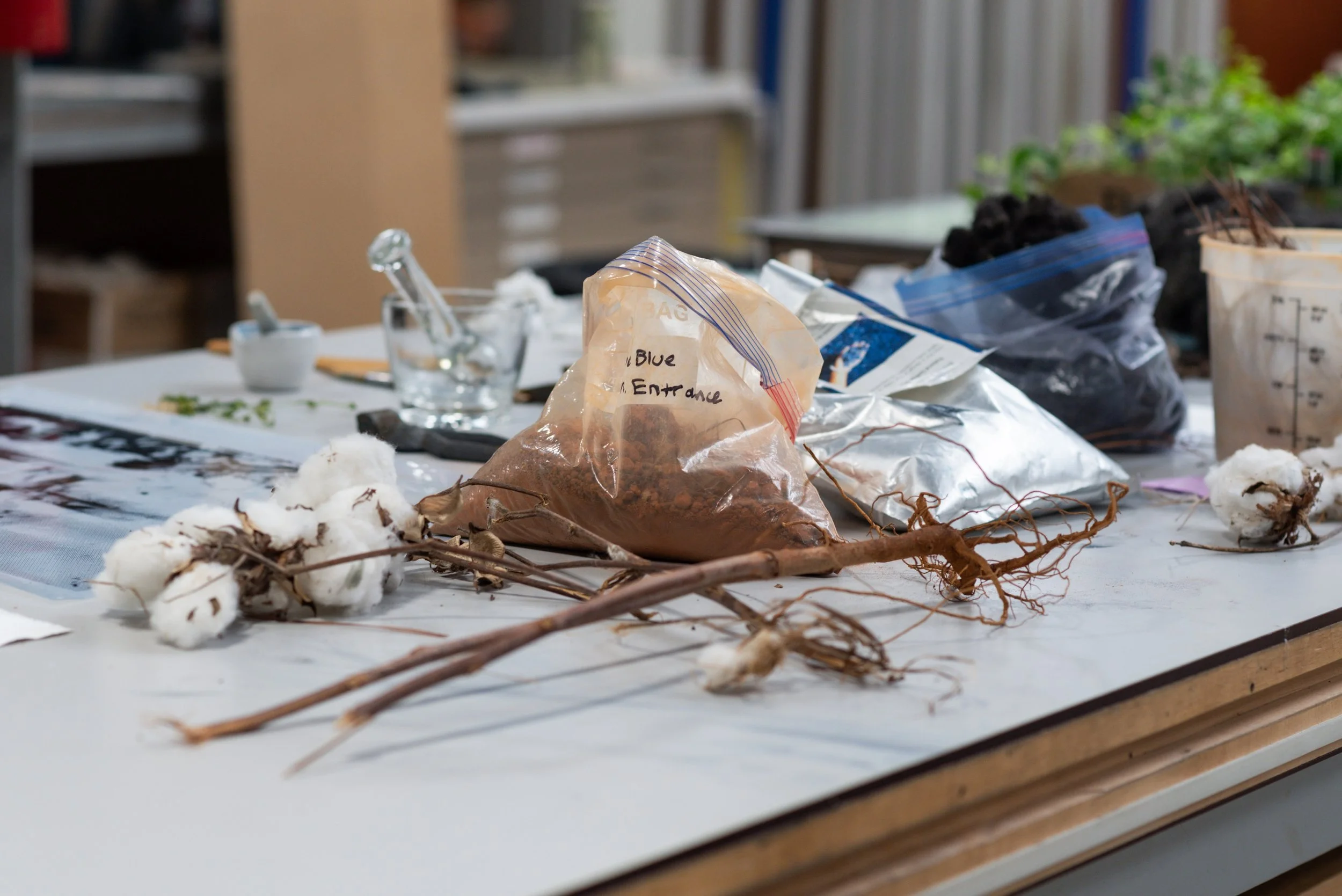
Materials brought by Gbadebo to Highpoint including soil from True Blue Cemetery in Fort Motte, South Carolina
The print collapses three images of the cemetery into a single, compressed surface, mirroring the way history itself is layered, buried, and obscured. A cyanotype forms the foundation, while the middle and top layers are screenprinted using ink made from indigo and red clay gathered directly from True Blue Cemetery, embedding the physical site into the image itself. Between each layer, white silhouettes of flattened periwinkle plants are placed with intention, alternately revealing and concealing what lies beneath.
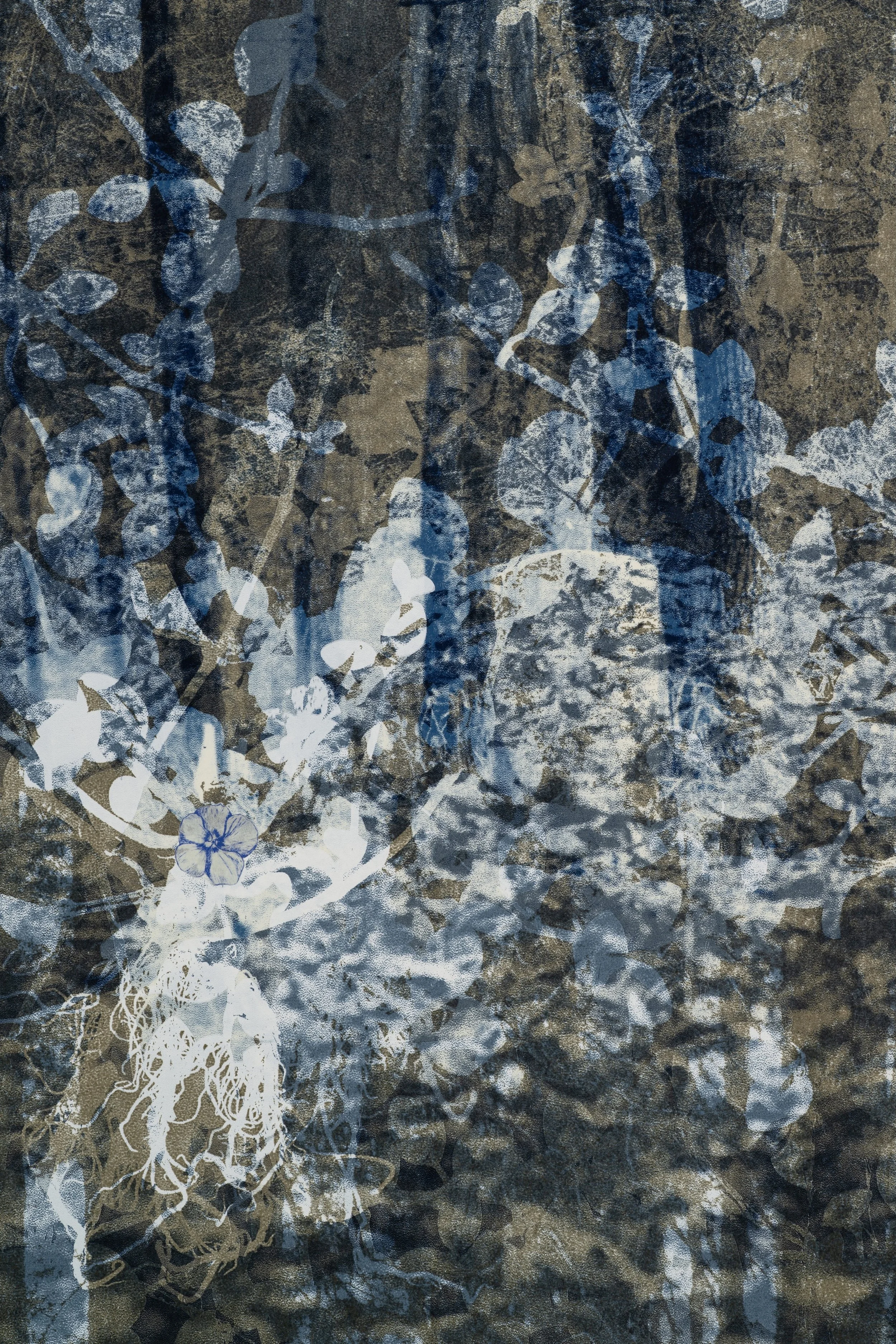
Detail of Periwinkle
A single lithograph of a periwinkle bloom is collaged on top, camouflaged within the landscape, echoing how periwinkle operates in the wild: quiet, persistent, easy to miss, and impossible to ignore once seen. In this work, periwinkle becomes both material and metaphor, a delicate visual language through which absence is made visible and land becomes a marker of lives lived and lost.
The making of the print mirrored the depth of its meaning. Pushing materiality further than ever before was not just a challenge but a necessity, and one of the many reasons Highpoint was drawn to working with Gbadebo. To screenprint with soil, Highpoint sourced an industrial spice grinder to mill the red clay finely enough to pass through the mesh of a screen, only to discover a second, unexpected hurdle. Left untreated, the soil began to grow organic material. Baking it became essential, a lesson learned through experimentation rather than instruction. That trial and error process, full of surprises, setbacks, and discoveries, became part of the work’s DNA. The result is a print that feels as intentional as it is elemental, carrying the physical, historical, and emotional weight of the site it comes from. Periwinkle exemplifies a work where land, memory, and material speak together.
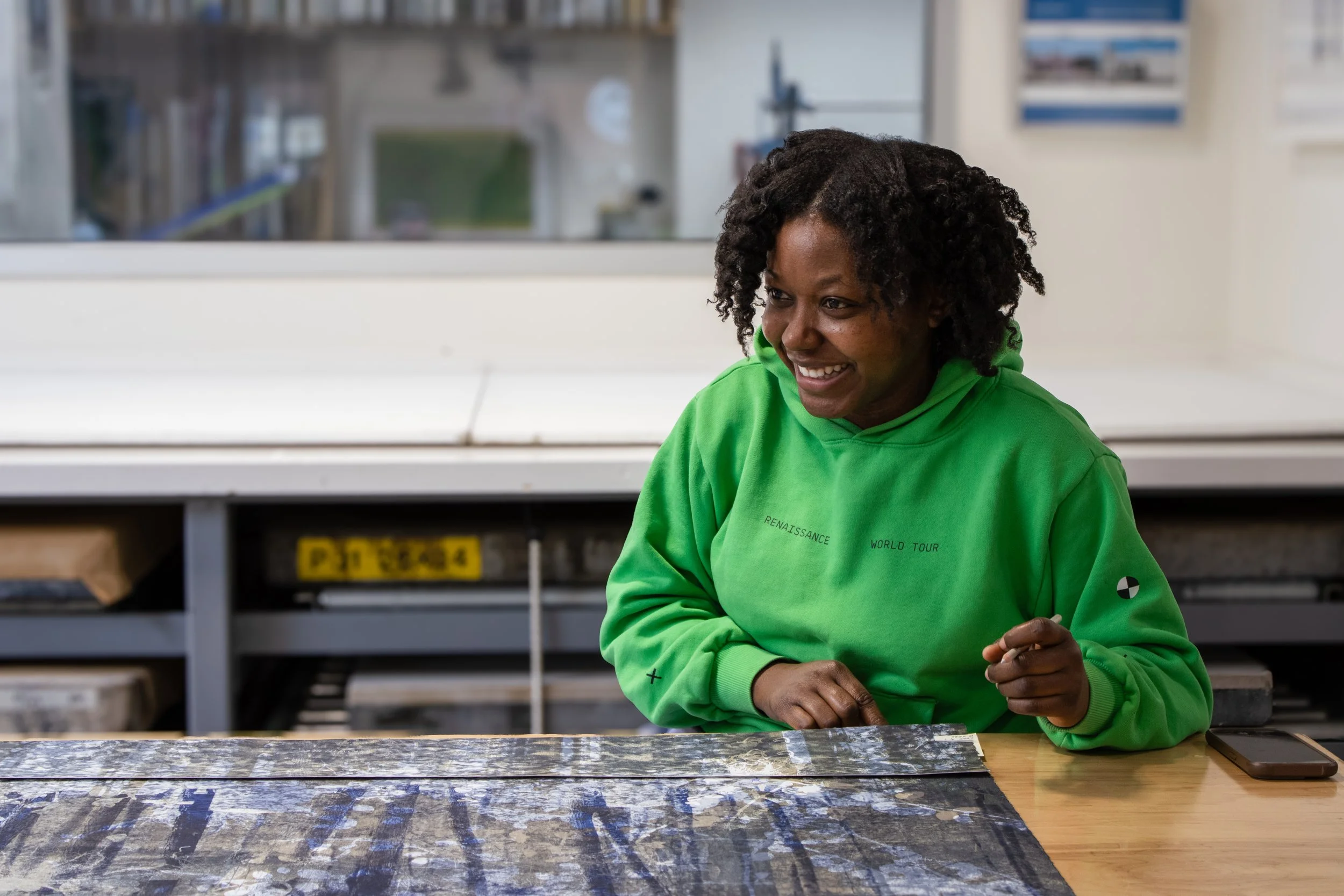
Gbadebo signing the prints in the Highpoint Editions studio - March 2026
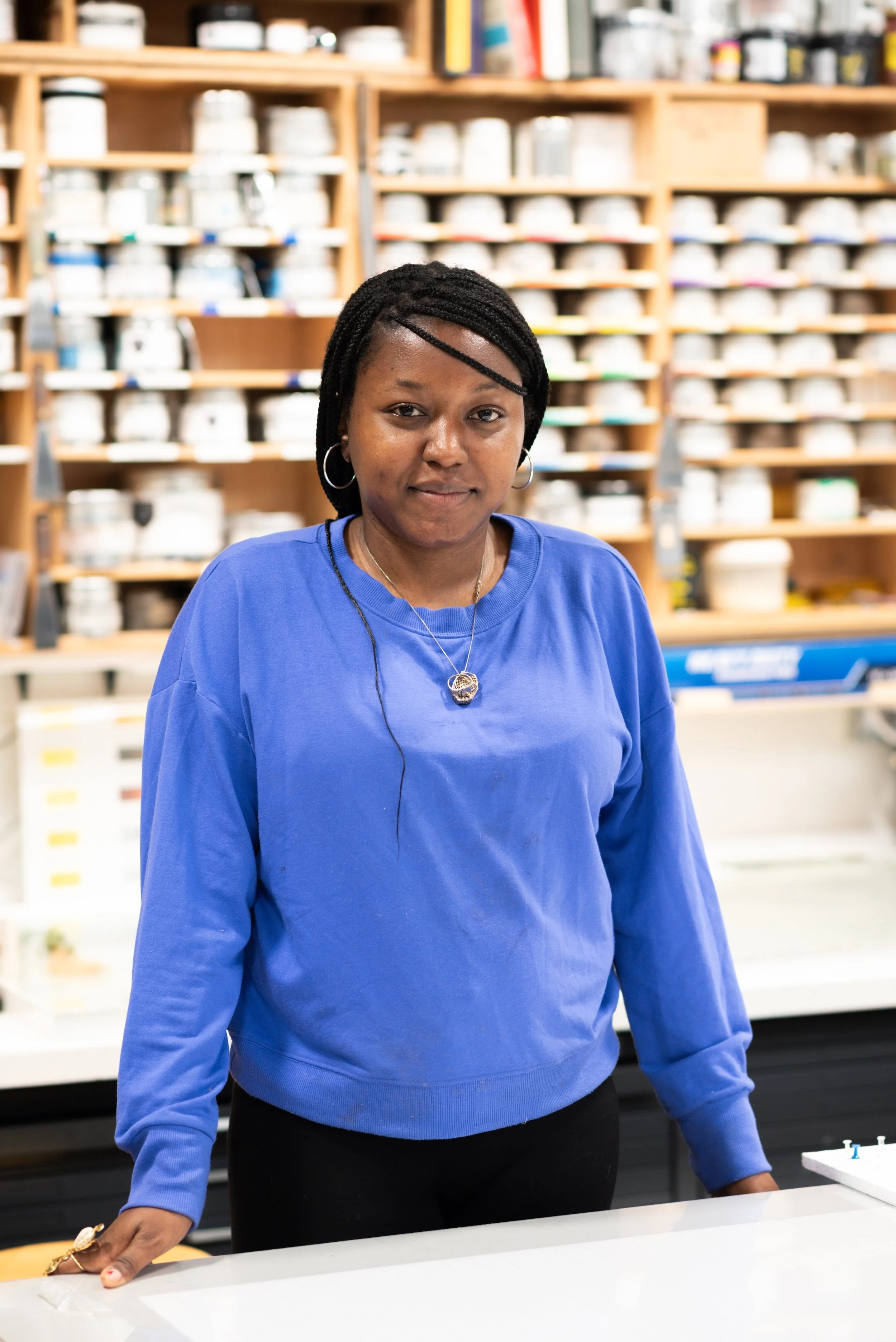
Adebunmi Gbadebo (Ah-dae-bu-mee Bha-dae-bo) lives and works in Philadelphia, Pennsylvania. Gbadebo earned a BFA at the School of Visual Arts, New York, and a certification in Creative Place Keeping at the New Jersey Institute of Technology. She was an Artist in Residence at the Clay Studio in Philadelphia (2021-2025) and has also been a Maxwell and Hanrahan Fellow (2023) and a Pew Fellow (2022). Gbadebo was a Keynote speaker for the American Ceramic Circle annual conference (2023) and has given talks at various educational and cultural institutions including the Museum of the African Diaspora, the Metropolitan Museum of Art and the Newark Museum of Art. She served as the Community Engagement Apprentice to Architect Nina Cooke John for the Harriet Tubman Monument in Newark, New Jersey, to replace a statue of Christopher Columbus, and is currently working with students and faculty at Clemson University to create a sculpture that honors Black and enslaved laborers.
Grounded in historically and culturally significant materials such as indigo dye, human hair collected throughout the African diaspora and soil hand-dug from the True Blue plantation grounds in South Carolina, Gbadebo’s practice is an exploration of heritage. Her use of such materials centers her family history of enslavement in the American South, while her ceramics draw inspiration from traditional African pottery techniques, calling on her Nigerian ancestry. Fueled by research and a commitment to the archival record, Gbadebo’s multidisciplinary approach investigates the complex relationships between land, matter, and memory.
Solo exhibitions include Watch Out for the Ghosts, Nicola Vassell Gallery, New York (2025); Adebunmi Gbadebo: Remains, Claire Oliver Gallery, New York (2023) and Uprooted, New Jersey City University, Jersey City, NJ (2020). Group exhibitions include Rise Up: Resistance, Revolution, Abolition, The Fitzwilliam Museum, University of Cambridge, UK (2025); Ten Thousand Suns, 24th Biennale of Sydney, Artspace, AU (2024); Blues People, curated by Alliyah Allen, Express Newark, Rutgers University, Newark, NJ (2024); Songs for Ritual and Remembrance, Arthur Ross Gallery, University of Pennsylvania, PA (2023) and Hear Me Now: The Black Potters of Old Edgefield, South Carolina at the Metropolitan Museum of Art, New York; Traveled to the Museum of Fine Arts Boston, University of Michigan Museum of Art, and the High Museum of Art, Atlanta (2022). Gbadebo’s work is held in the collections of the Brooklyn Museum, Carnegie Museum of Art, Minneapolis Institute of Art, Minnesota Museum of American Art, Montclair Art Museum, Museum of Fine Arts Boston, Newark Museum of Art, the Rhode Island School of Design, the Smithsonian National Museum of African American History and Culture, the Smithsonian National Museum of African Art, the South Carolina State Museum, Wake Forest University and the Weisman Art Museum.
Gbadebo is represented by Nicola Vassell Gallery in New York.