editions news

Raven Chacon's Performances at the Park Avenue Armory

In a recent interview with Hyperallergic, Highpoint Editions Artist, Raven Chacon details his recent performances at the Park Avenue Armory, the freedom of improvisation, and the privilege of “deep listening.” Chacon’s score-based creations encourage collaboration among performers and audiences and incorporate found sounds, such as rifles, foghorns, whistles, and coins with natural elements.

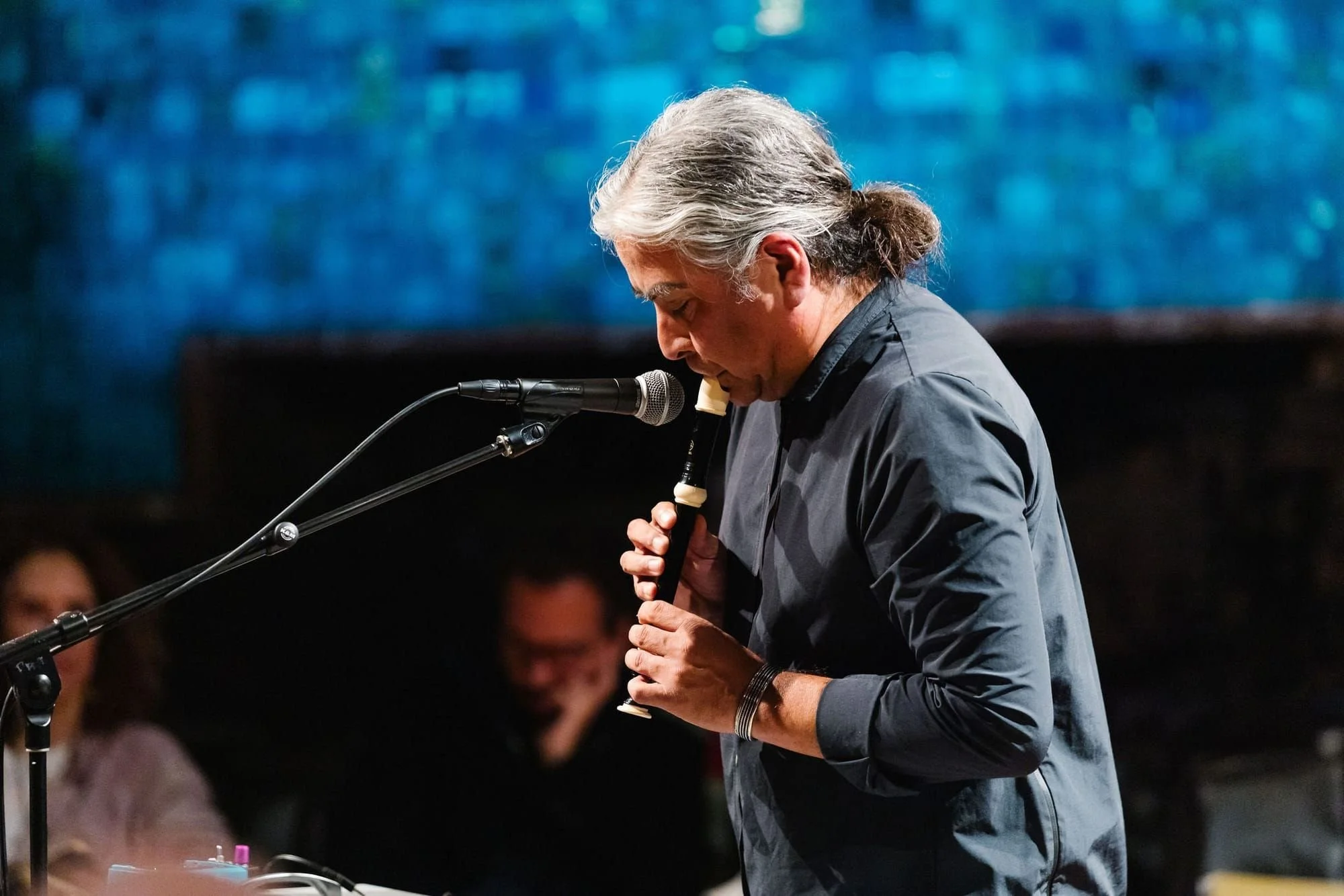
Diné (Navajo) composer, performer, and visual artist Raven Chacon performs in the Veterans Room as part of Park Avenue Armory’s 2026 Artists Studio series on Wednesday, October 7. (all photos Da Ping Luo, courtesy Park Avenue Armory)

He presented two nights in the Veterans Room of fully improvised sets using a variety of acoustic, electric, and electronic instruments, some homemade. These improvised compositions ranged from sparse, minimalistic soundscapes to complex, multi-layered works that incorporated voices, noise, and found sounds.

Raven Chacon in Hold to this Earth

Highpoint Editions Artist, Raven Chacon will be a part of an upcoming group exhibition titled, Hold to this Earth. This show will feature sixty-five works by thirty-eight artists, including two significant new commissions, making it a landmark exhibition of contemporary Indigenous North American art on a scale never seen before in the UK. Hold to this Earth features sculpture, film, photography, painting, ceramics and fibre art highlighting the broad spectrum of work being produced by Indigenous North American artists today.

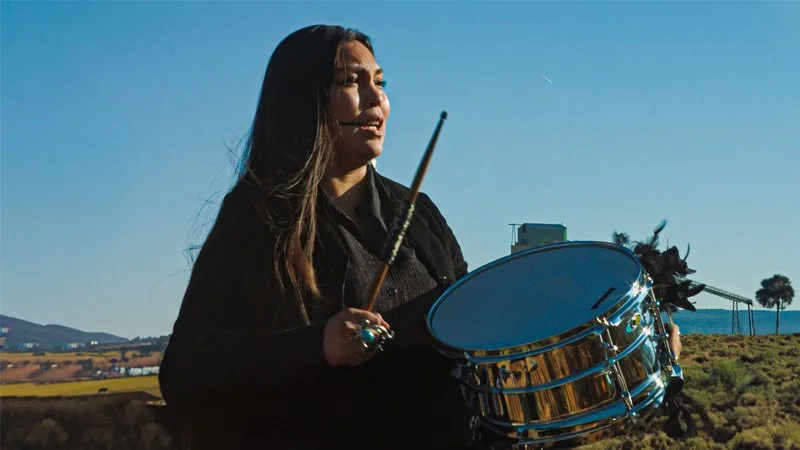
Film still from Raven Chacon: Three Songs installation piece.

Representing over 35 different Tribal Nations and multiple generations, the exhibition highlights both established voices and emerging artists who are shaping contemporary art today. They reference and honour ancestral knowledge whilst being steadfastly contemporary, asserting a powerful presence and countering narratives of erasure that too often position Indigenous cultures only in terms of the past. Materials such as clay, hide, wool, beads and natural pigments become carriers of powerful stories, memory and tradition, rooted in connection to the earth. Newer modes of expression and understanding growing out of digital culture also speak to the shifting landscapes of Indigenous life in the 21st century.

On view June 13th, 2026  through Apr 18th, 2027 at the Yorkshire Sculpture Park in West Bretton, U.K Learn more here!

Mungo Thomson's Solo Exhibition at Colefax Gallery

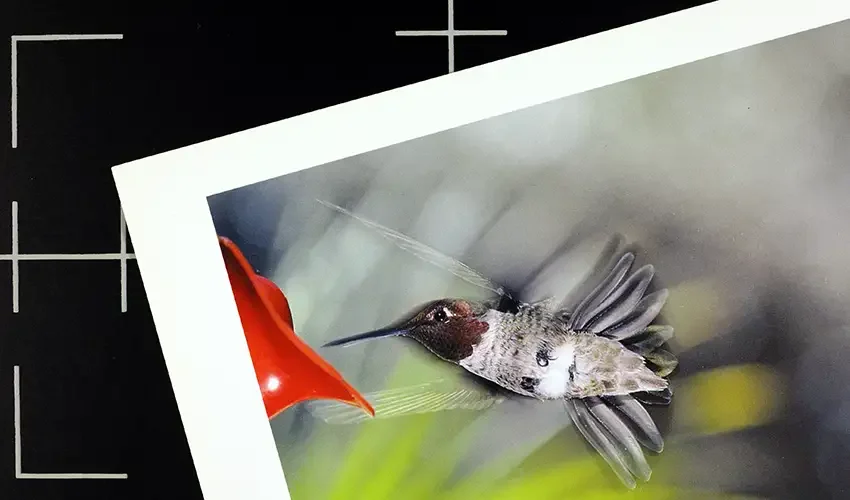
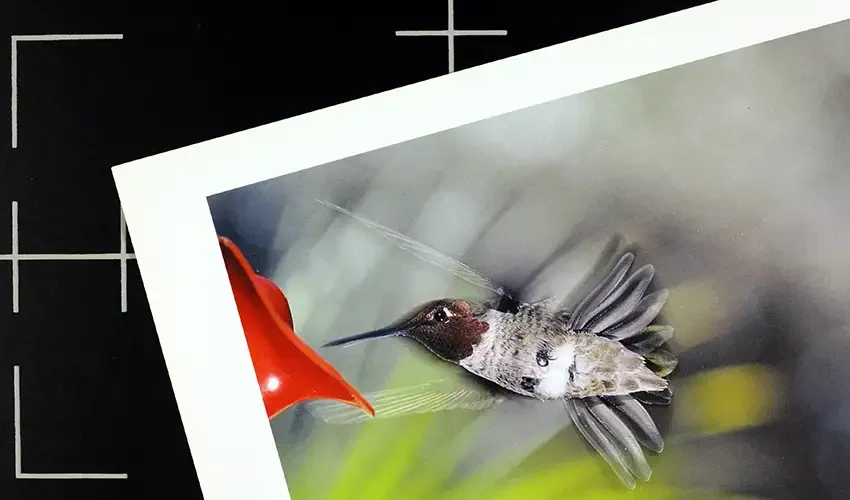
Highpoint Editions Artist, Mungo Thomson has an upcoming solo exhibition titled, For Your Reference that will be held at the Colefax Gallery at the Santa Barbara Museum of art. The exhibition will be showing “three films containing images scanned from birdwatching field guides, history textbooks, and a handbook for mimes.” “These films playfully comment on the presumed authority of reference materials. Thomson asks: Can anyone really tell the entire history of the world in just one volume? Can humor be practiced and perfected through gesture alone? He reveals how these books flatten complex ideas such as nature and history.

Mungo Thomson, Volume 10. A Field Guide to Hummingbirds (still), 2024. Video installation with sound, 3 minutes, 13 seconds. SBMA, Purchase with funds provided by Kandy Budgor; Luria/Budgor Family Foundation. © Mungo Thomson.  Santa Barbara Museum of Art photo

The exhibition will be on view from May 17th, 2026 until October 26th, 2026

Learn more here.

Raven Chacon Solo Exhibition at Sikkema Jenkins

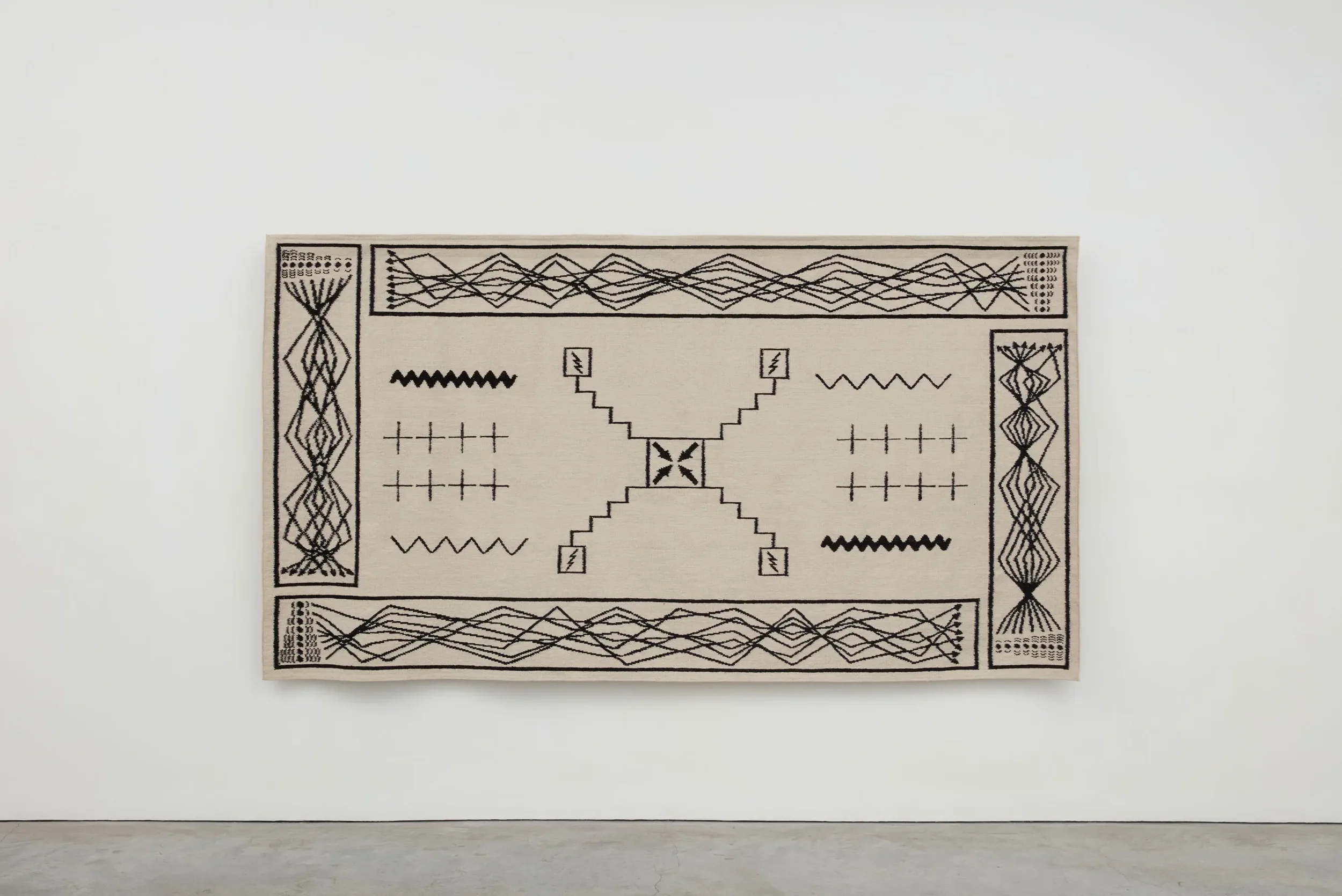
Raven Chacon, Storm Pattern, 2021/24. Handwoven woolen textile, sound. Textile: 70 x×128 ½ inches. Audio: Variable length, looped. Courtesy the artist and Sikkema Malloy Jenkins, New York.

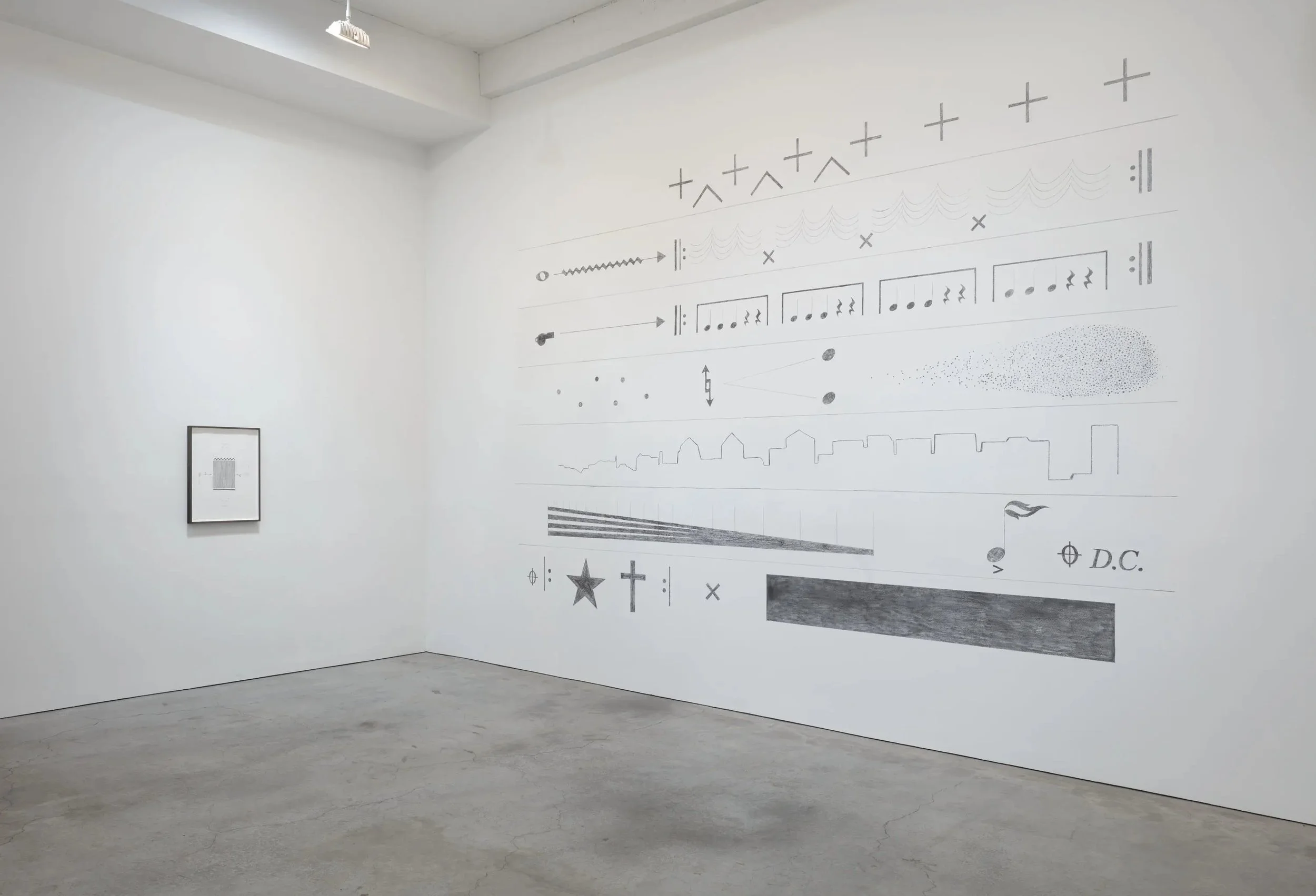
Highpoint Editions Artist, Raven Chacon’s solo exhibition, Scores for Coming Storms is now on view until June 20th, 2026! This show is “a layered installation of sonic and visual works that encompasses both Euro-American and Navajo worldviews,” and “is made up of a large graphite wall drawing, framed ink drawings, a sound installation, and a wall textile. As a succinct reprise and recontextualization of earlier work, it allows gallery-goers to see and listen to the breadth of this artist’s multivalent vision.” Below is a brief walkthrough of the show from Art as Form Tours!

https://www.youtube.com/watch?v=mzlKY6L1w2o 

Installation view: Raven Chacon: Scores for Coming Storms, Sikkema Malloy Jenkins, New York, 2026. Courtesy the artist and Sikkema Malloy Jenkins, New York.

On view at Sikkema Malloy Jenkins, NY from May 14–June 20, 2026 Learn more here!

New Release - Periwinkle by Adebunmi Gbadebo

Periwinkle

Adebunmi Gbadebo, 2026

Cyanotype, screenprint with handmade inks, lithograph, and collage

Edition of 20

29 ½ x 44 ½ inches

$4,800 unframed


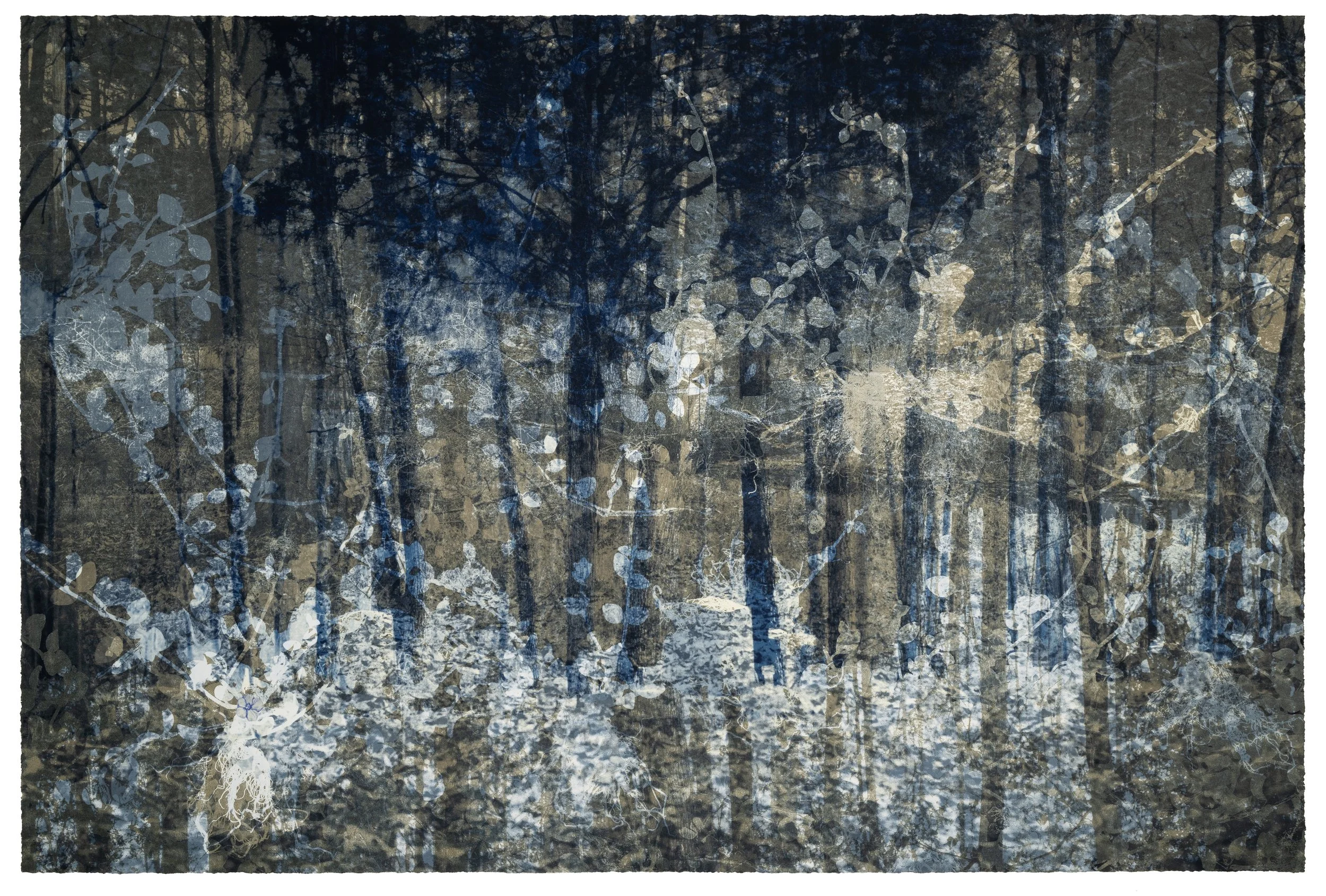
Highpoint Editions is honored to release Periwinkle, a new print by artist Adebunmi Gbadebo. This new print combining cyanotype, screenprint, and lithograph pushes the materiality of contemporary print by incorporating hand gathered soil and raw indigo to create an image where land, memory, and material speak together. 


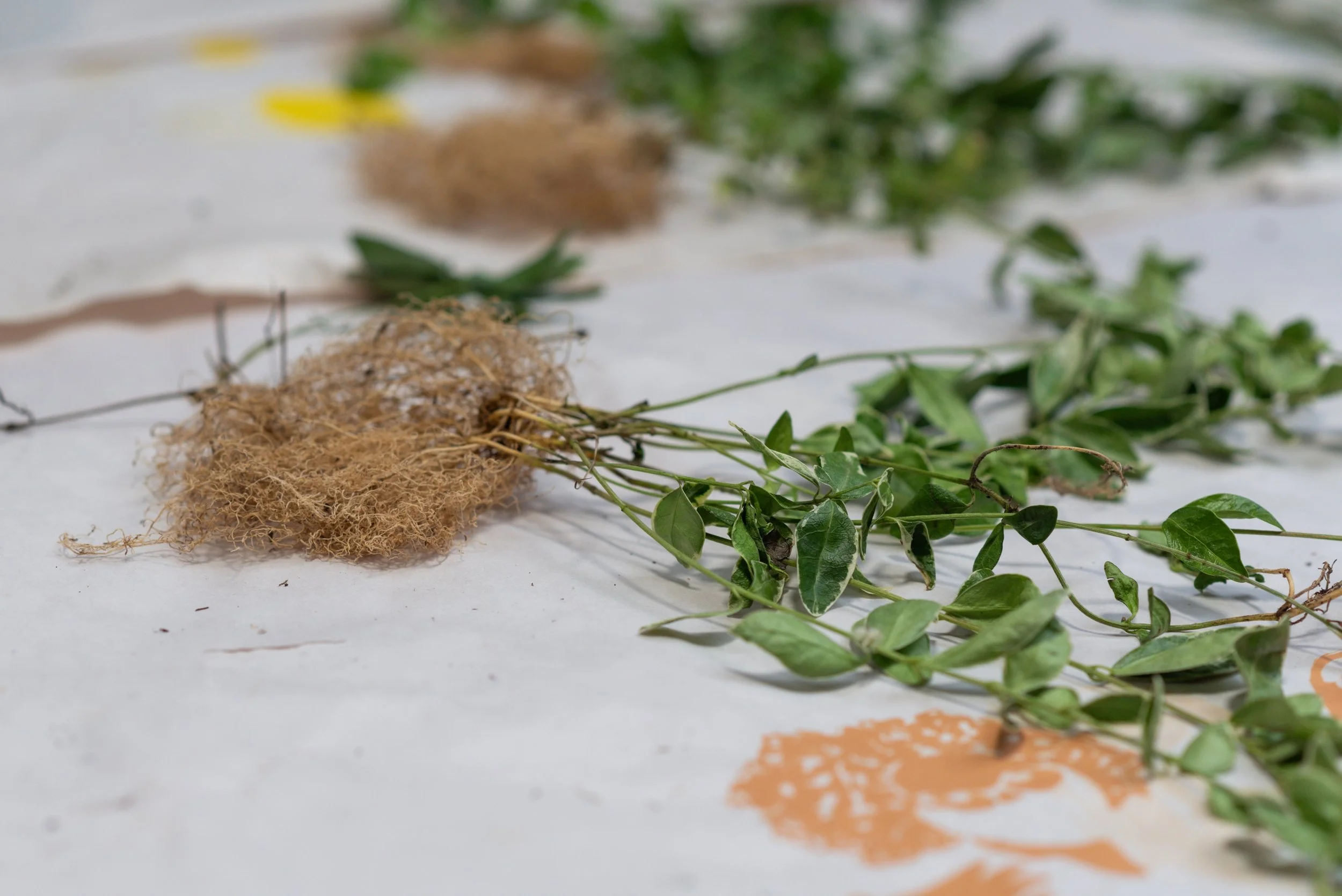
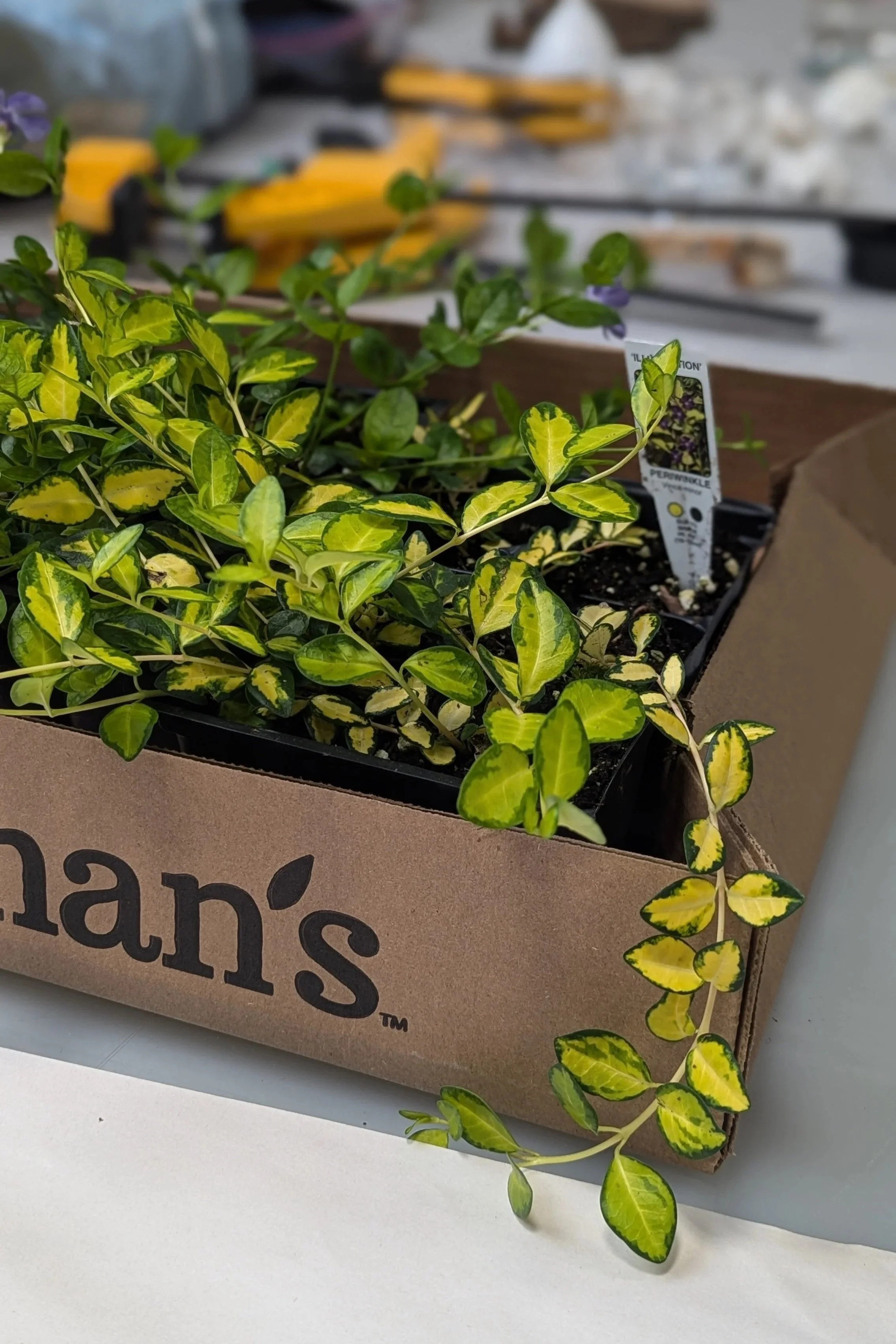
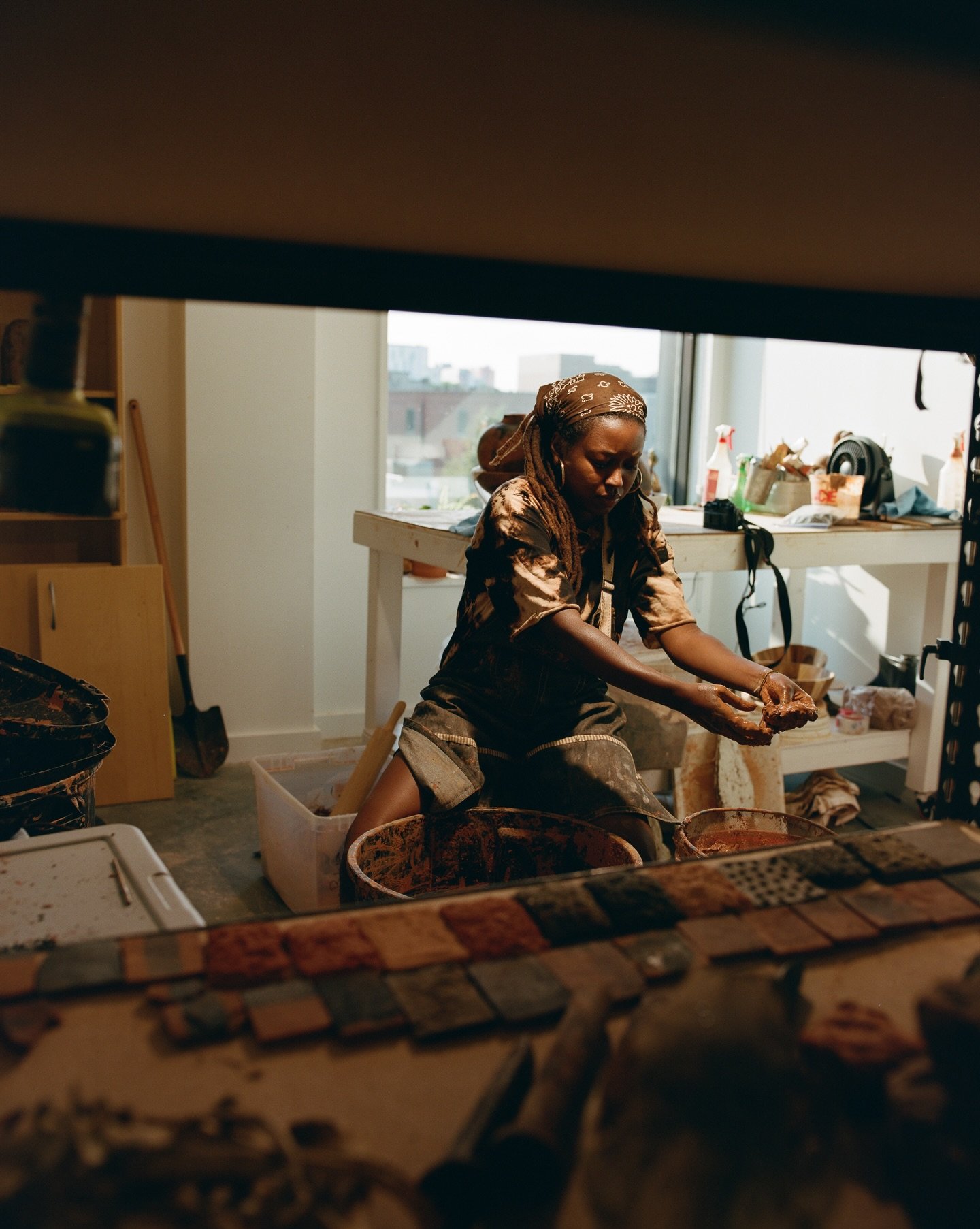
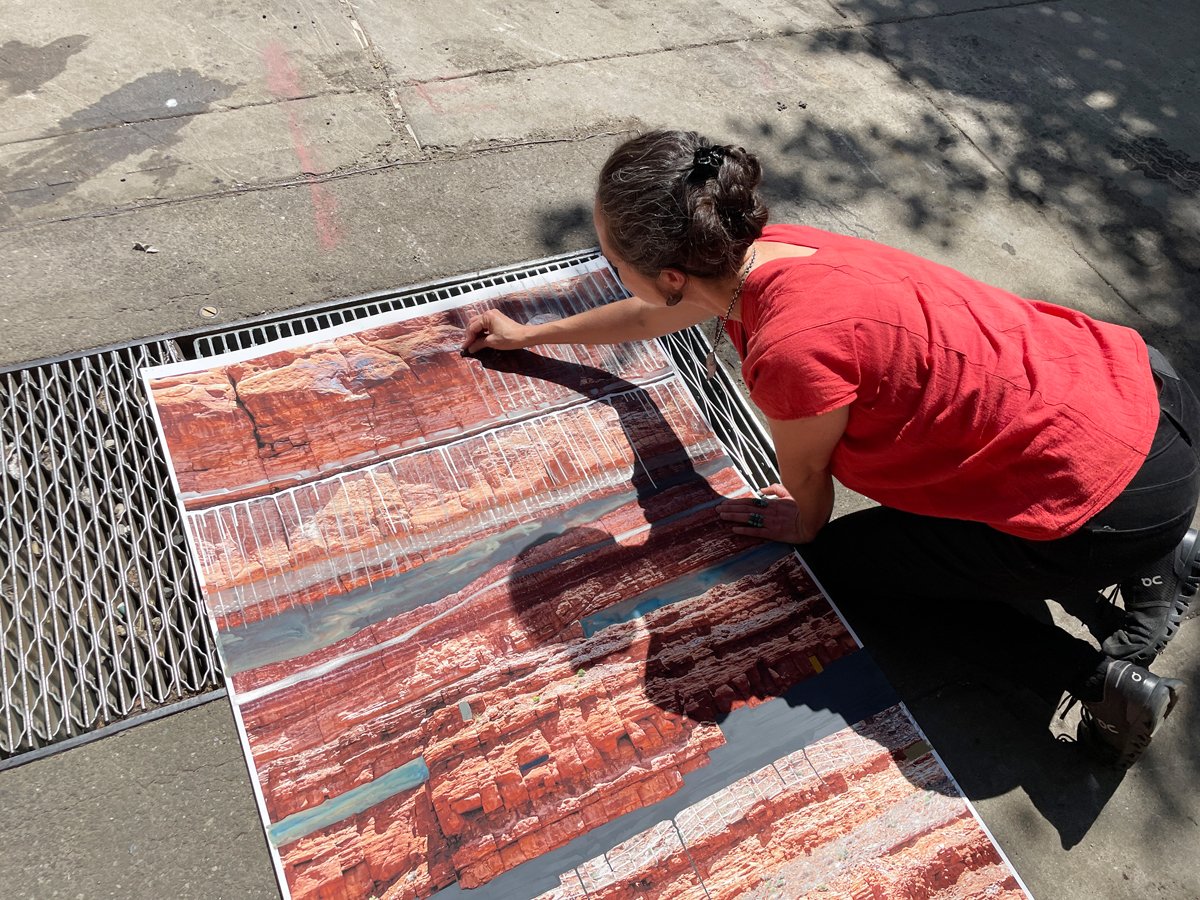
Periwinkle plants in the Highpoint Editions studio during Gbadebo’s visit

What began as a conceptually simple intention, to make a print of a flower, quickly unfolded into something far more layered, rigorous, and alive. When Adebunmi Gbadebo entered the Highpoint Editions studio in Minneapolis, the flower became a portal rather than a subject, a way to return to True Blue Plantation in Fort Motte, South Carolina, where her maternal lineage was enslaved and where the land itself still carries memory. The periwinkle, chosen for this work, is not ornamental. It is a witness. Thriving in acidic soil altered by decomposed bodies, it has long served as an informal grave marker, especially in forgotten or overgrown burial grounds of the enslaved. Descendant communities, anthropologists, or archaeologists frequently look for periwinkle as an indicator of human remains lost within the earth and at True Blue Cemetery, a seven acre site now largely reclaimed by woodland, these small blooms signal the presence of a hidden history.

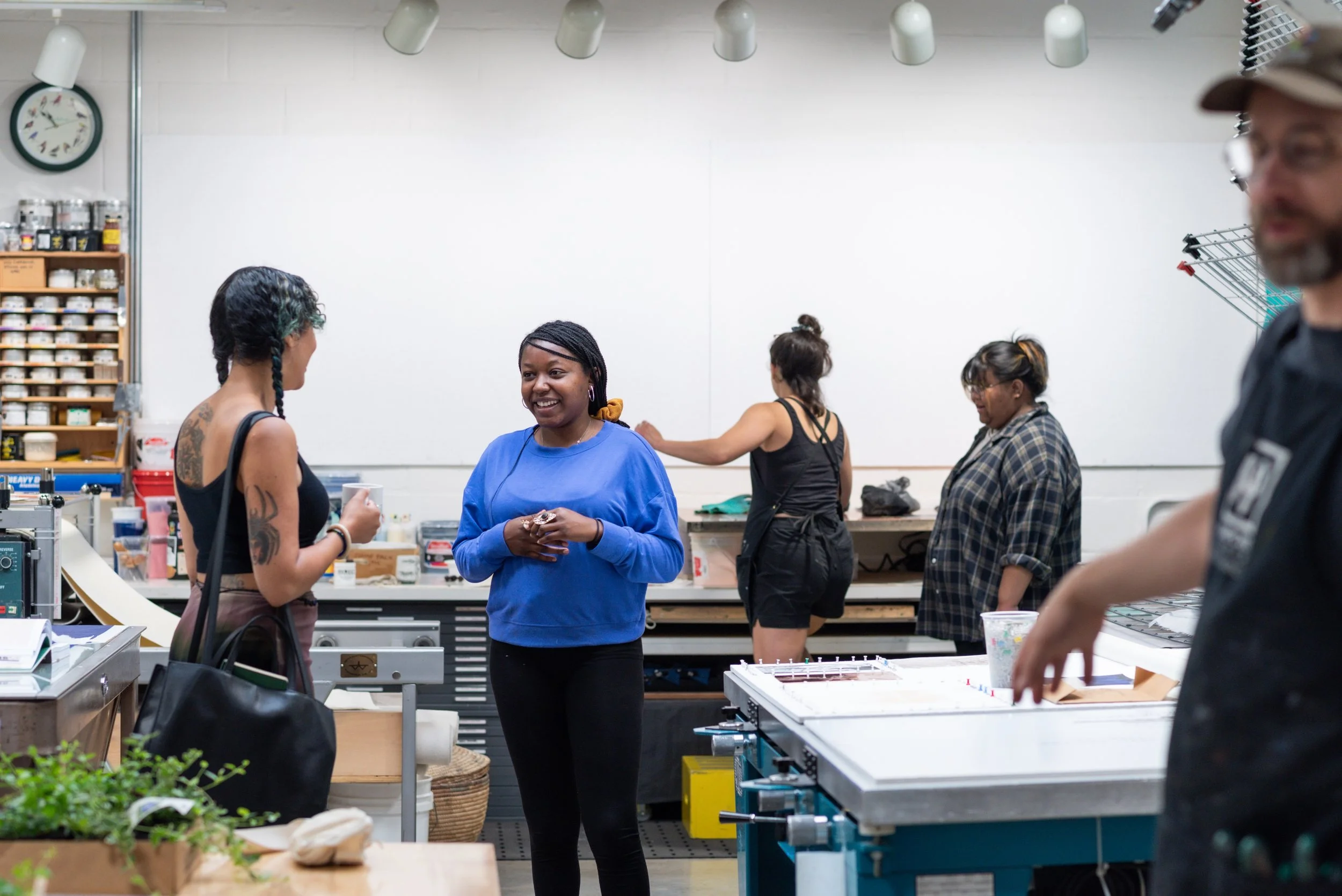
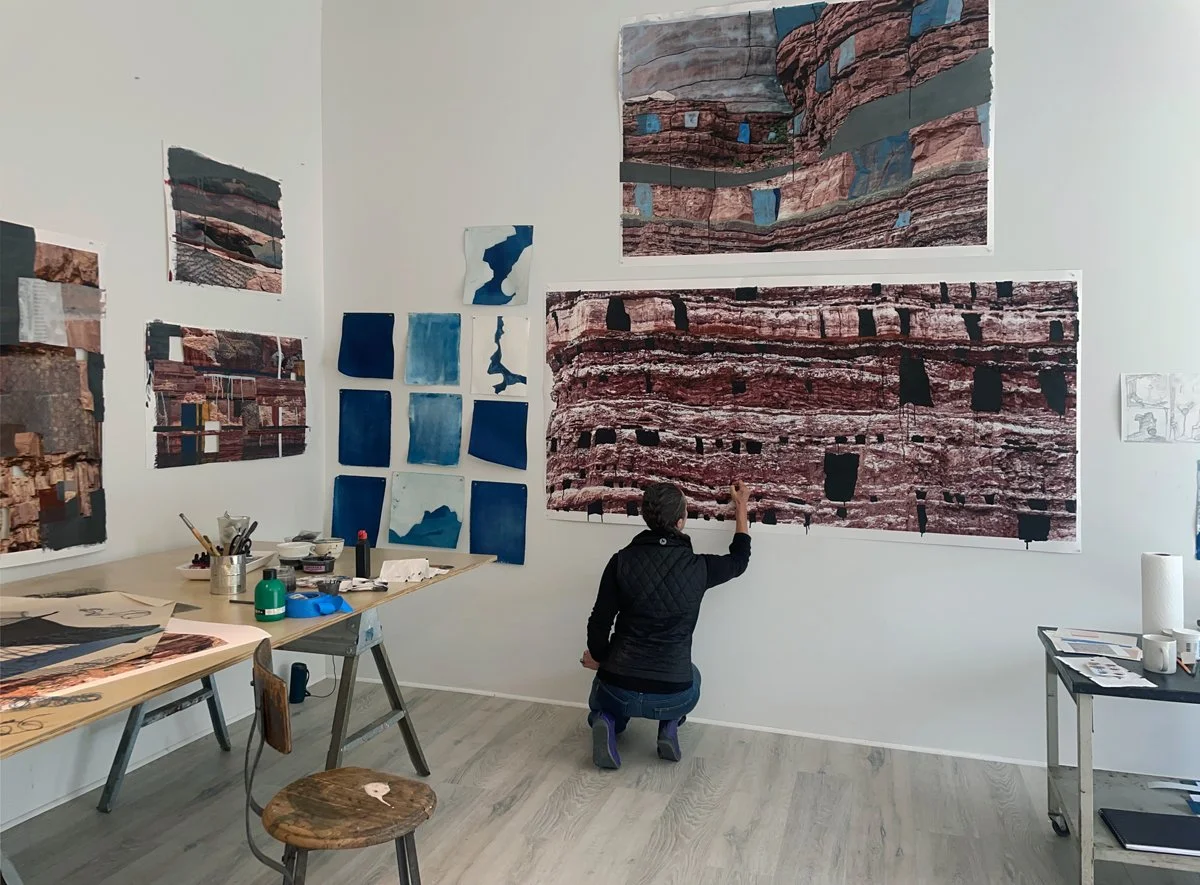
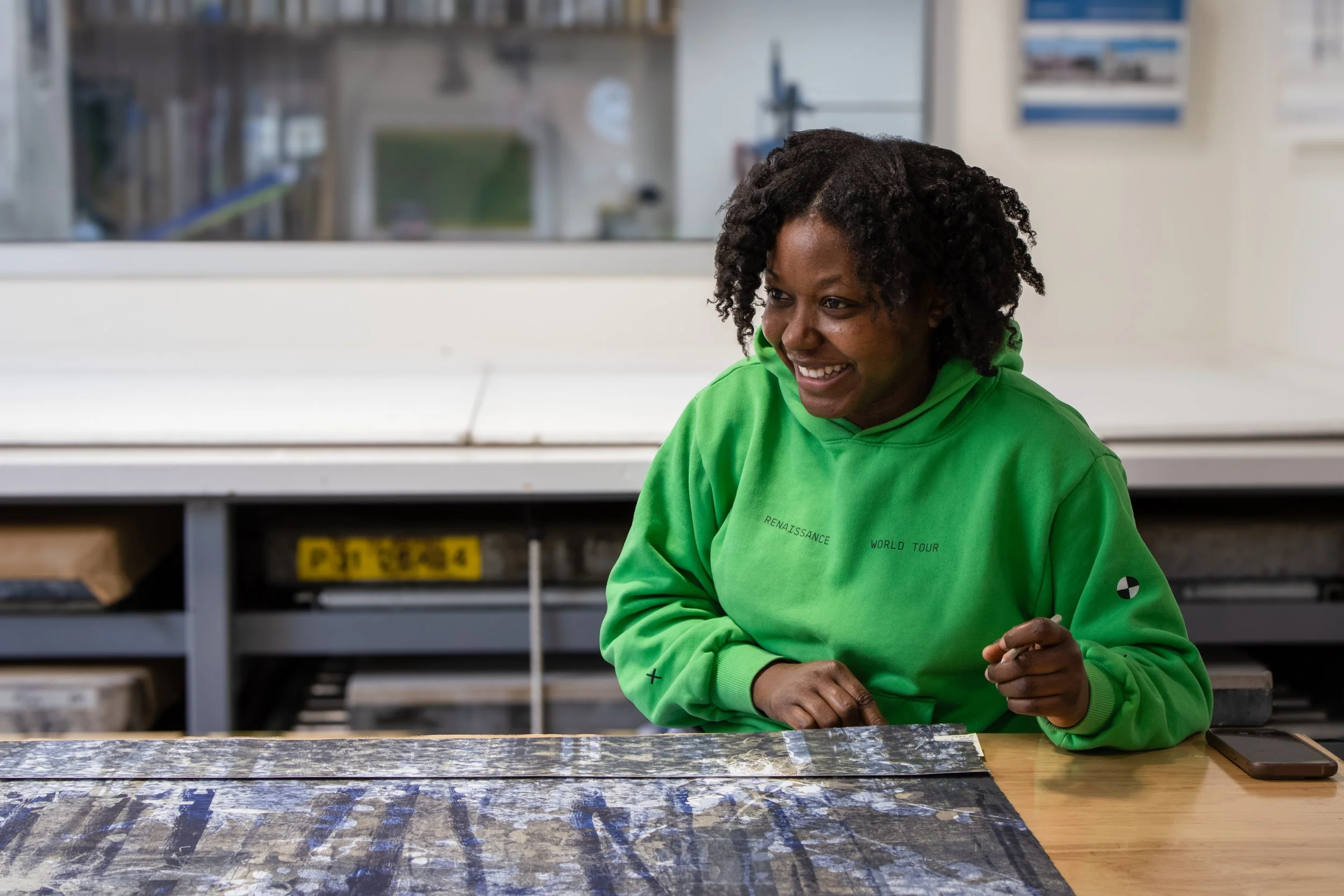
Adebunmi Gbadebo in Highpoint Editions studio with fellow HPE Artist Leslie Barlow

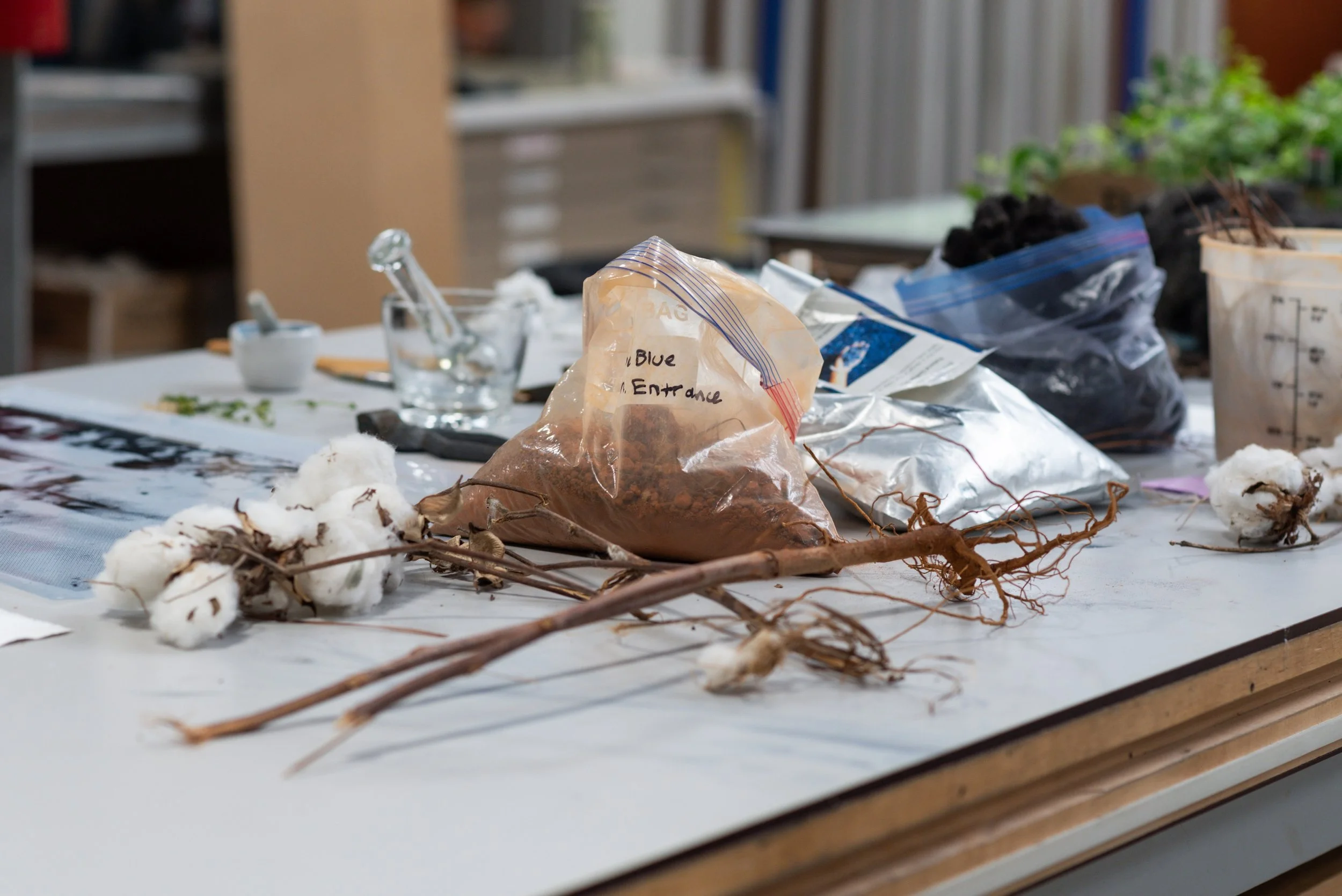
Materials brought by Gbadebo to Highpoint including soil from True Blue Cemetery in Fort Motte, South Carolina

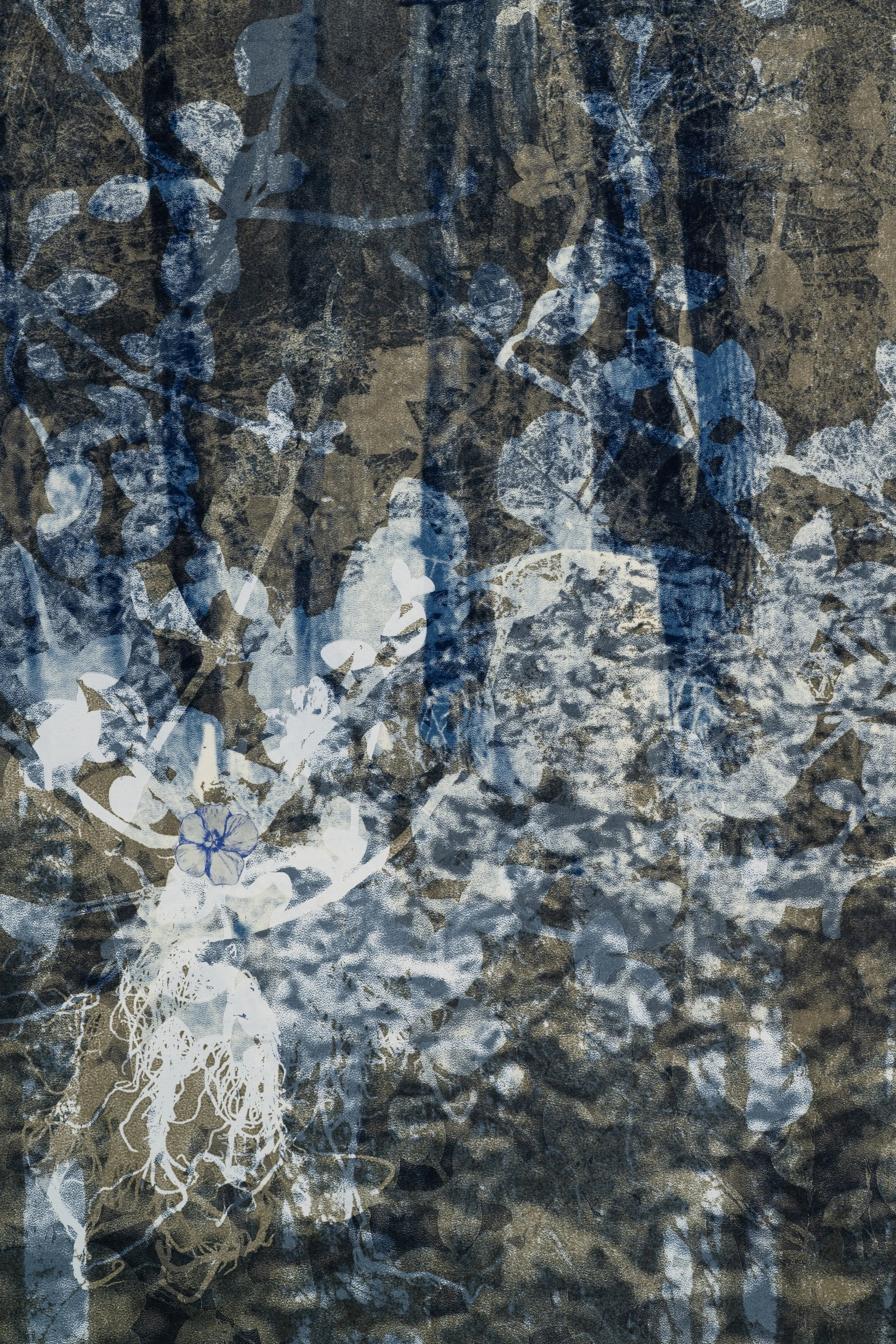
The print collapses three images of the cemetery into a single, compressed surface, mirroring the way history itself is layered, buried, and obscured. A cyanotype forms the foundation, while the middle and top layers are screenprinted using ink made from indigo and red clay gathered directly from True Blue Cemetery, embedding the physical site into the image itself. Between each layer, white silhouettes of flattened periwinkle plants are placed with intention, alternately revealing and concealing what lies beneath. 

Detail of Periwinkle

 A single lithograph of a periwinkle bloom is collaged on top, camouflaged within the landscape, echoing how periwinkle operates in the wild: quiet, persistent, easy to miss, and impossible to ignore once seen. In this work, periwinkle becomes both material and metaphor, a delicate visual language through which absence is made visible and land becomes a marker of lives lived and lost.

The making of the print mirrored the depth of its meaning. Pushing materiality further than ever before was not just a challenge but a necessity, and one of the many reasons Highpoint was drawn to working with Gbadebo. To screenprint with soil, Highpoint sourced an industrial spice grinder to mill the red clay finely enough to pass through the mesh of a screen, only to discover a second, unexpected hurdle. Left untreated, the soil began to grow organic material. Baking it became essential, a lesson learned through experimentation rather than instruction. That trial and error process, full of surprises, setbacks, and discoveries, became part of the work’s DNA. The result is a print that feels as intentional as it is elemental, carrying the physical, historical, and emotional weight of the site it comes from. Periwinkle exemplifies a work where land, memory, and material speak together.

Gbadebo signing the prints in the Highpoint Editions studio - March 2026


Adebunmi Gbadebo (Ah-dae-bu-mee Bha-dae-bo) lives and works in Philadelphia, Pennsylvania. Gbadebo earned a BFA at the School of Visual Arts, New York, and a certification in Creative Place Keeping at the New Jersey Institute of Technology. She was an Artist in Residence at the Clay Studio in Philadelphia (2021-2025) and has also been a Maxwell and Hanrahan Fellow (2023) and a Pew Fellow (2022). Gbadebo was a Keynote speaker for the American Ceramic Circle annual conference (2023) and has given talks at various educational and cultural institutions including the Museum of the African Diaspora, the Metropolitan Museum of Art and the Newark Museum of Art. She served as the Community Engagement Apprentice to Architect Nina Cooke John for the Harriet Tubman Monument in Newark, New Jersey, to replace a statue of Christopher Columbus, and is currently working with students and faculty at Clemson University to create a sculpture that honors Black and enslaved laborers.

Grounded in historically and culturally significant materials such as indigo dye, human hair collected throughout the African diaspora and soil hand-dug from the True Blue plantation grounds in South Carolina, Gbadebo’s practice is an exploration of heritage. Her use of such materials centers her family history of enslavement in the American South, while her ceramics draw inspiration from traditional African pottery techniques, calling on her Nigerian ancestry. Fueled by research and a commitment to the archival record, Gbadebo’s multidisciplinary approach investigates the complex relationships between land, matter, and memory.

Solo exhibitions include Watch Out for the Ghosts, Nicola Vassell Gallery, New York (2025); Adebunmi Gbadebo: Remains, Claire Oliver Gallery, New York (2023) and Uprooted, New Jersey City University, Jersey City, NJ (2020). Group exhibitions include Rise Up: Resistance, Revolution, Abolition, The Fitzwilliam Museum, University of Cambridge, UK (2025); Ten Thousand Suns, 24th Biennale of Sydney, Artspace, AU (2024); Blues People, curated by Alliyah Allen, Express Newark, Rutgers University, Newark, NJ (2024); Songs for Ritual and Remembrance, Arthur Ross Gallery, University of Pennsylvania, PA (2023) and Hear Me Now: The Black Potters of Old Edgefield, South Carolina at the Metropolitan Museum of Art, New York; Traveled to the Museum of Fine Arts Boston, University of Michigan Museum of Art, and the High Museum of Art, Atlanta (2022). Gbadebo’s work is held in the collections of the Brooklyn Museum, Carnegie Museum of Art, Minneapolis Institute of Art, Minnesota Museum of American Art, Montclair Art Museum, Museum of Fine Arts Boston, Newark Museum of Art, the Rhode Island School of Design, the Smithsonian National Museum of African American History and Culture, the Smithsonian National Museum of African Art, the South Carolina State Museum, Wake Forest University and the Weisman Art Museum.

Gbadebo is represented by Nicola Vassell Gallery in New York.


For availability and to purchase Periwinkle, email our Gallery Director Alex Blaisdell alex@highpointprintmaking.org

Andrea Carlson's New Solo Exhibition: Endless Sunshine

Highpoint Editions Artist, Andrea Carlson presents a new exhibition titled Endless Sunshine. The body of work shown will include her “first paintings on birchbark, a material she harvests from her Lake Superior homeland. Additional selections of paintings, as well as screenprints and sculptures, investigate how land can hold stories of power, potential, and dispossession. Endless Sunshine invites audiences to consider how landscapes are imagined and remembered, and how art can illuminate paths toward collective healing and self-determination.”

Endless Sunshine will be on view March 6th through August 9th, at the Contemporary Art Museum St. Louis.

Learn more about the exhibition here.

Printing Black America: Du Bois's Data Portraits in the 21st Century

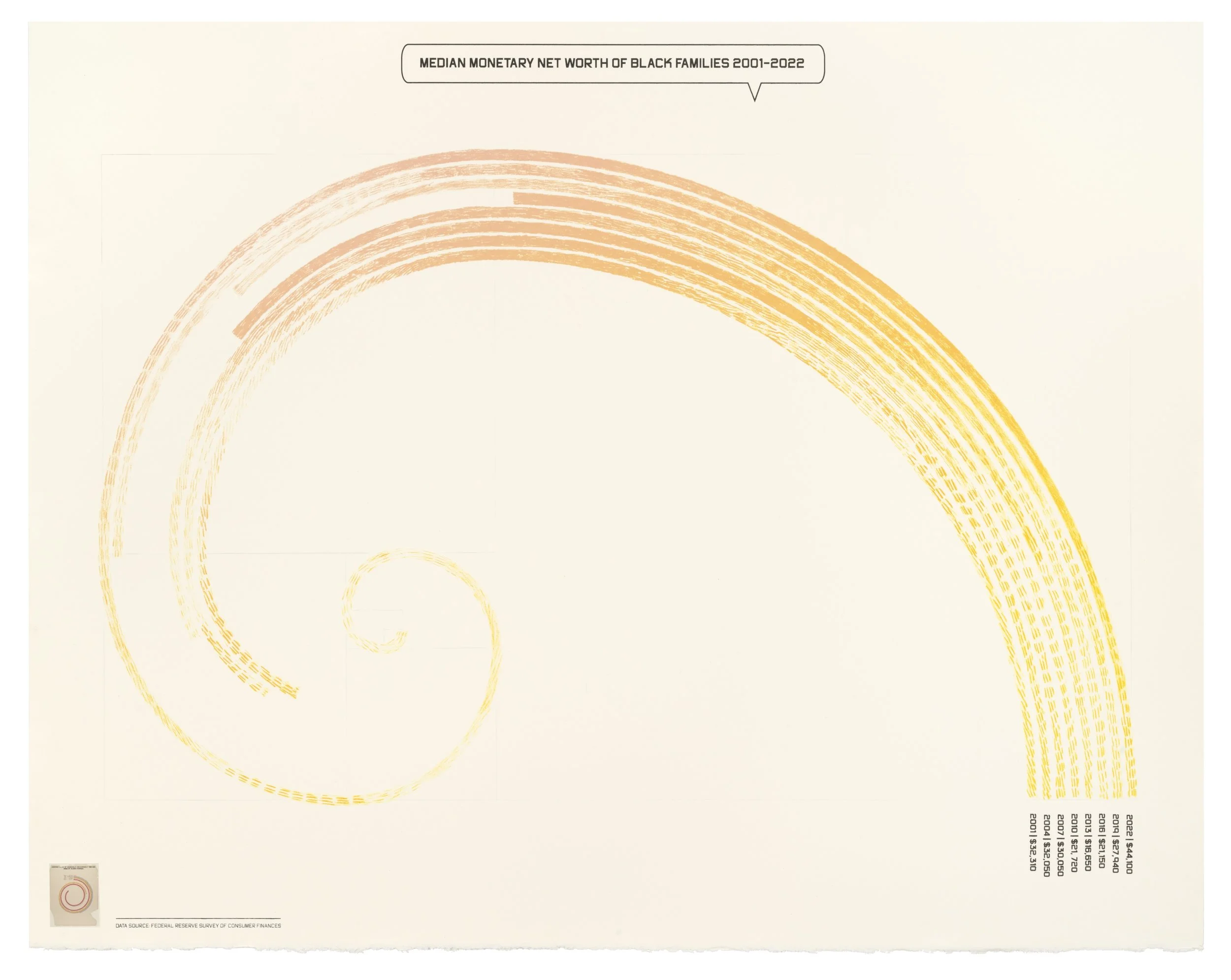
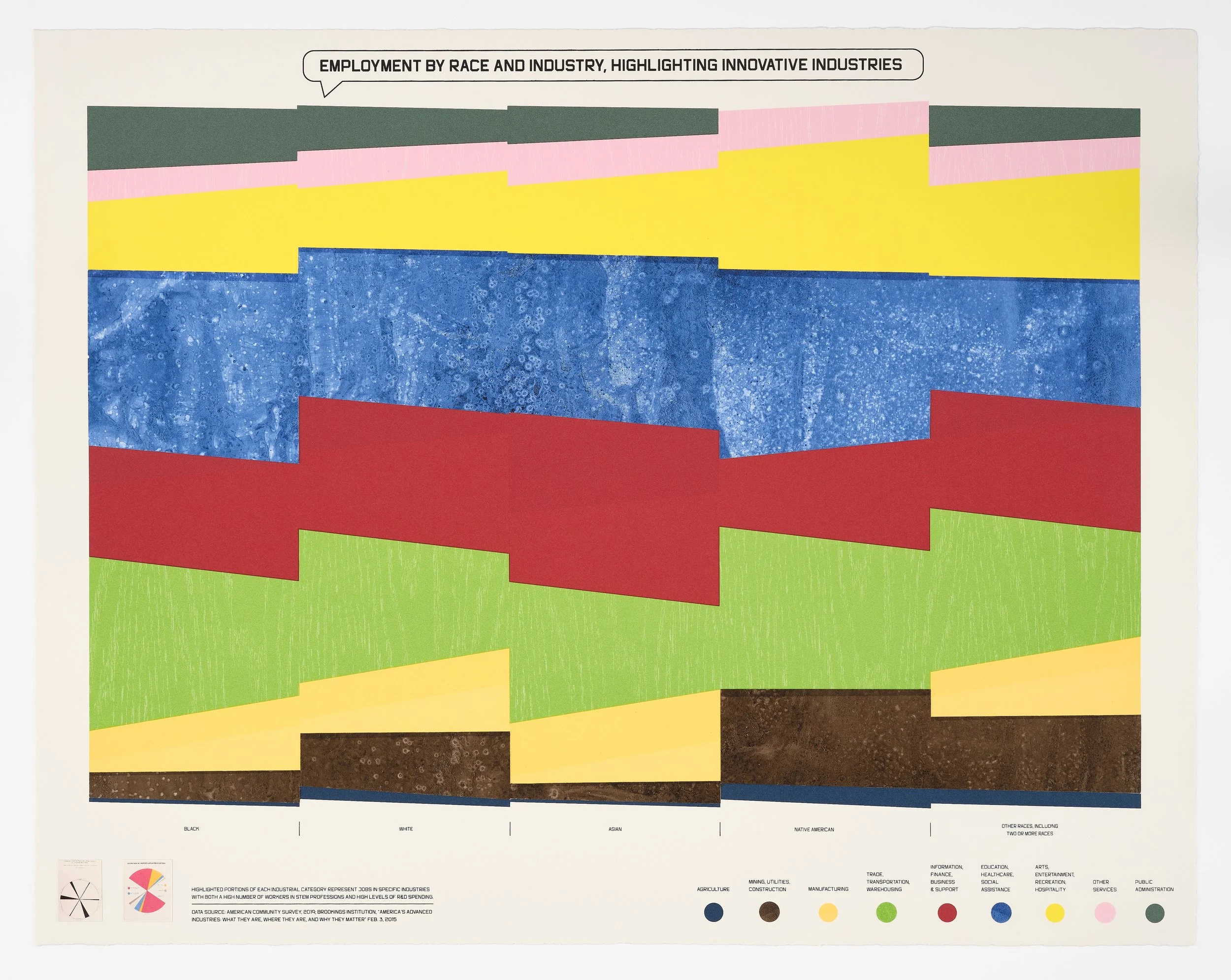
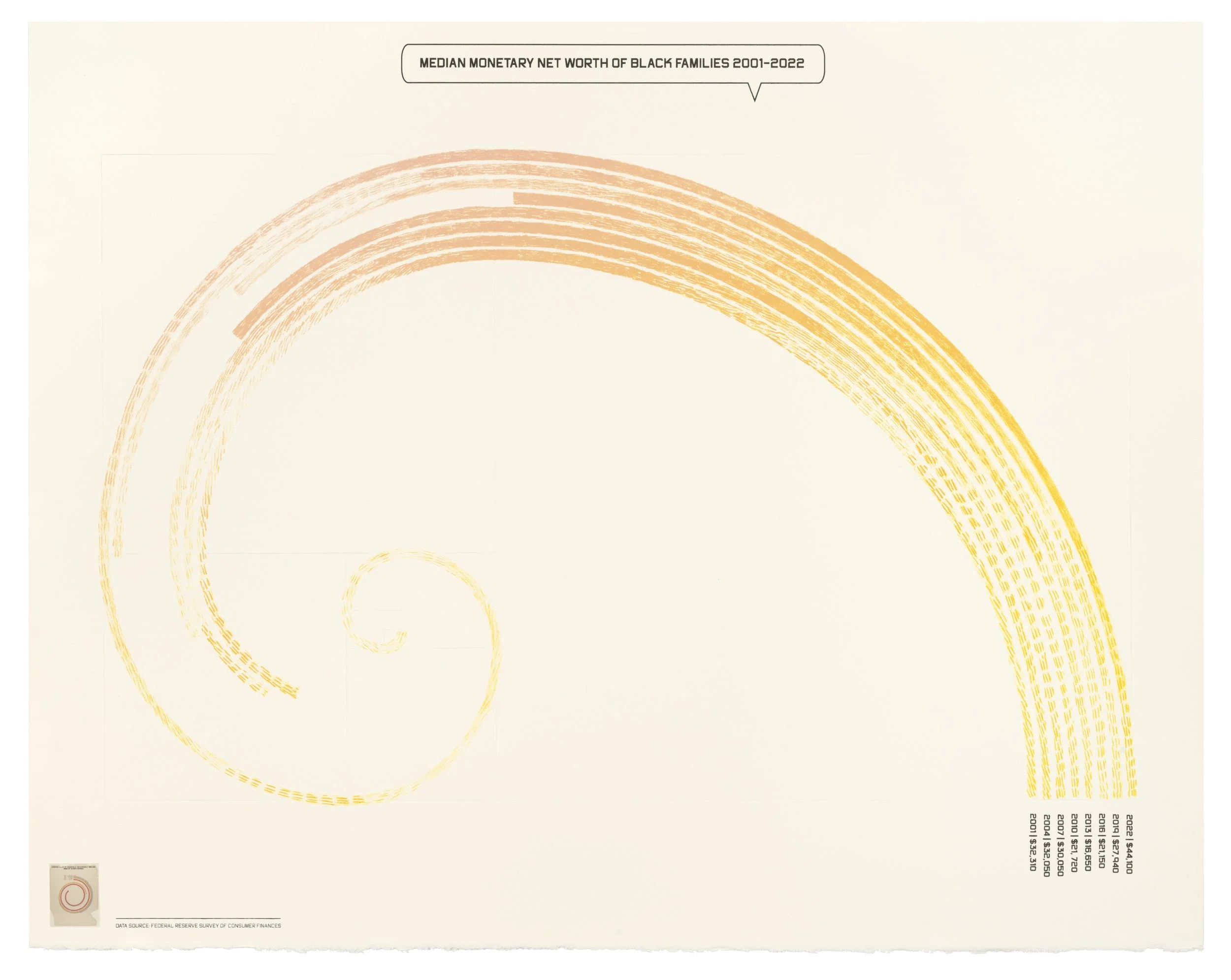
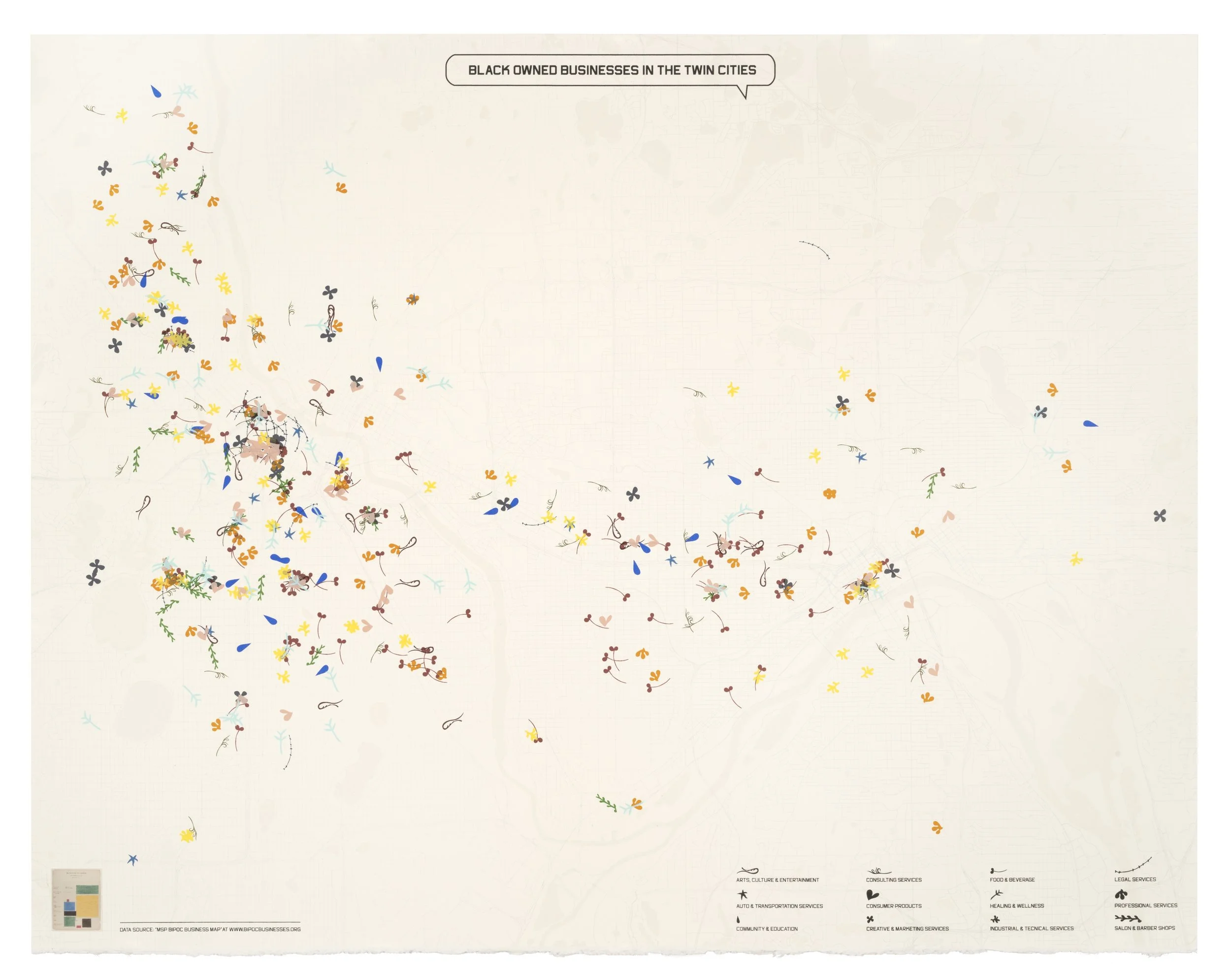
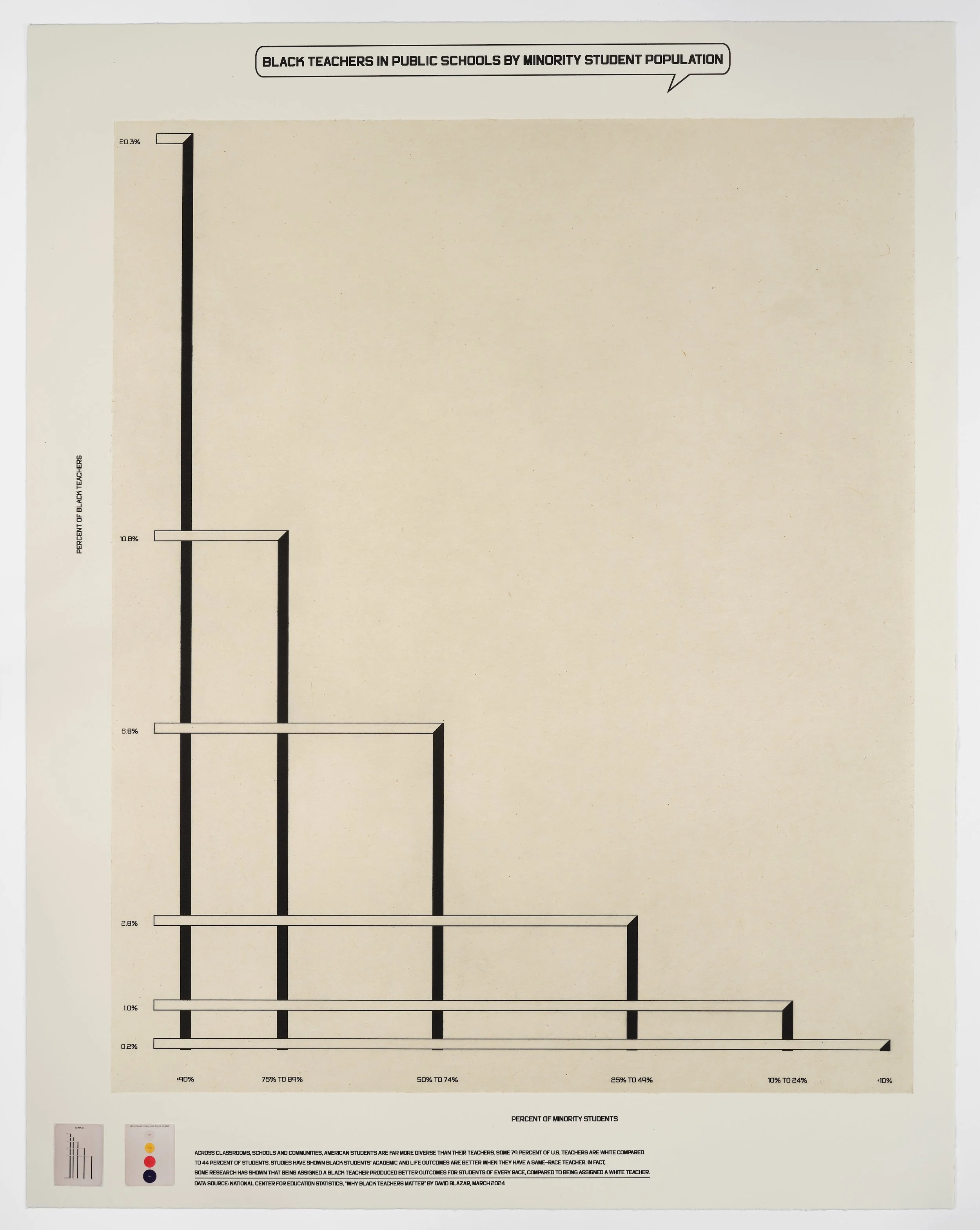
William Villalongo and Shraddha Ramani, Median Net Monetary Worth of Black Families 2001–2022, 2026. Lithograph and collage. 22 x 28 in. Edition of 20. Printed and published by Highpoint Editions, Minneapolis, MN. © Villalongo Studio LLC. Courtesy William Villalongo, Shraddha Ramani and Highpoint Editions, Minneapolis, MN.

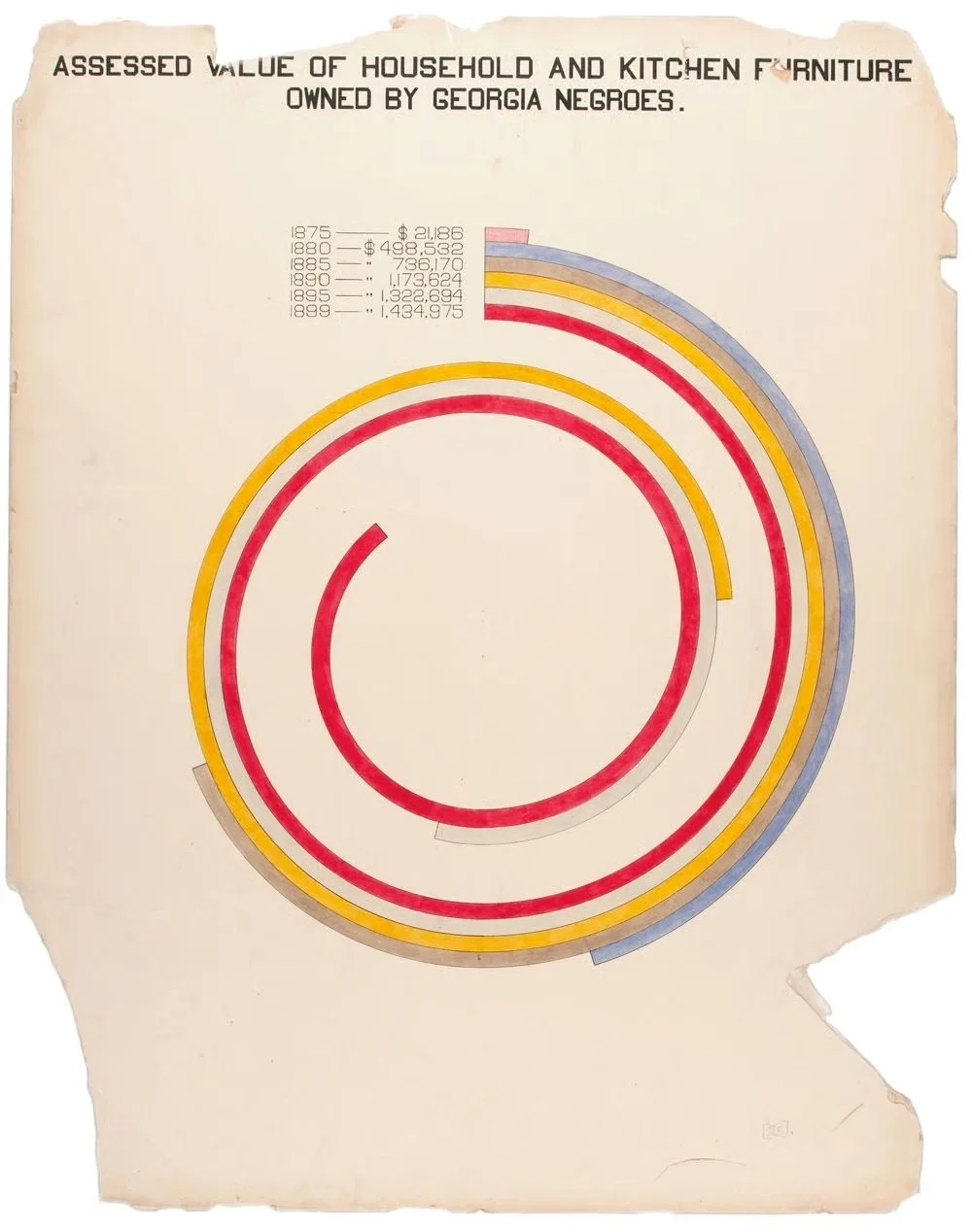
Assessed Value of Household and Kitchen Furniture Owned by Georgia Negroes. Image courtesy of the Library of Congress, Prints & Photographs Division, LC-DIG-ppmsca-33887. Inspiration for the print above.

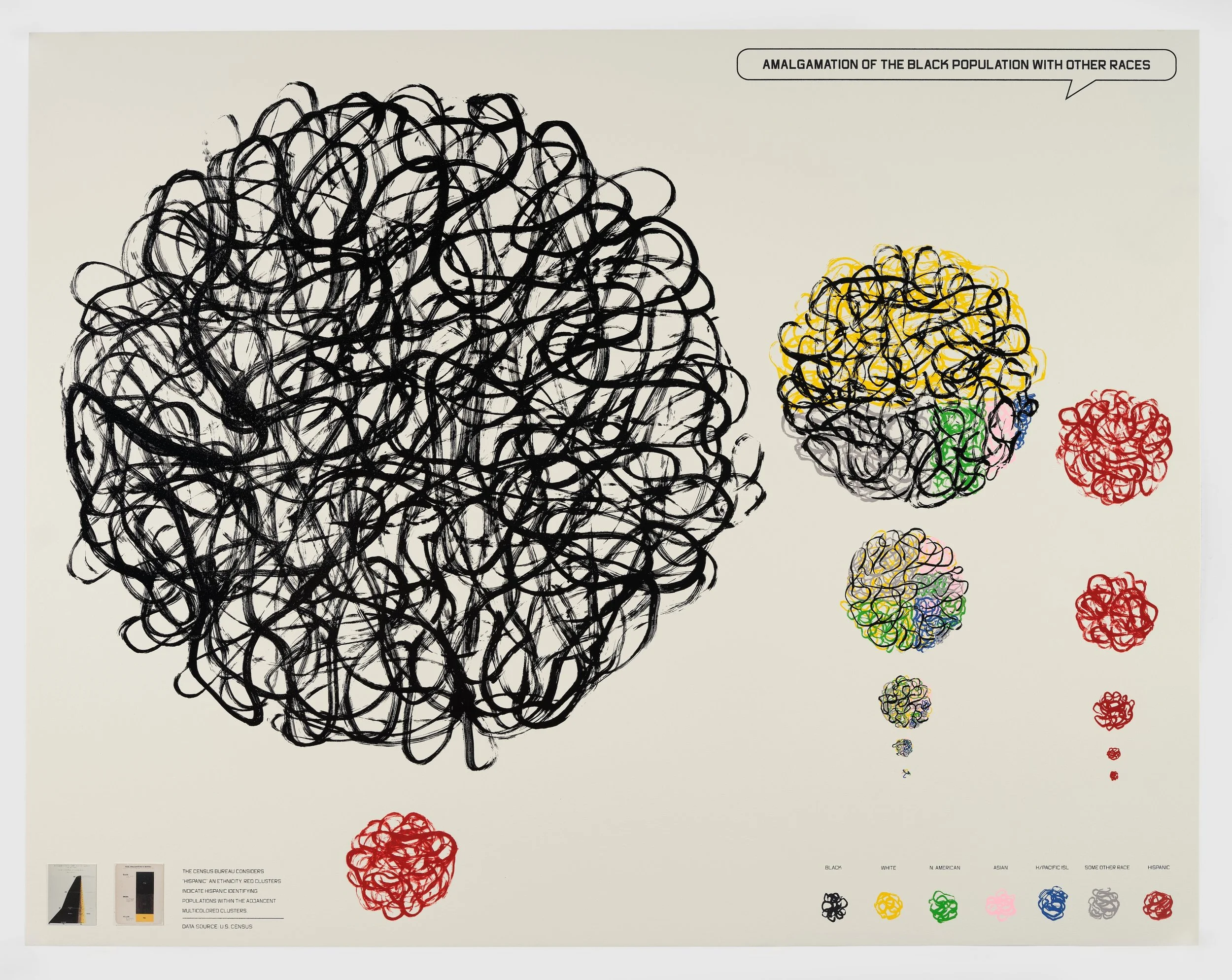
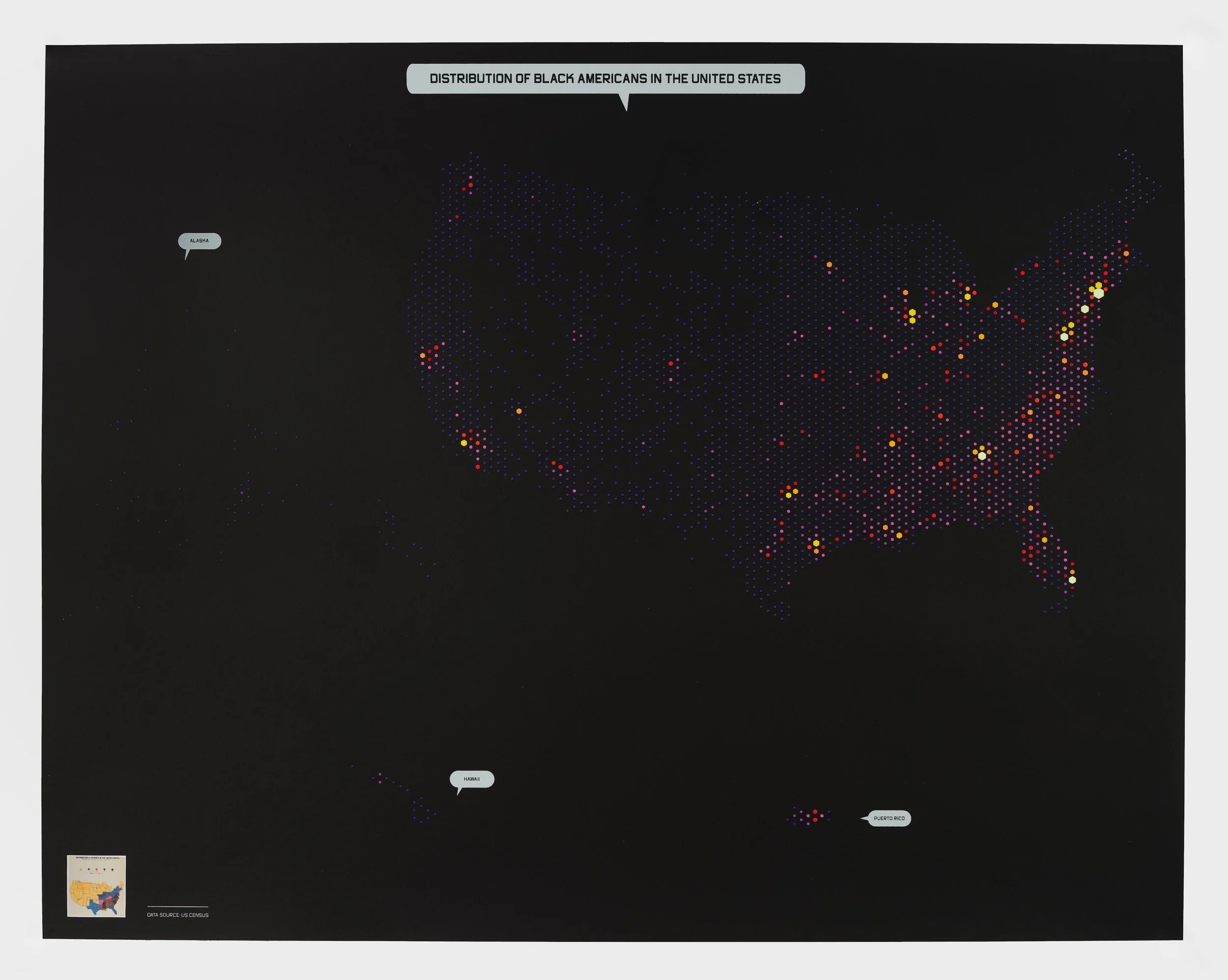
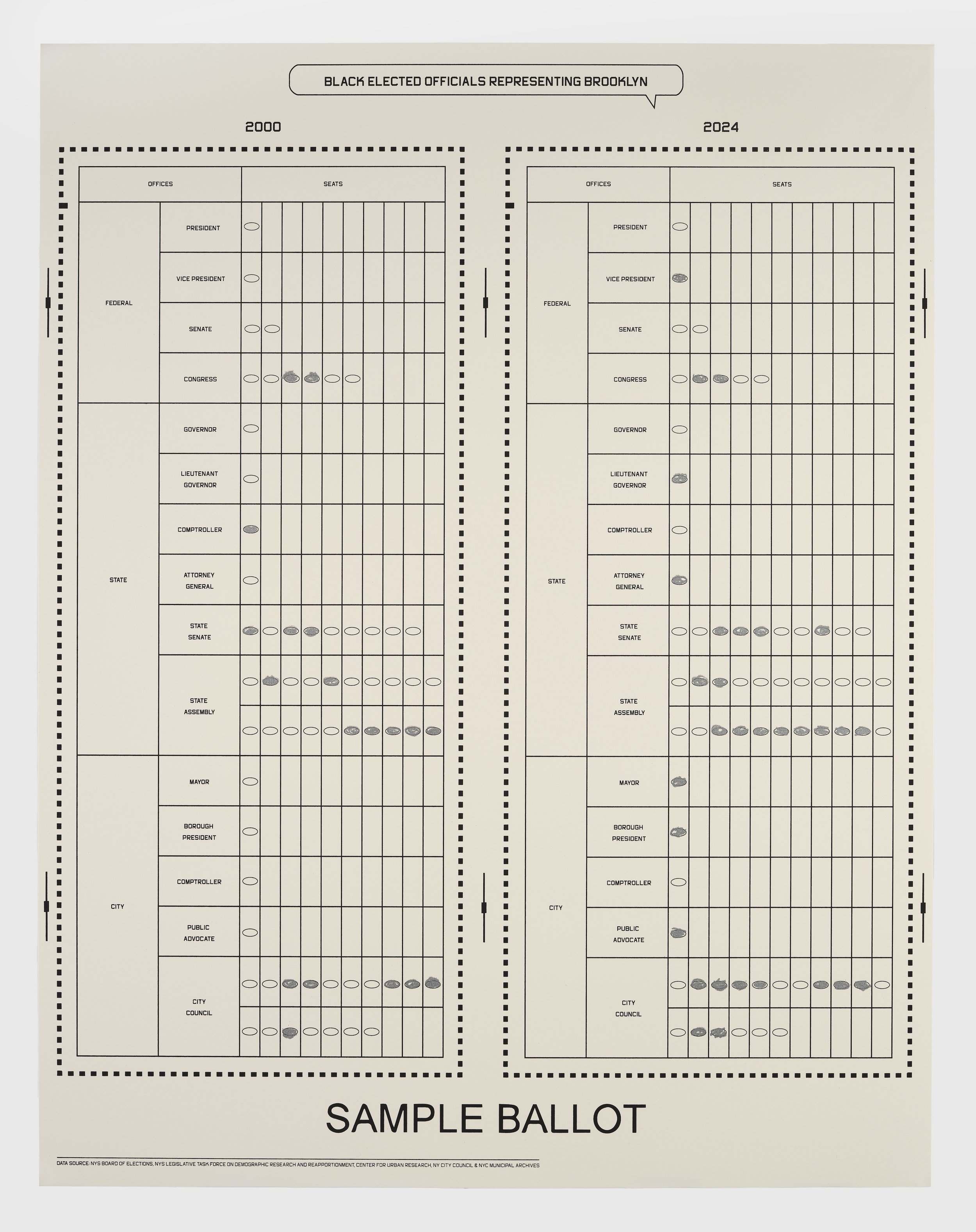
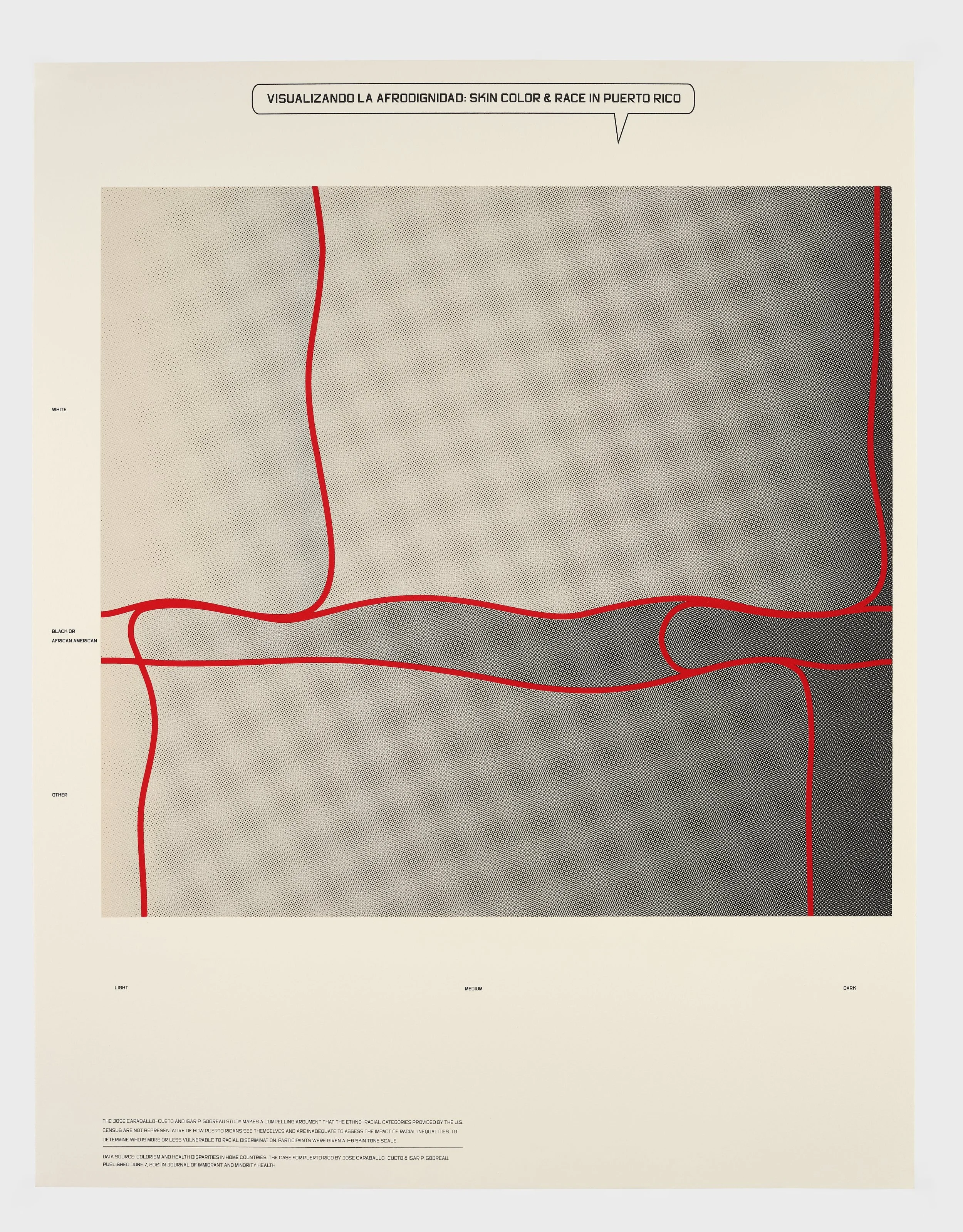
In 1900, W.E.B. Du Bois organized a series of infographics on the progress of Black peoples after Emancipation, to be displayed as part of the American Negro Exhibit in the 1900 Paris Exposition world's fair. Using the still-developing field of data visualization, the American Negro Exhibit worked to upend the conceit of Western superiority and inevitable "progress" of industrialization by rendering in stark relief the dynamic participation of Black peoples in American social and economic life, and their global participation in science, literature, and art.

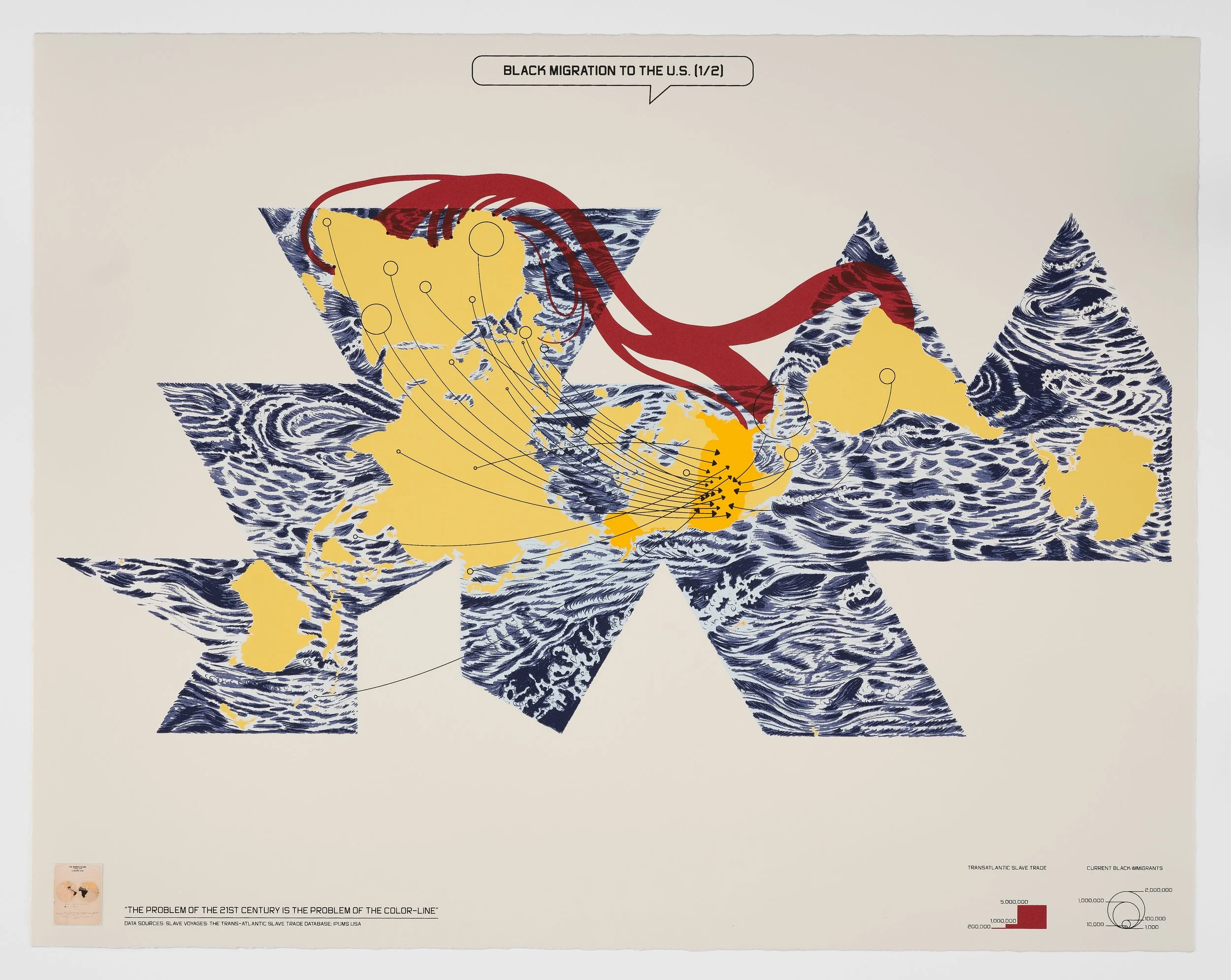
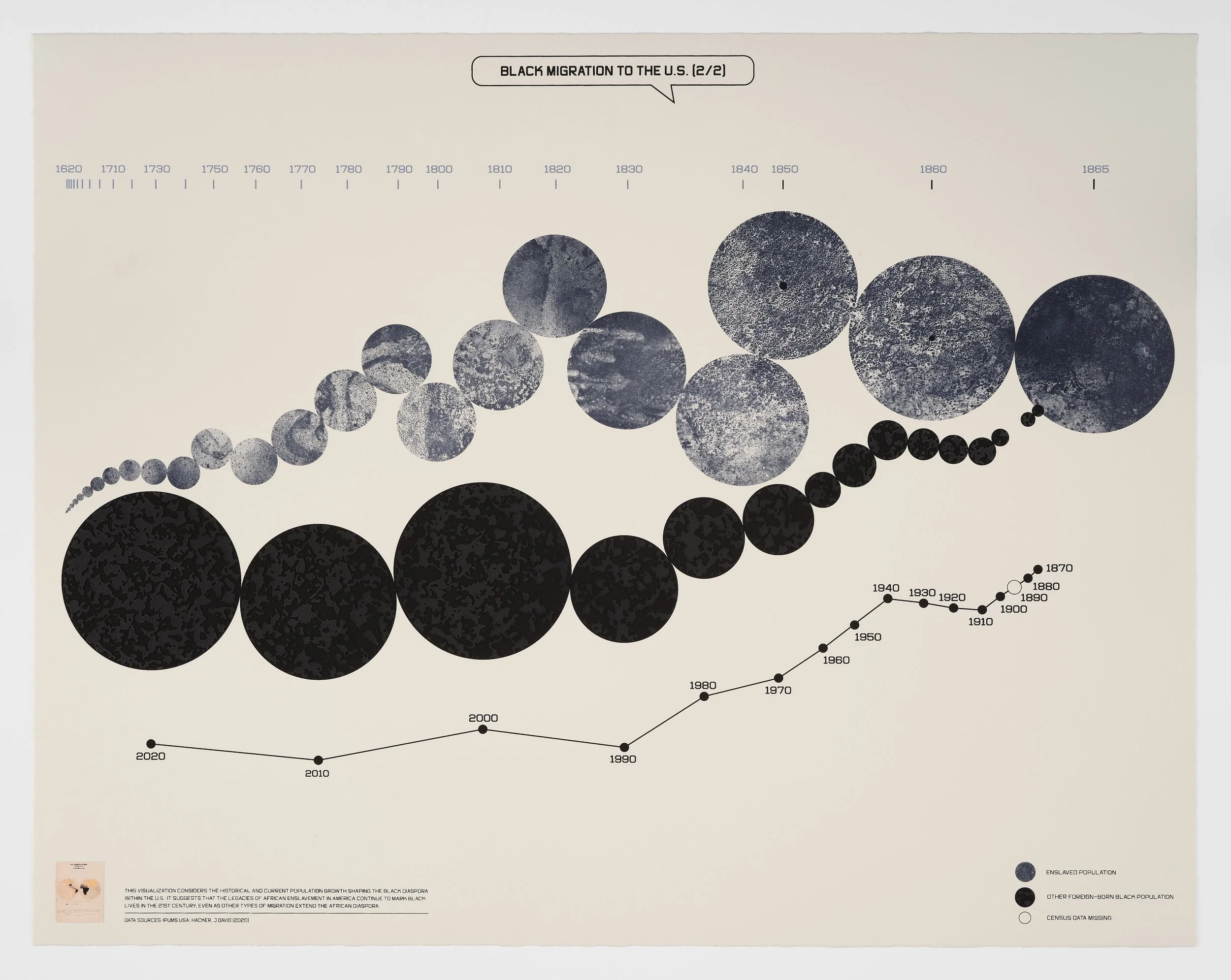
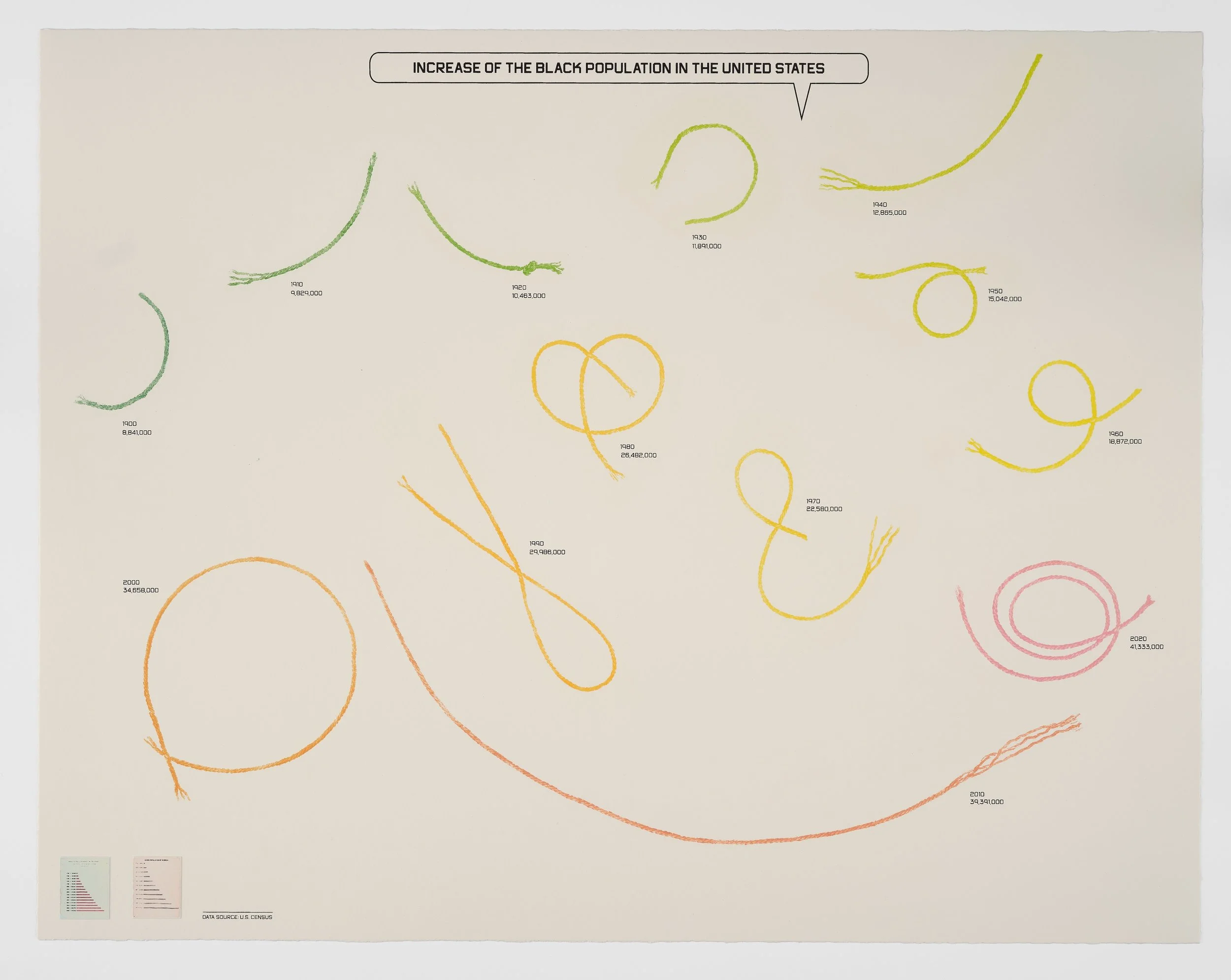
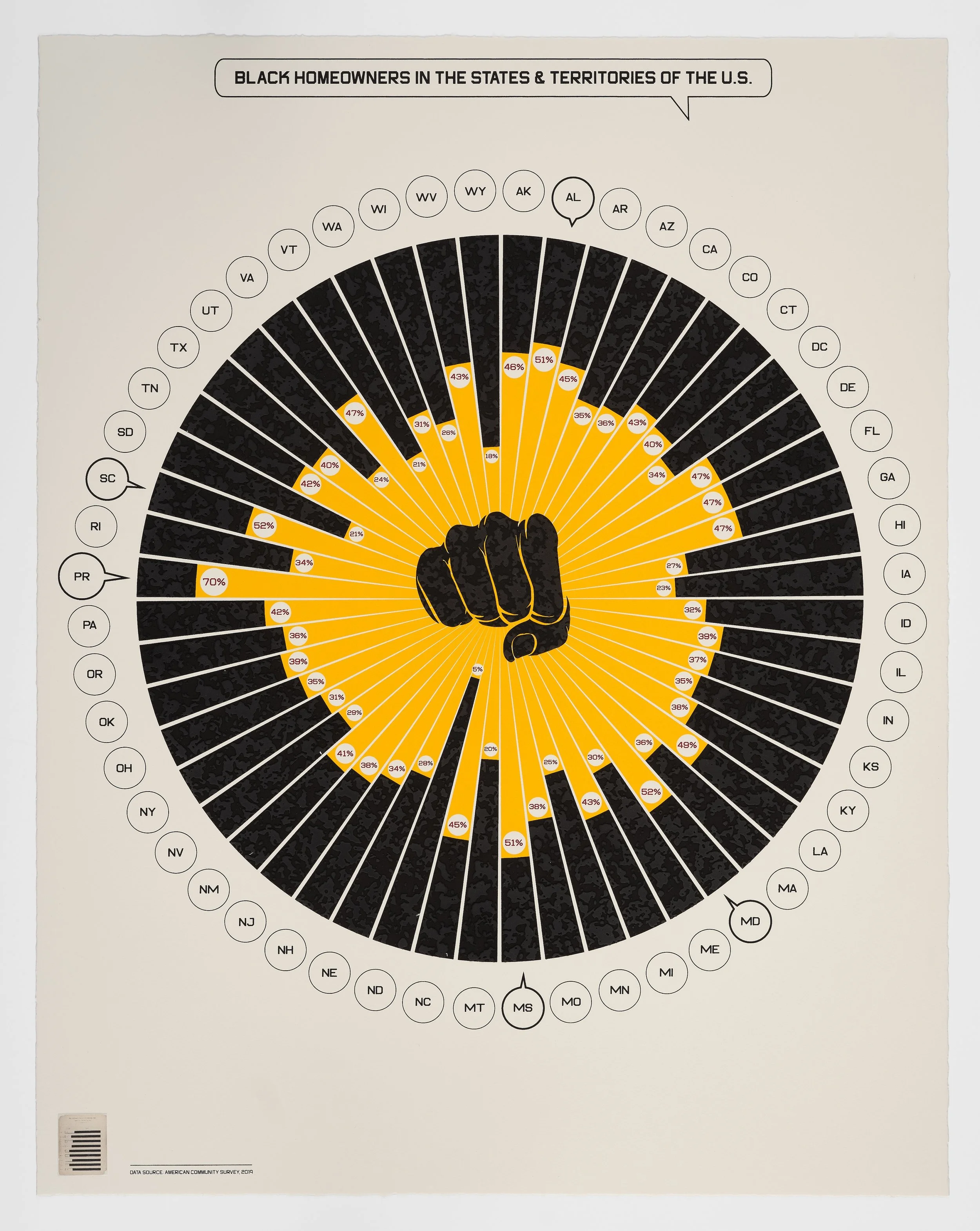
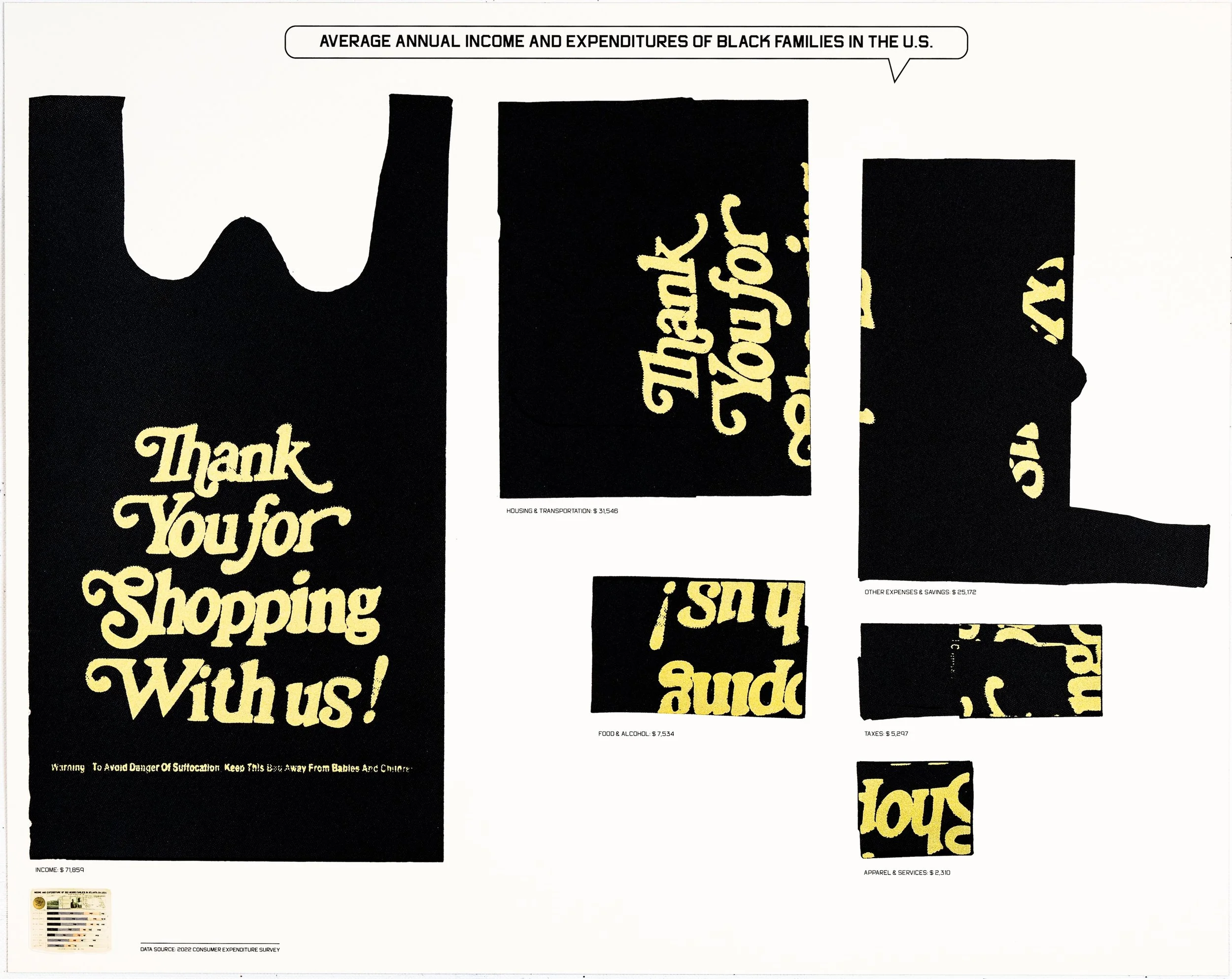
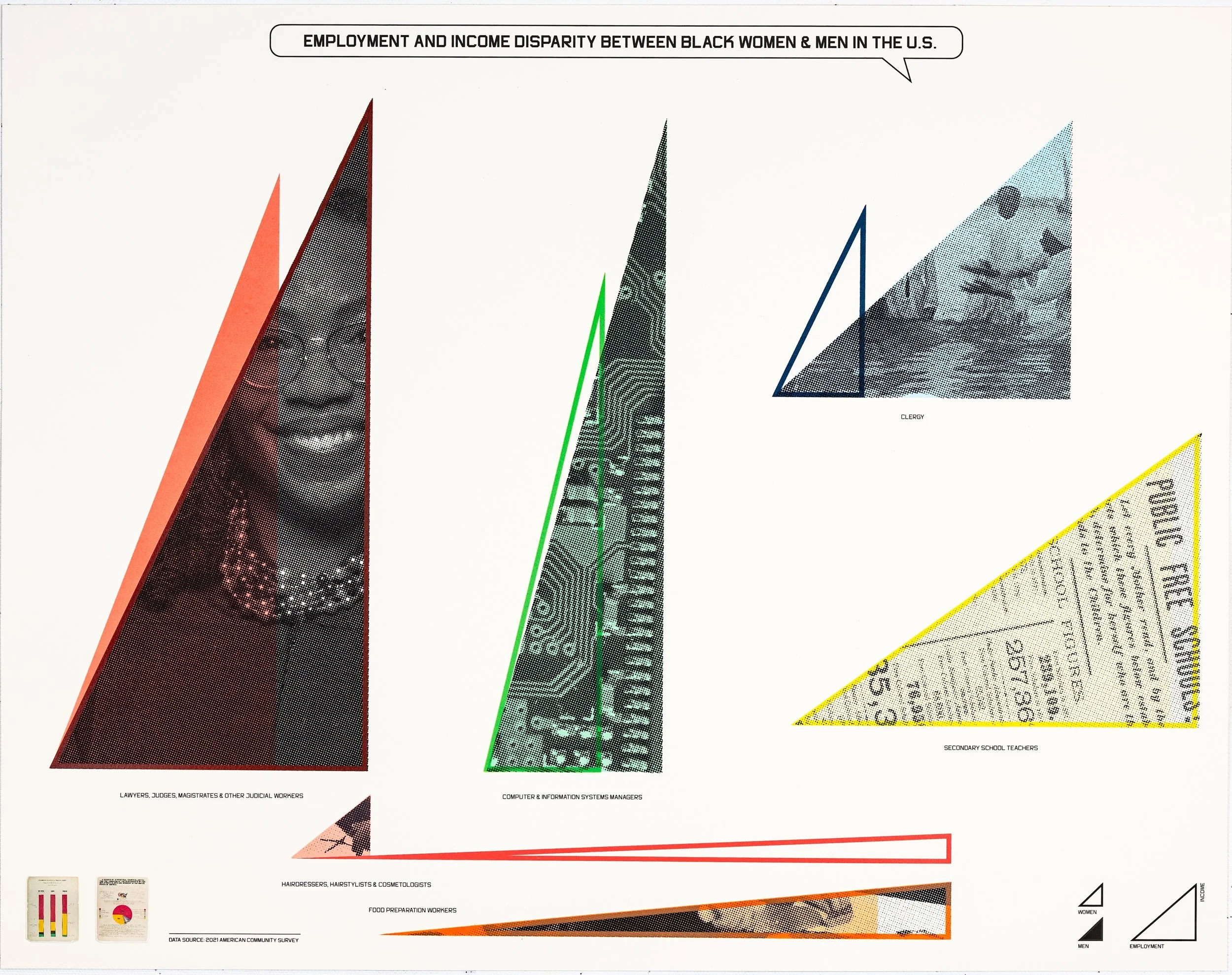
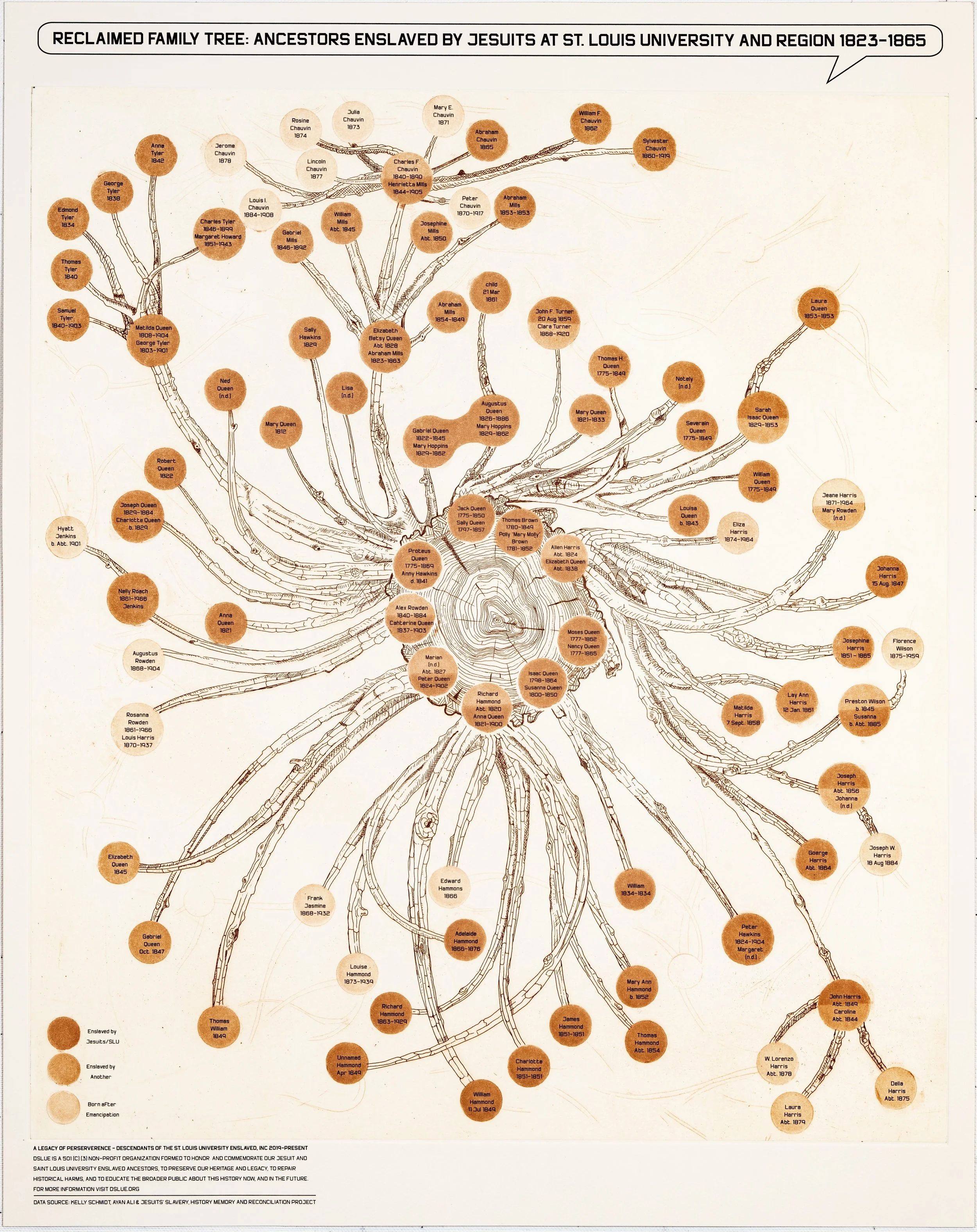
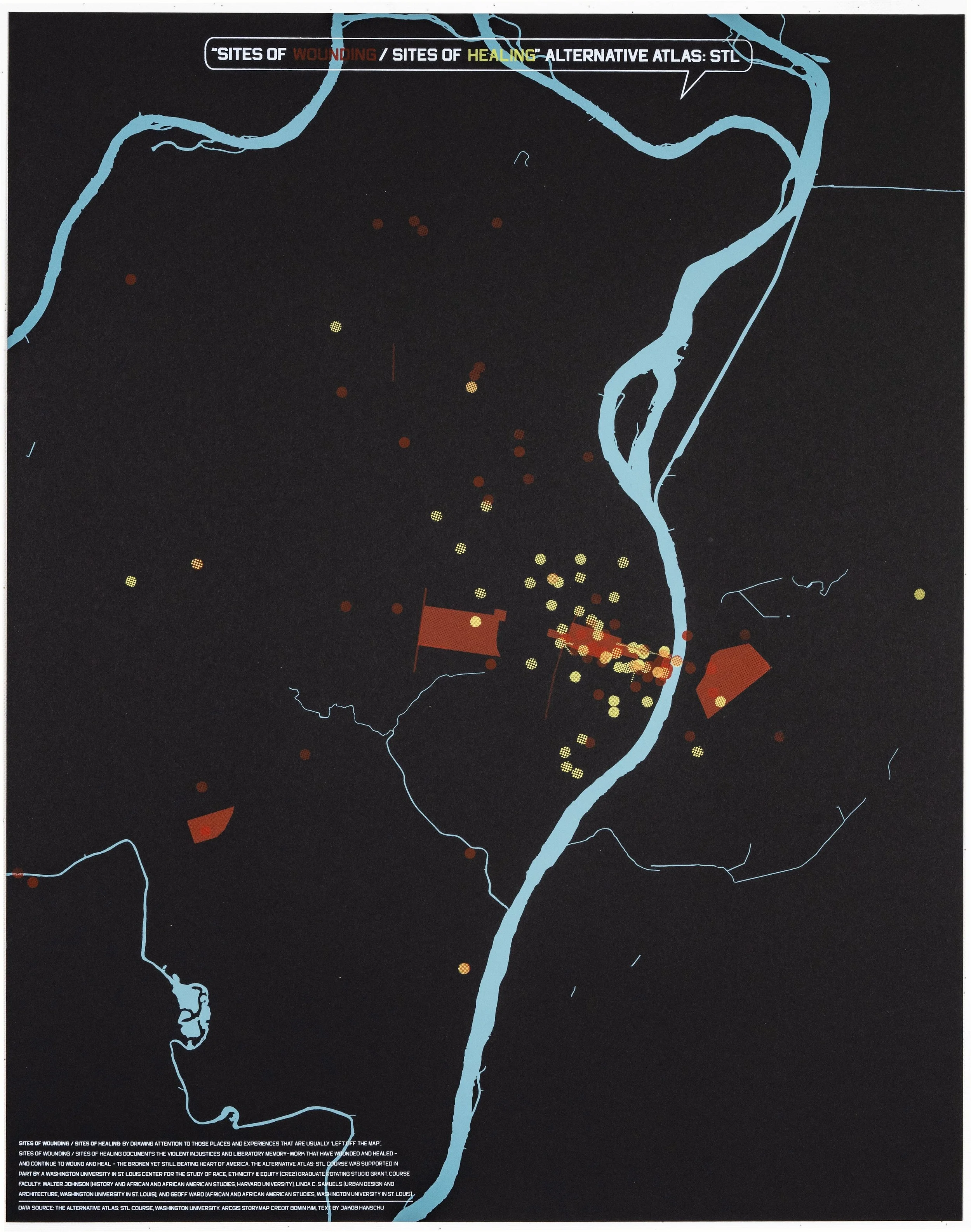
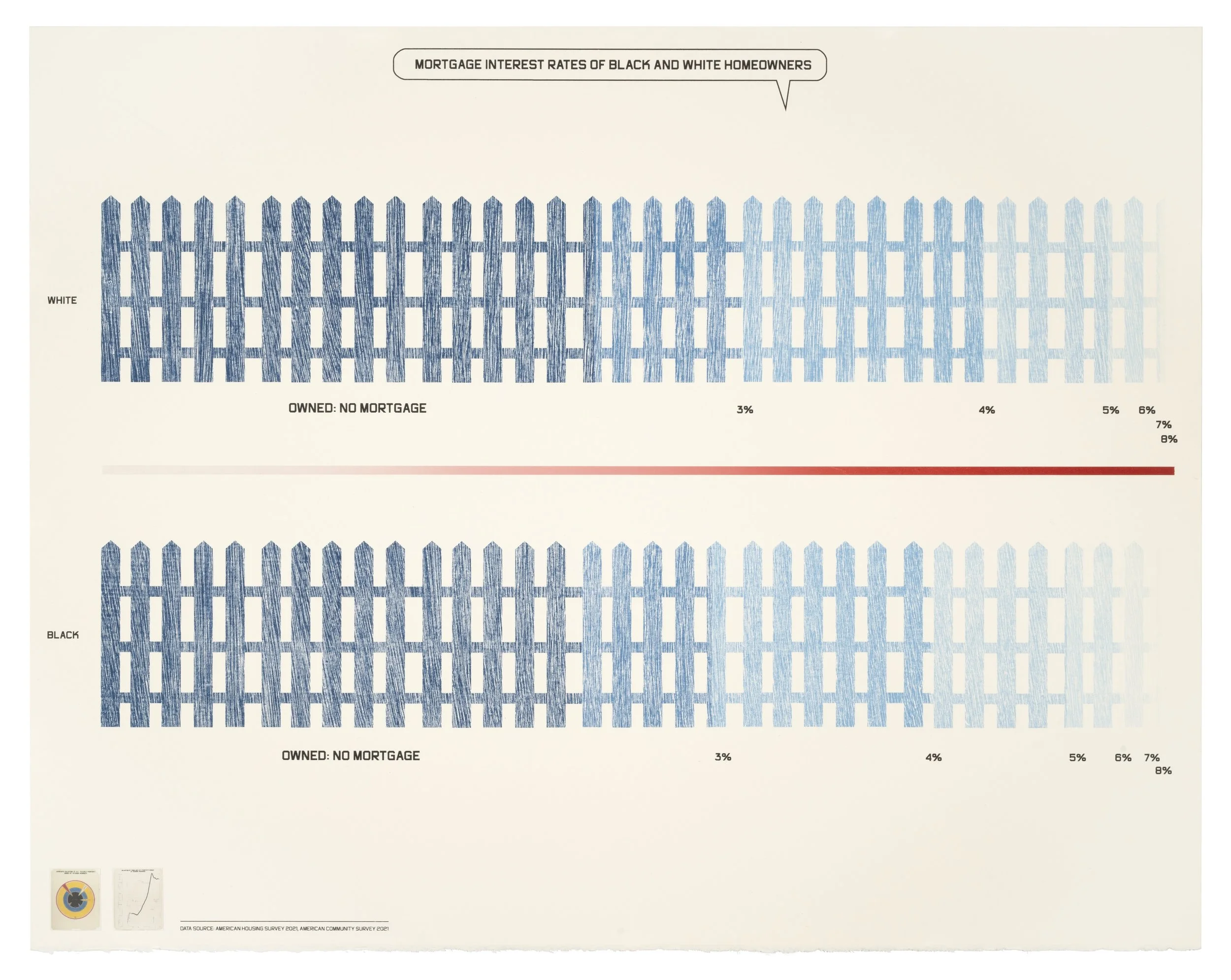
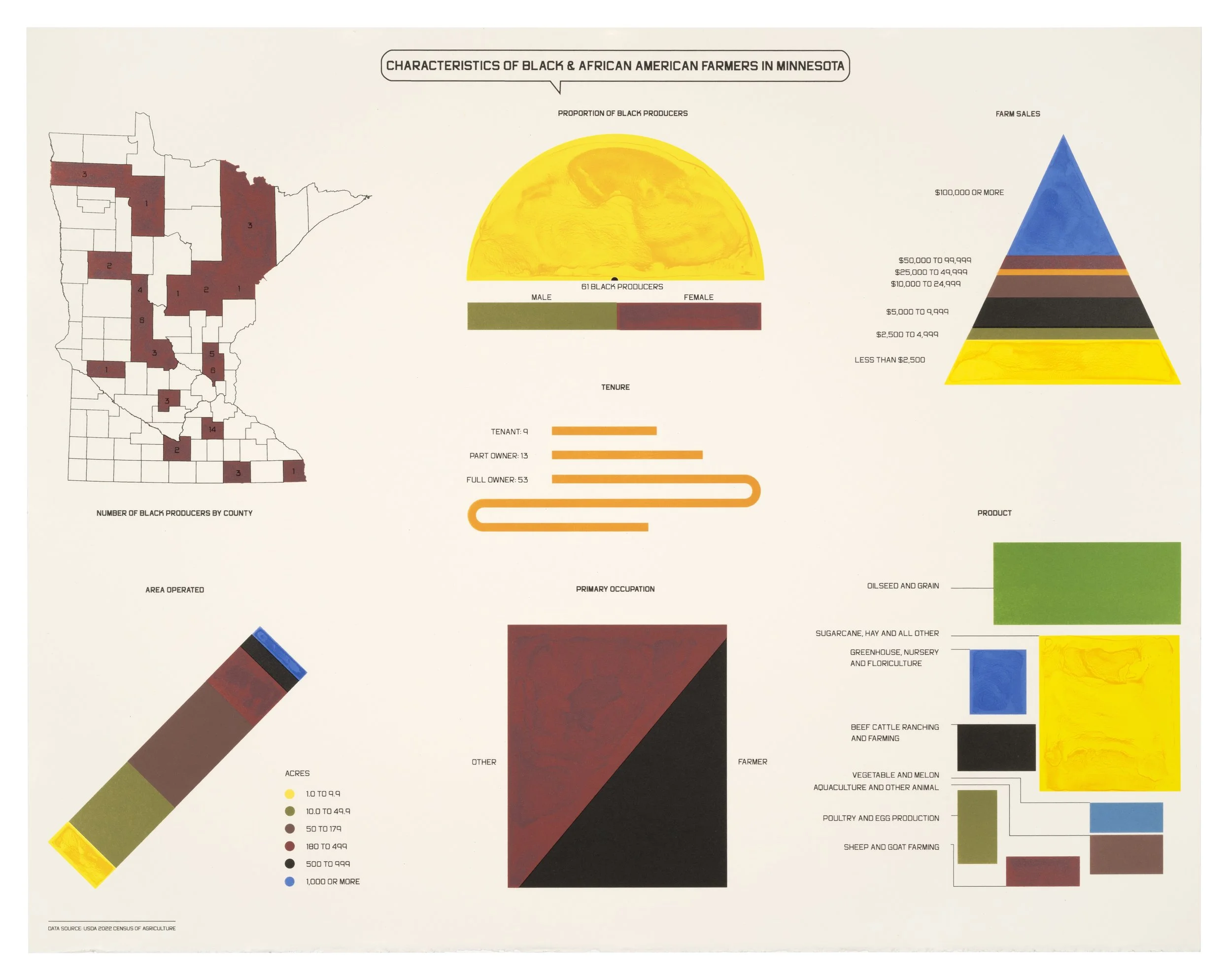
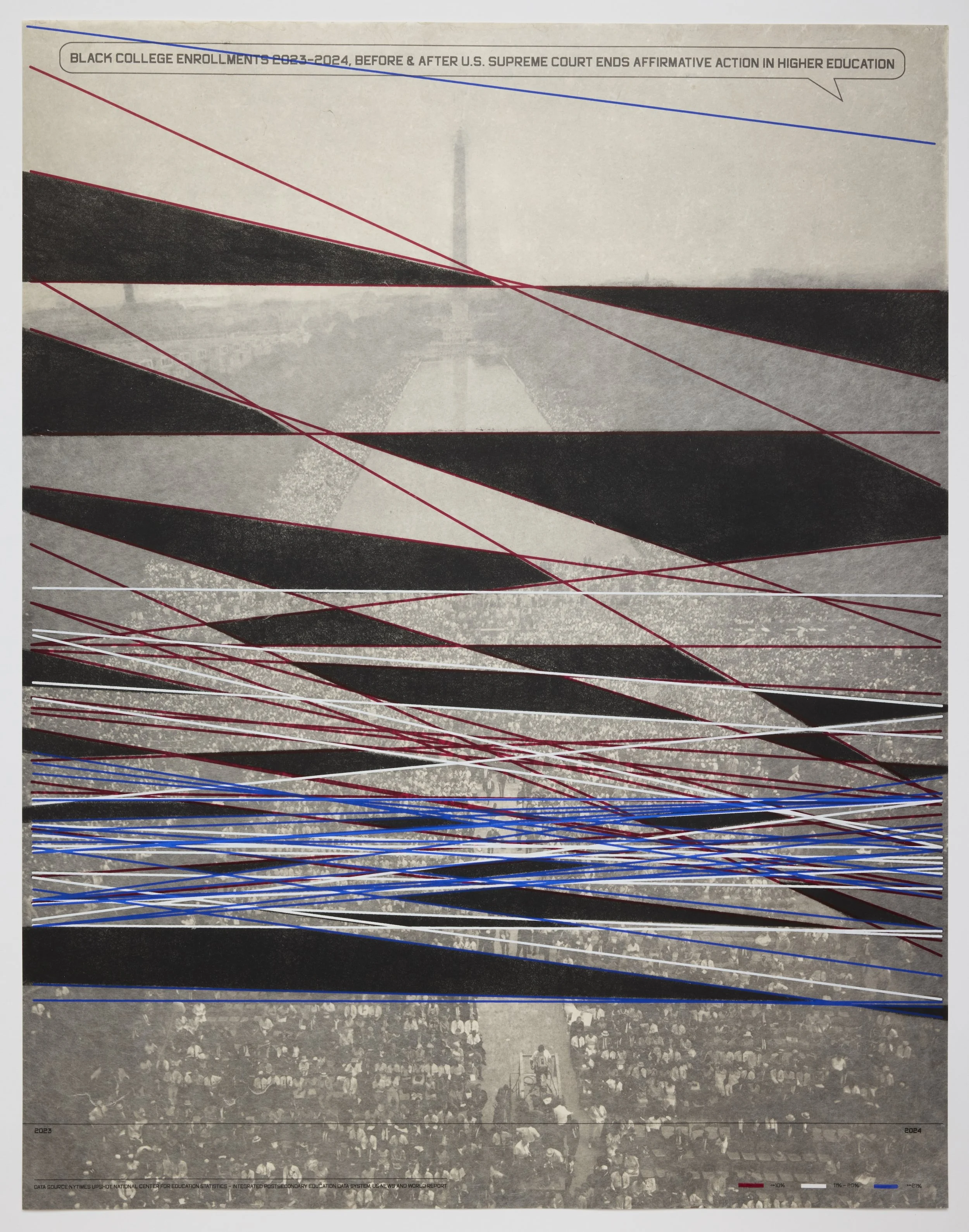
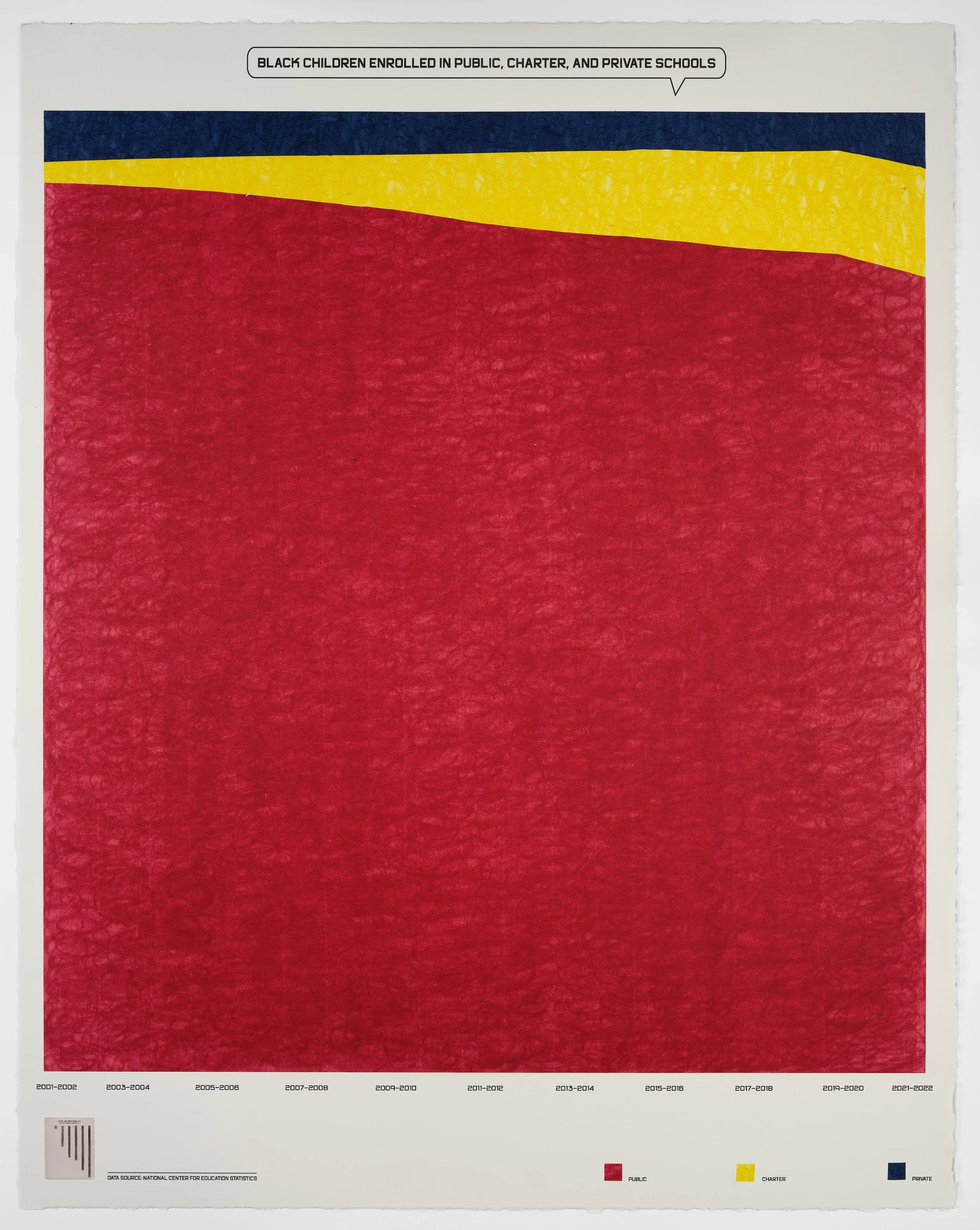
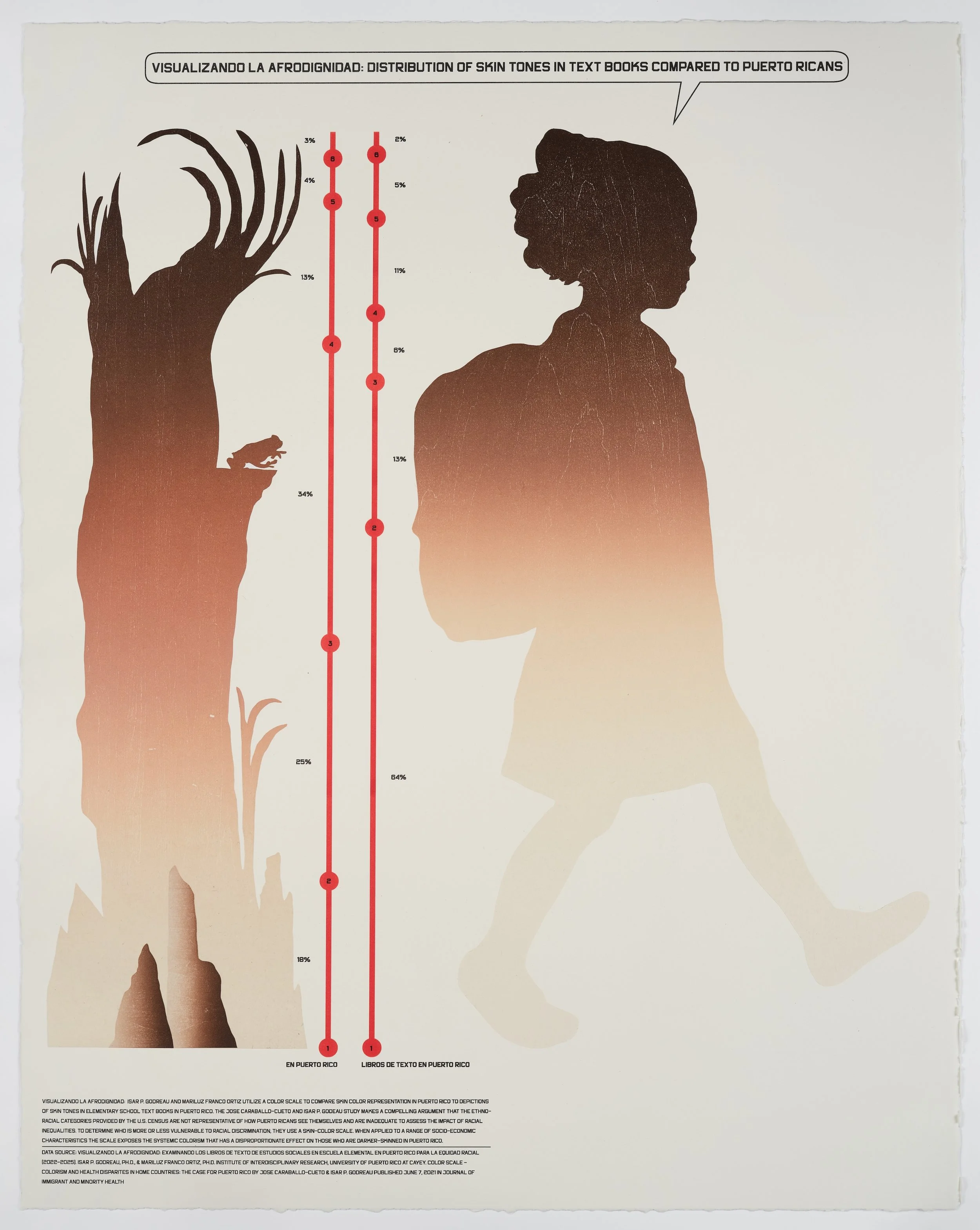
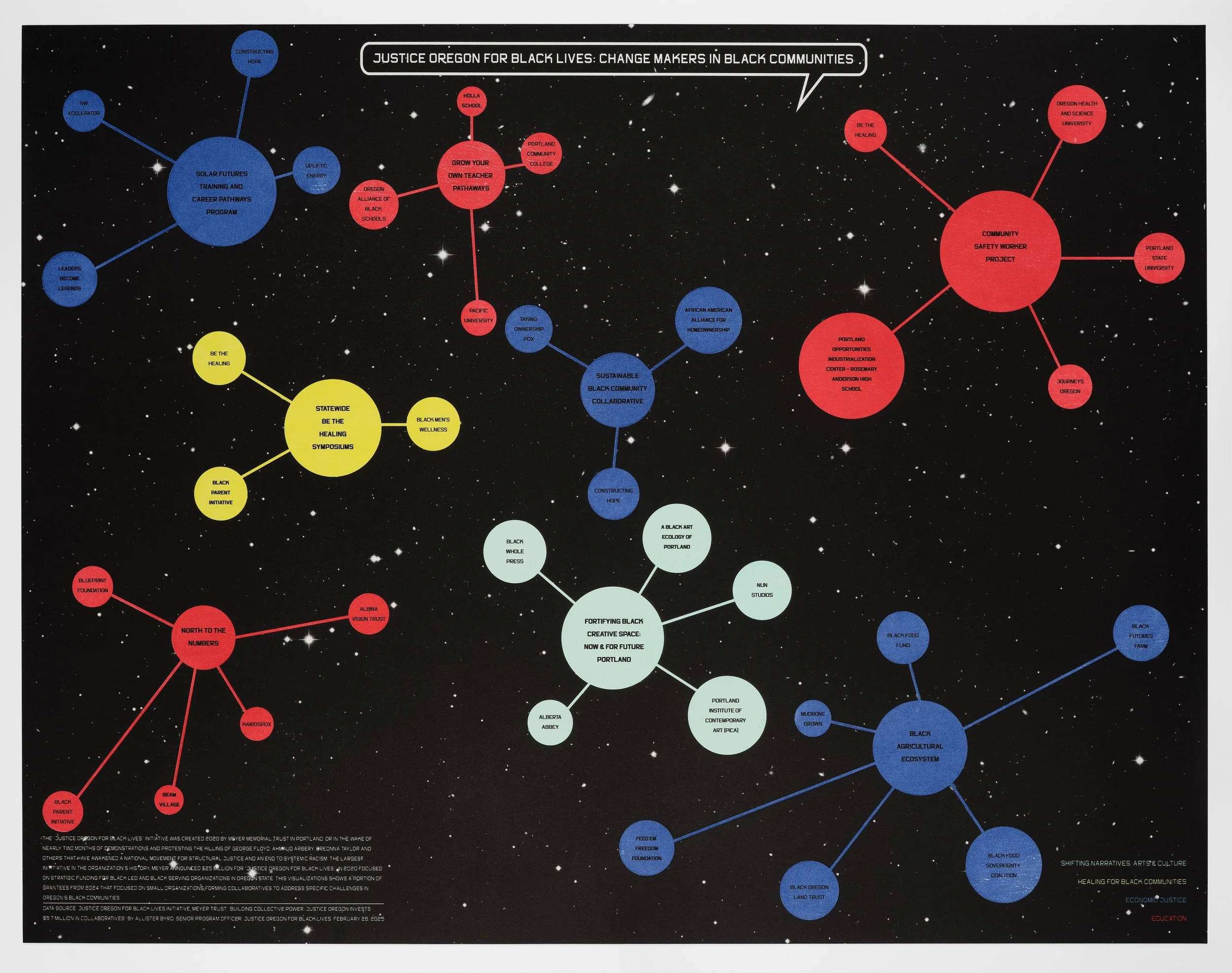
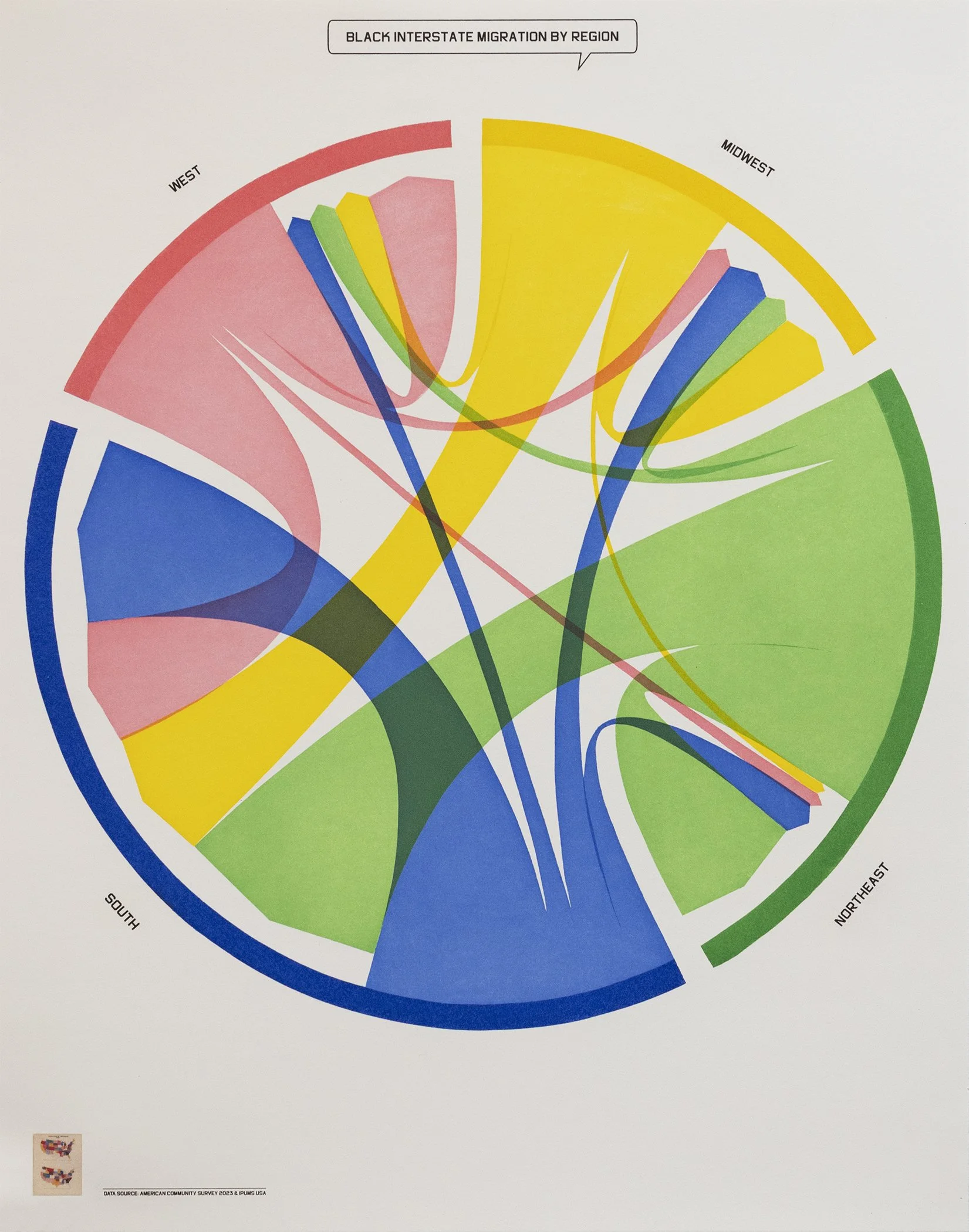
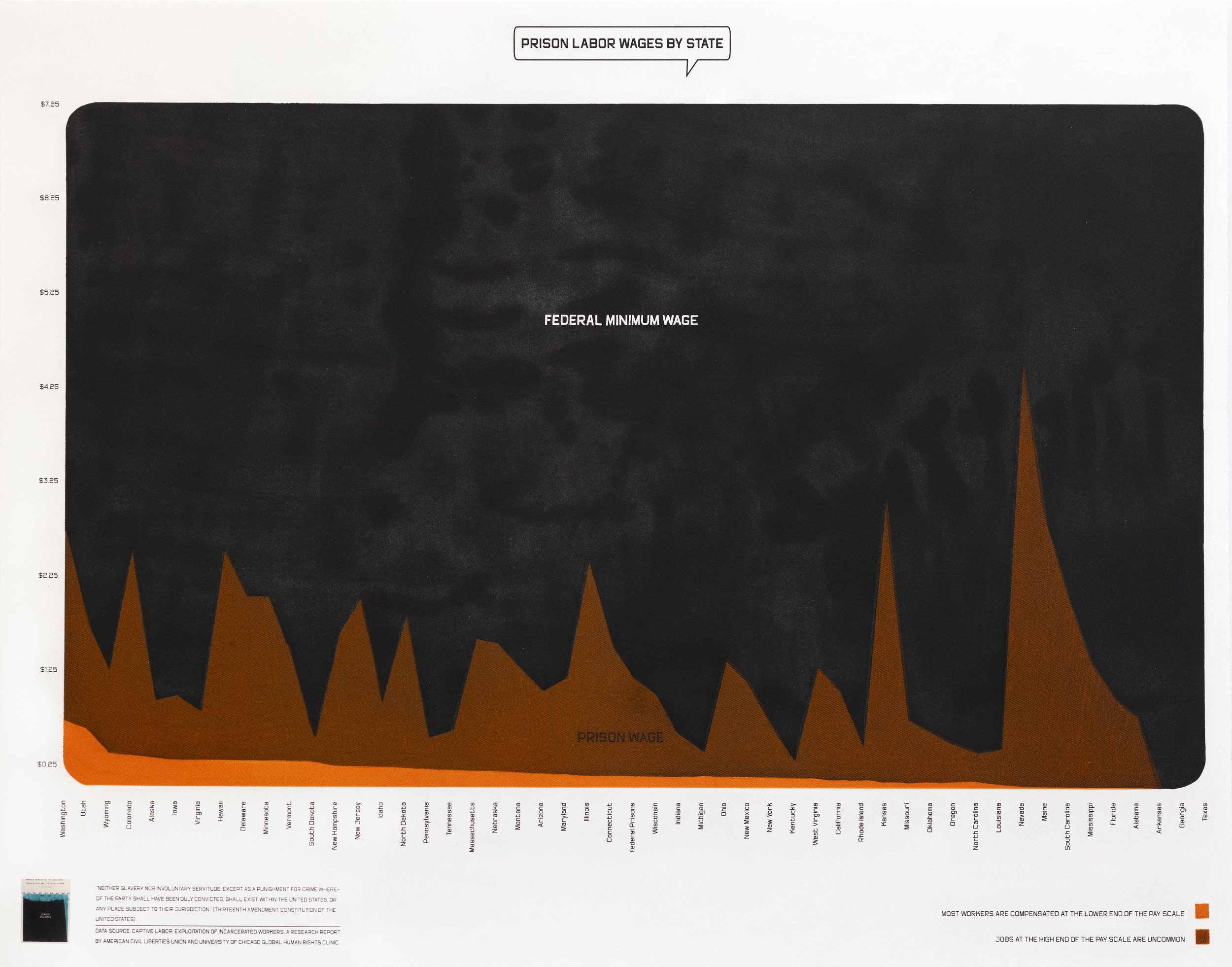
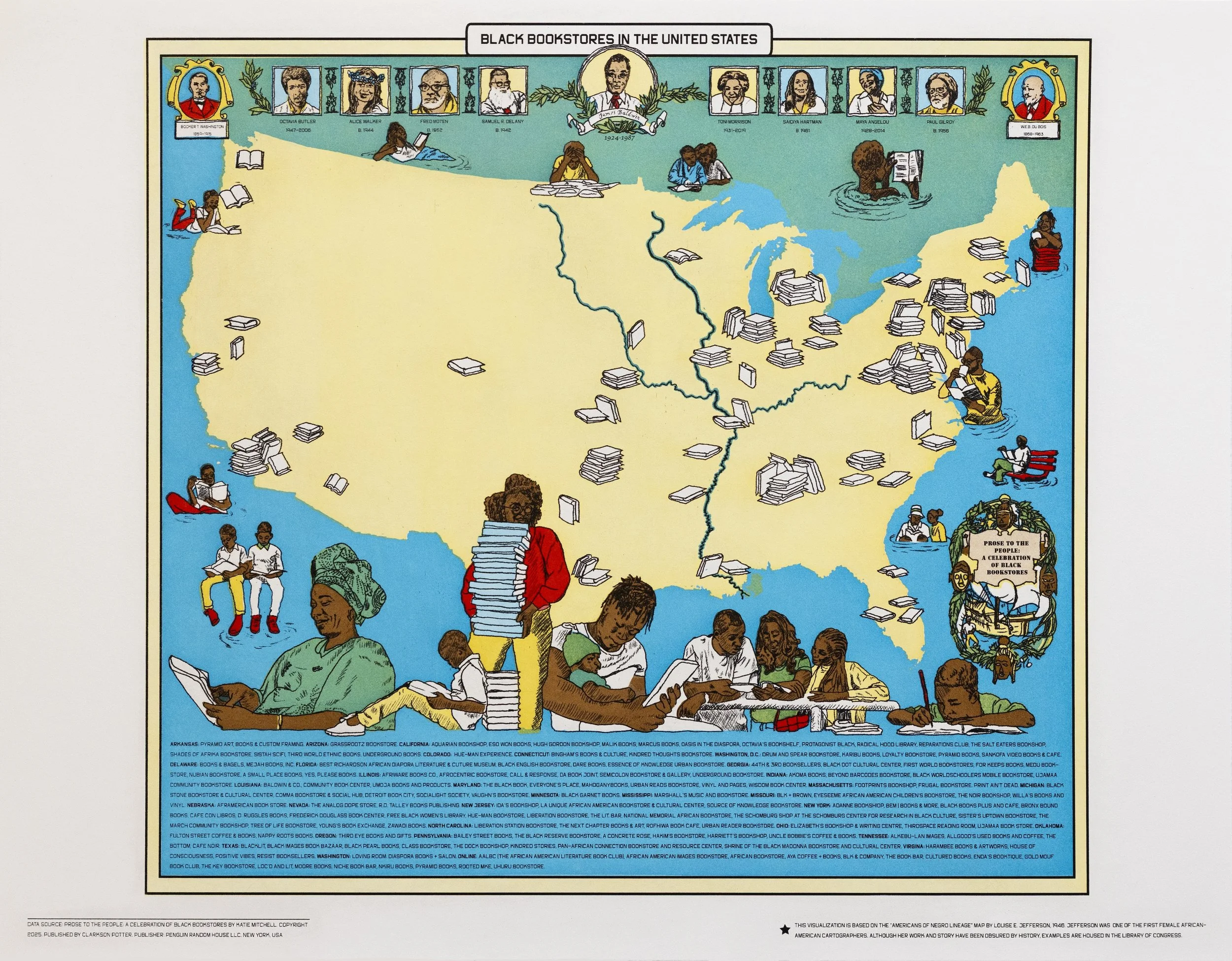
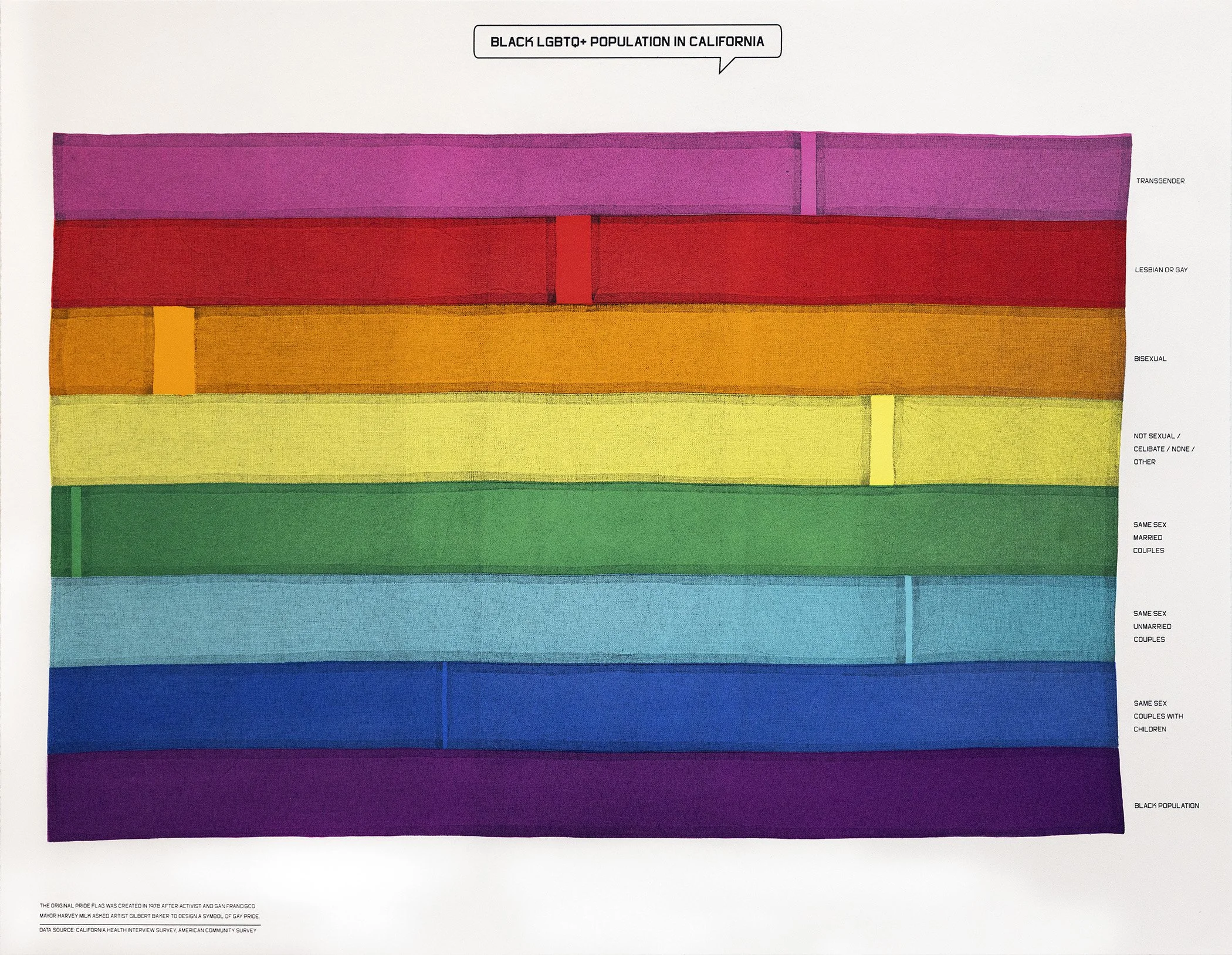
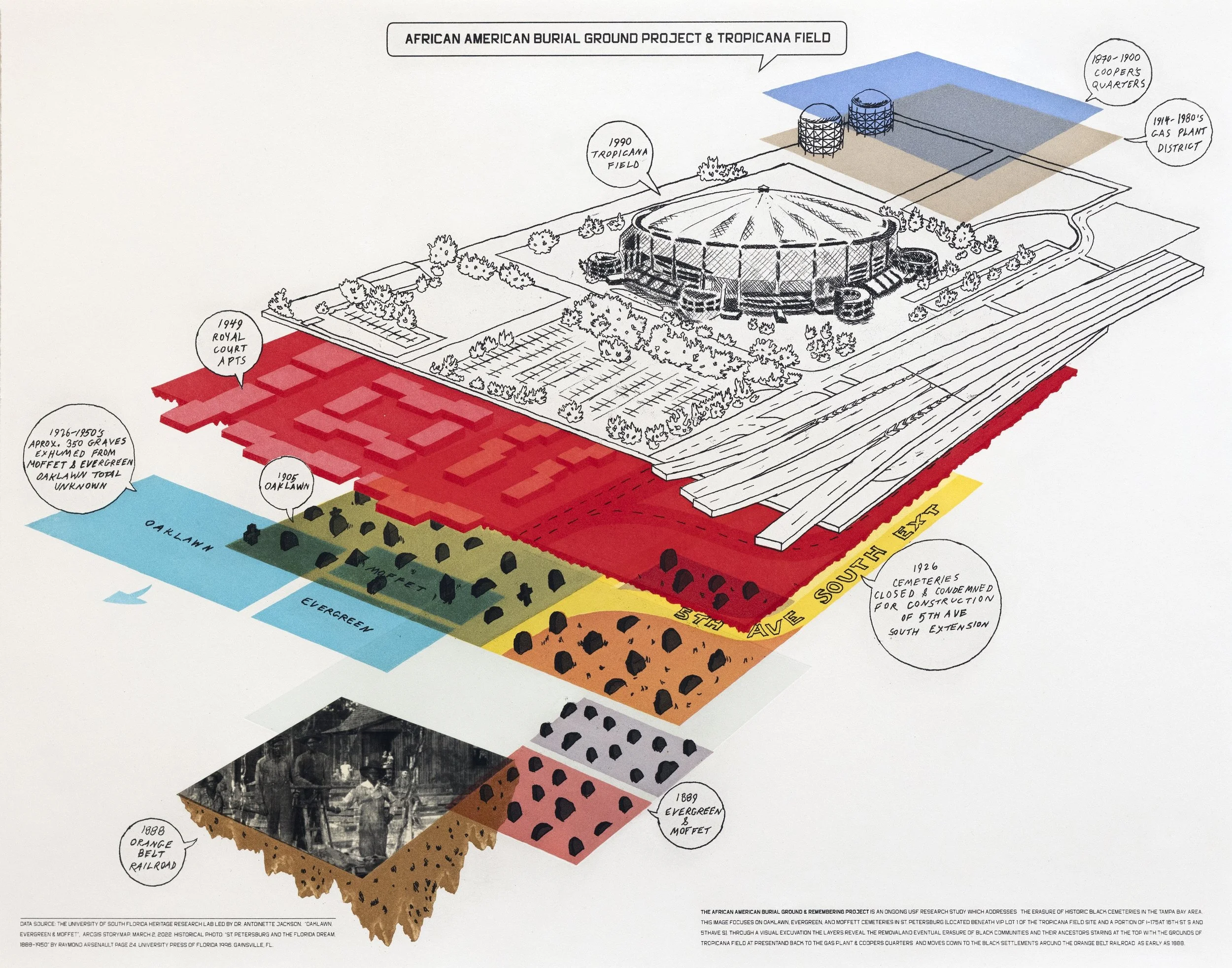
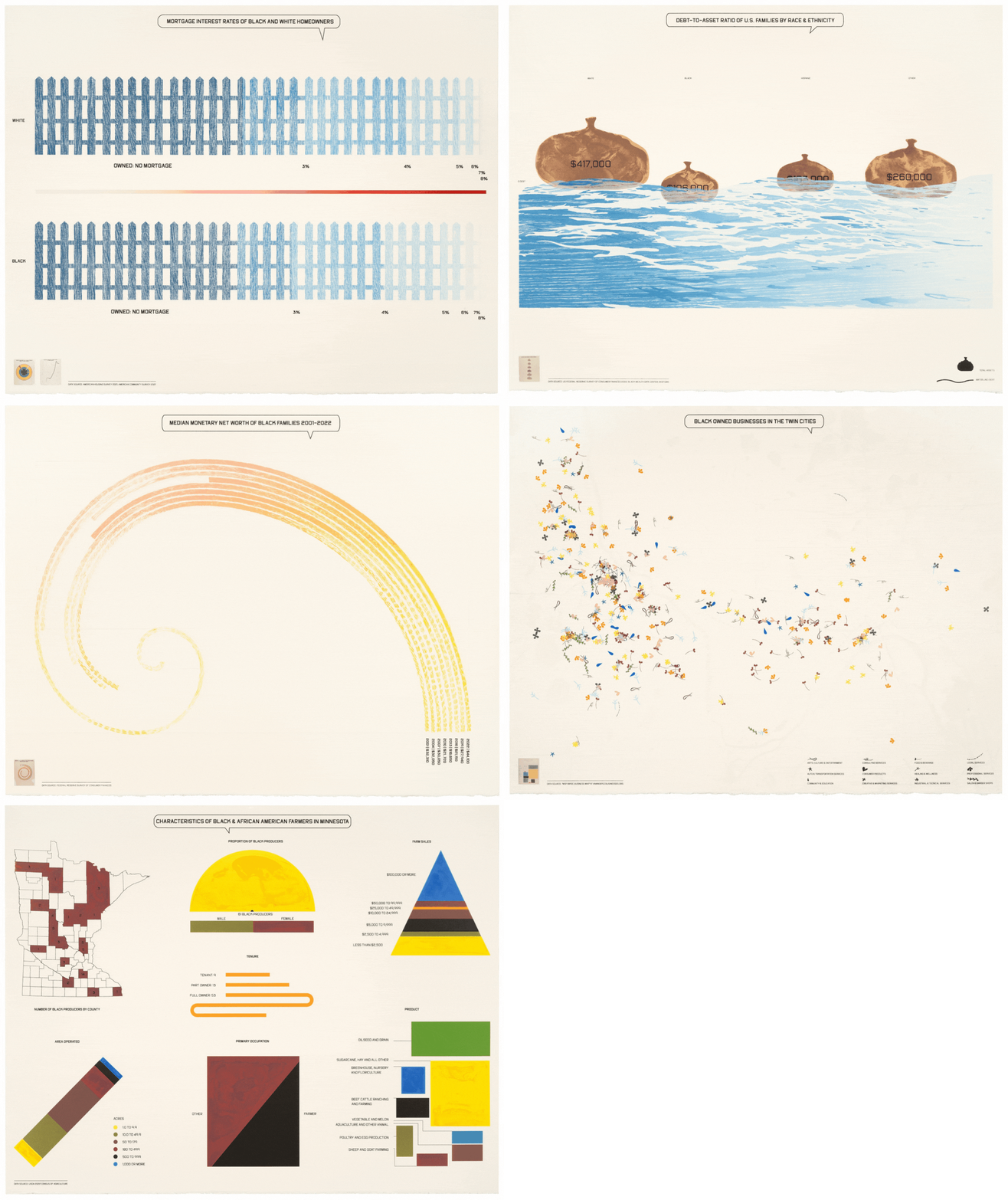
In Printing Black America, artist William Villalongo and urbanist Shraddha Ramani update and reimagine Du Bois's infographics. Printing Black America: Du Bois's Data Portraits in the 21st Century is a fine art print portfolio based on the project of Du Bois and his team for the contemporary moment. Villalongo and Ramani create new images or "data portraits" using a range of printmaking techniques, current data and living projects by Black scholars, social scientists and activists. To achieve this, Villalongo and Ramani worked in collaboration with printmaking studios in various regions of the United States and their communities. This project uses the original data portraits created for the American Negro Exhibit as a springboard for the critical possibilities found at the intersection of art and social science to render portraits of Black life in the 21st century.

Printing Black America is organized as six thematic portfolios published in editions of 20. Each portfolio holds 5 images. The complete project collection includes all 6 thematic portfolios for a total of 30 images.

Printmaking partners on the project are USF Graphicstudio, Tampa, FL; Powerhouse Arts, Brooklyn, NY; Island Press, Washington University, St. Louis, MO; Highpoint Editions, Minneapolis, MN; Paulson Fontaine Press, Berkeley, CA; and Mullowney Printing Company, Portland, OR.


EDITION INFORMATION

The Complete Printing Black America Collection

William Villalongo and Shraddha Ramani

Printing Black America: Du Bois's Data Portraits in the 21st Century, 2026

30 prints in six foil-stamped fabric-covered portfolios plus a screenprinted table of contents, foreword by Nell Irvin Painter, acknowledgements page, poem by Langston Hughes, and title pages for each portfolio.

Edition of 20

Published by USF Graphicstudio, Powerhouse Arts, Island Press, Highpoint Editions, Paulson Fontaine Press, and Mullowney Printing Company

$70,000

Impressions available: 10/20, 11/20, 12/20

Portfolio Four: Ownership

William Villalongo and Shraddha Ramani

Printing Black America: Du Bois's Data Portraits in the 21st Century, 2026

One foil-stamped fabric-covered portfolio containing five prints plus a screenprinted foreword by Nell Irvin Painter, acknowledgements page, poem by Langston Hughes, and title page.

Edition of 20

Published by Highpoint Editions

$12,500

Impressions available: 19/20, 20/20


Shraddha Ramani is an urbanist and researcher based in Brooklyn, NY. She uses data visualization and mapmaking as tools to make cities more resilient and equitable. Her work is centered around democratizing data to better equip communities to make informed decisions about their futures. She worked in multiple capacities in the Geographic Information Systems (GIS) department at New York City Emergency Management, finishing as the Director of the GIS Data Center. In this role she directed a team to make data-driven decisions for emergency planning, response, recovery, and mitigation. In earlier roles she developed online applications to help the public visualize and understand natural hazard risks in their communities. Previously, she worked on the development of the Future City Lab exhibition at the Museum of the City of New York. Shraddha Ramani is from Bangalore, India and her work is heavily informed by her own immigrant experience. She has participated in planning projects in India and Brazil and was a Peace Corps volunteer in Ecuador. She has a Master's degree in Urban Planning from Columbia University, and a BA in Environmental Studies from Oberlin College.

William Villalongo was born in 1975. He lives and works in Brooklyn, NY. He received his BFA from The Cooper Union School of Art, MFA from Tyler School of Art at Temple University and attended Skowhegan School of Painting & Sculpture. His figurative paintings, works on paper and sculpture are concerned with representing the Black subject against notions of race and exploring metaphors of mythology and liberation. His curatorial projects – American Beauty at Susan Inglett Gallery in 2013 and Black Pulp! touring nationally between 2016-2018 – explore the intersections of politics, history and art. Villalongo is the recipient of the prestigious Louis Comfort Tiffany Award and the Joan Mitchell Foundation Painters & Sculptor's Grant, and was the 2022 Jules Guerin & Harold M. English Rome Prize Fellow in Visual Art. His work is included in several notable collections including the Studio Museum in Harlem, The Whitney Museum of American Art and Princeton University Art Museum and El Museo del Barrio. His work has been reviewed in Art in America, The New Yorker and the New York Times. The artist is represented by Susan Inglett Gallery, New York and is an Associate Professor at The Cooper Union School of Art.

Adebummi Gbadebo Named as Participating Artist in 61st Venice-biennale

Adebunmi Gbadebo among the participating artists announced for “In Minor Keys,” the main exhibition at this year’s 61st Venice Biennale, curated by the team of the late curator Koyo Kouoh.

The Venice Biennale has revealed the 105 artists and collectives and six artist-led organizations participating in the main exhibition its sixty-first iteration, to take place May 9–November 22. The show was conceived by Cameroon-born curator Koyo Kouoh, who died last summer as she was putting it together. The exhibition is being realized by a team she assembled, comprising curators Gabe Beckhurst Feijoo, Marie Helene Pereira, and Rasha Salti; critic Siddartha Mitter, who is serving as the Biennale catalogue’s editor; and research assistant Rory Tsapayi.

“The sixty-first international art exhibition of La Biennale di Venezia intends neither a litany of commentary on world events, nor an inattention or escape from compounding and continuous intersecting crises,” said Tsapayi, speaking at a press conference at which the participants were revealed. “Rather, it proposes a radical reconnection with art’s natural habitat and role in society, that is the emotional, the visual, the sensory, the effective, the subjective.”

Spread across the Giardini’s Central Pavilion, the Arsenale, and other sites, “In Minor Keys” will additionally encompass outdoor installations, performances, and a procession of poets in the Giardini.

Learn more about the announcement on Artnet here and Artforum here!

Brooklyn Public Library Showcases Printing Black America

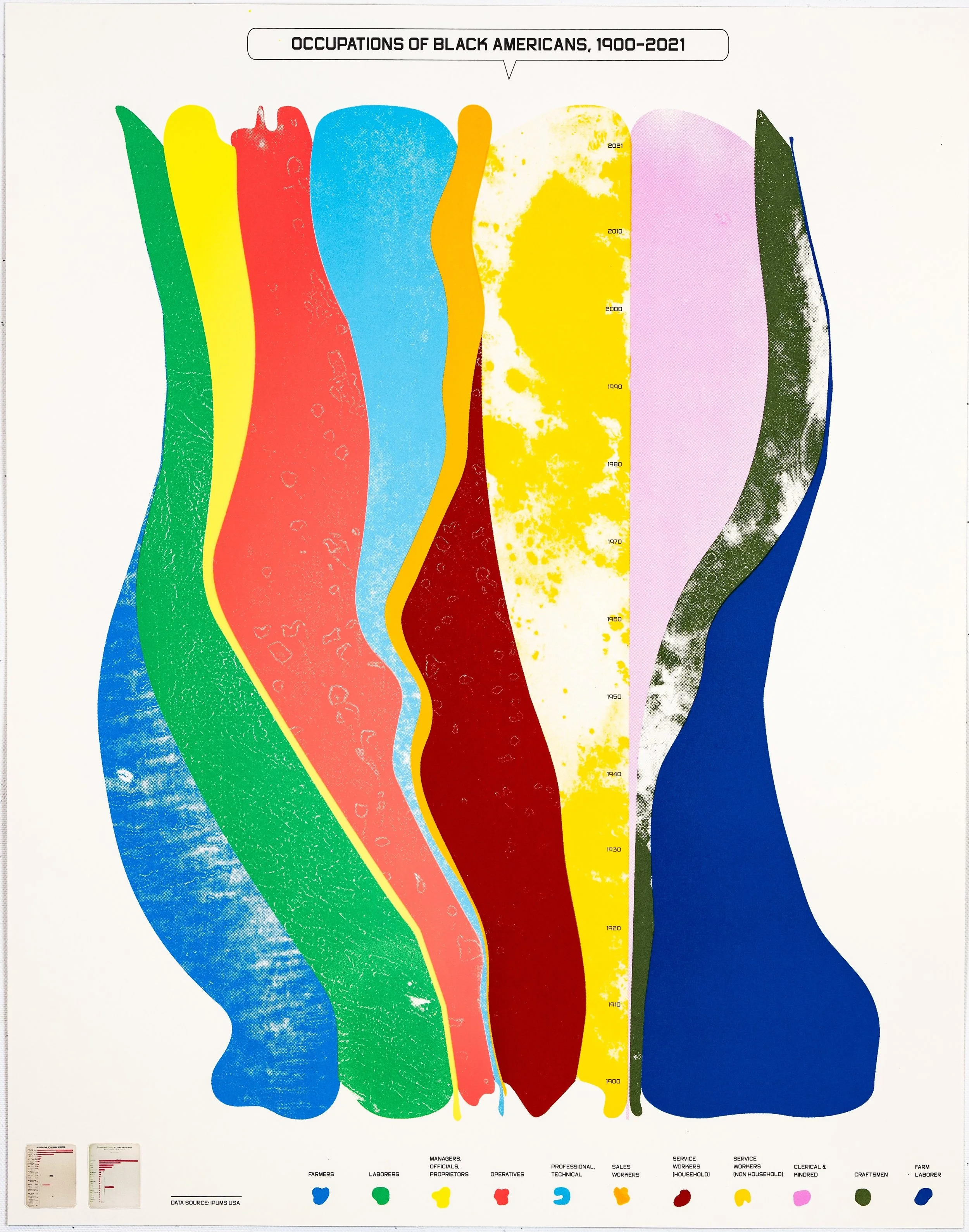
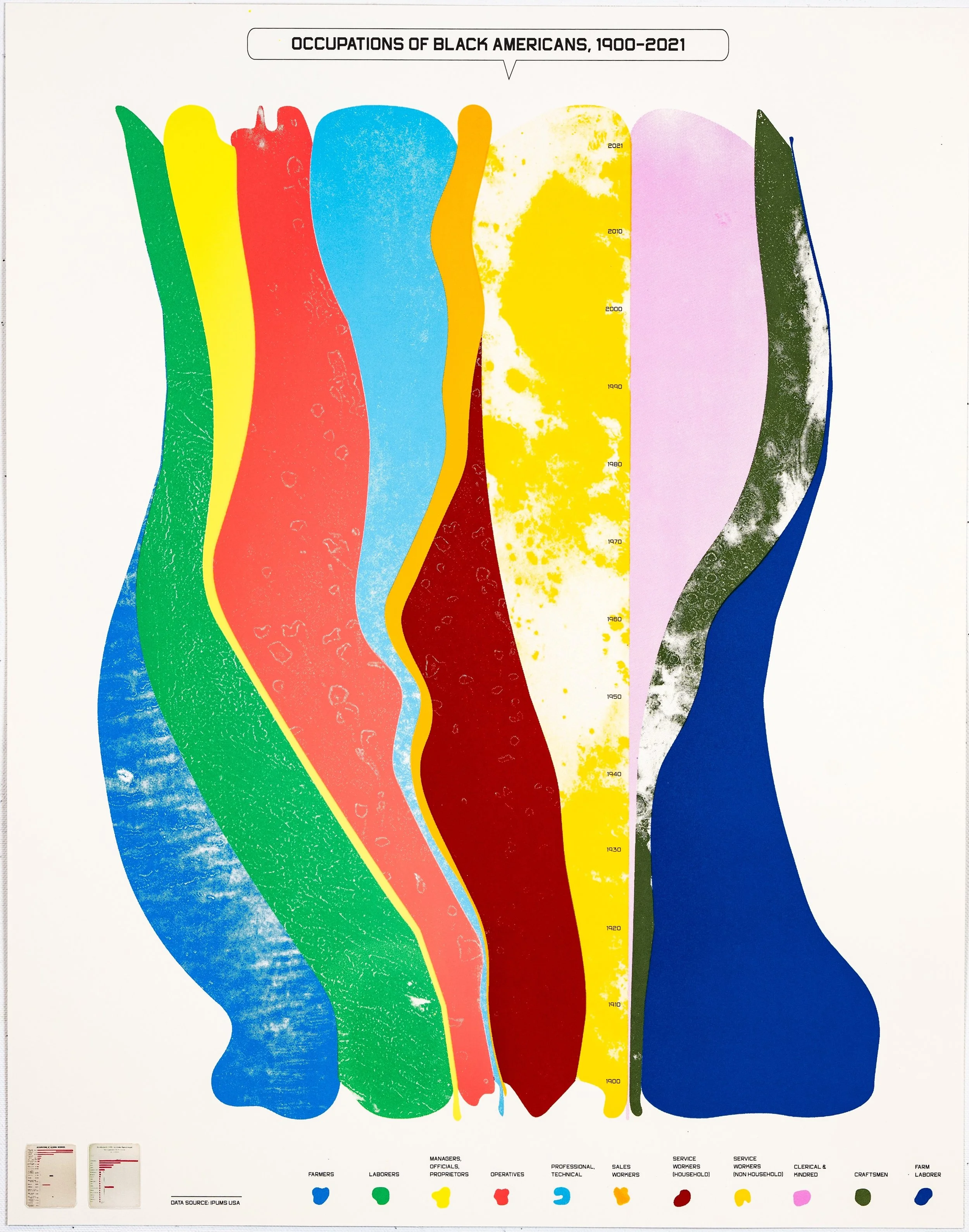
William Villalongo and Shraddha Ramani, Occupations of Black Americans 1900 - 2021, 2025. Screenprint, chine collé. 28 x 22 in. Printed and published by Island Press, Washington University, St. Louis, MO. © Villalongo Studio LLC. Courtesy William Villalongo, Shraddha Ramani and Island Press, St Louis, MO.

William Villalongo and Shraddha Ramani’s monumental project created with 6 print shops around the country is now on view at the Brooklyn Public Library! The exhibition is on view through May 31, 2026.

Printing Black America is a responsive, transhistorical project that portrays aspects of Black life in the 21st Century. Urbanist Shraddha Ramani and visual artist William Villalongo reinterpret and respond to the data visualizations innovated by luminary activist and educator W.E.B. Du Bois—what he called “data portraits”—that debuted among a collection of materials at the 1900 Paris World’s Fair in “The American Negro Exhibition” (ANE). One hundred and twenty-five years later, Ramani and Villalongo expand on Du Bois’s methodologies of data collection and visual storytelling, centering “living projects” in local communities across the country to consider new possibilities for Black life today and to probe at the meaning of these historical works when held up against our contemporary moment.

This exhibition shows historical source material alongside the contemporary works of Printing Black America. An installation in the Languages and Literature wing delves into The American Negro Exhibition (sometimes referred to as the Exhibit of American Negroes) in the 1900 Paris World’s Fair, offering important context. It was co-organized by a collective of leading African American scholars, activists, and human rights advocates: Thomas J. Calloway (leading the project; a lawyer and principal fundraiser for the exhibit), Daniel A.P. Murray (the Assistant Librarian of Congress), and W.E.B. Du Bois. This grand prize-winning exhibition offered a powerful encapsulation of Black progress despite structural oppression and a counter-narrative against the mainstream ideology of racism, celebrating Black life and achievement in America’s post-Reconstruction era.

Importantly, Printing Black America employs the same means of mechanical reproduction in image-making—printmaking—used in Du Bois’s era, using various fine art printing techniques to create vivid imagery. It was editioned across a national network of printshops, from Graphicstudio in Tampa to Highpoint Center in Minneapolis, Island Press in St. Louis to Mullowney Printing in Portland, Paulson-Fontaine in San Francisco to Powerhouse Arts in Brooklyn.

The celebration of Black people, culture, and life was central to Du Bois’s work. It is central, too, to Printing Black America. Like Du Bois’s incisive inquiries, his demographic methodologies, and his fight for civil rights, Printing Black America offers far more than a reinscription of the issue Du Bois named in his 1903 masterpiece, The Souls of Black Folk, as the defining problem of the 20th century: the problem of the color line. Like its source, Printing Black America gives visibility to the shapes of collective, creative resistance, and to Black joy, dignity and continued self-determination.

Learn more about the exhibition here.

Learn more about the full collection of Printing Black America here


Skycatcher by Nicola López

Skycatcher

Nicola López, 2026

intaglio with chine collé

Edition of 8

Image: 17 ¾ x 17 ¾ inches

Paper: 25 ½ x 25 inches

$1,900 unframed

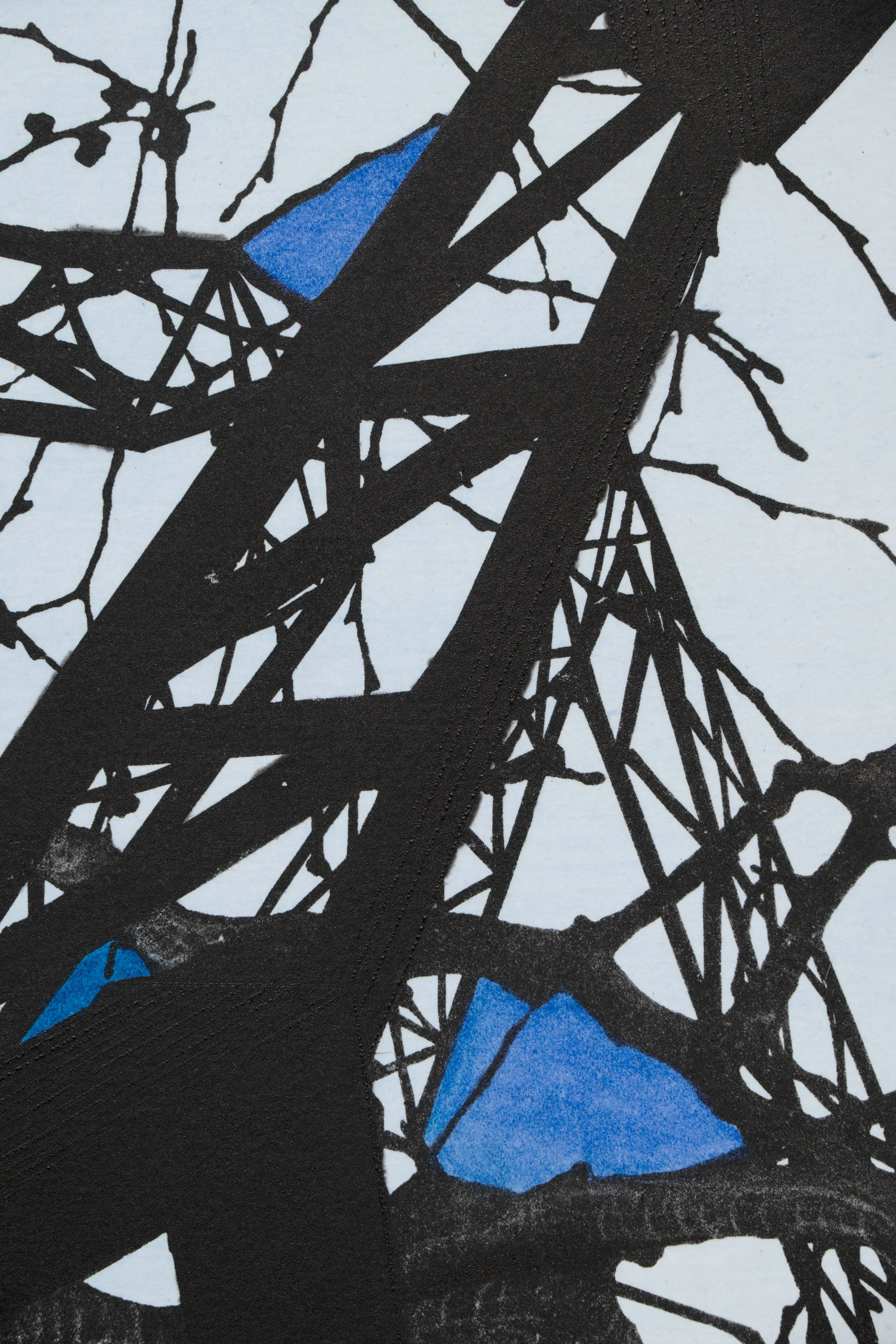
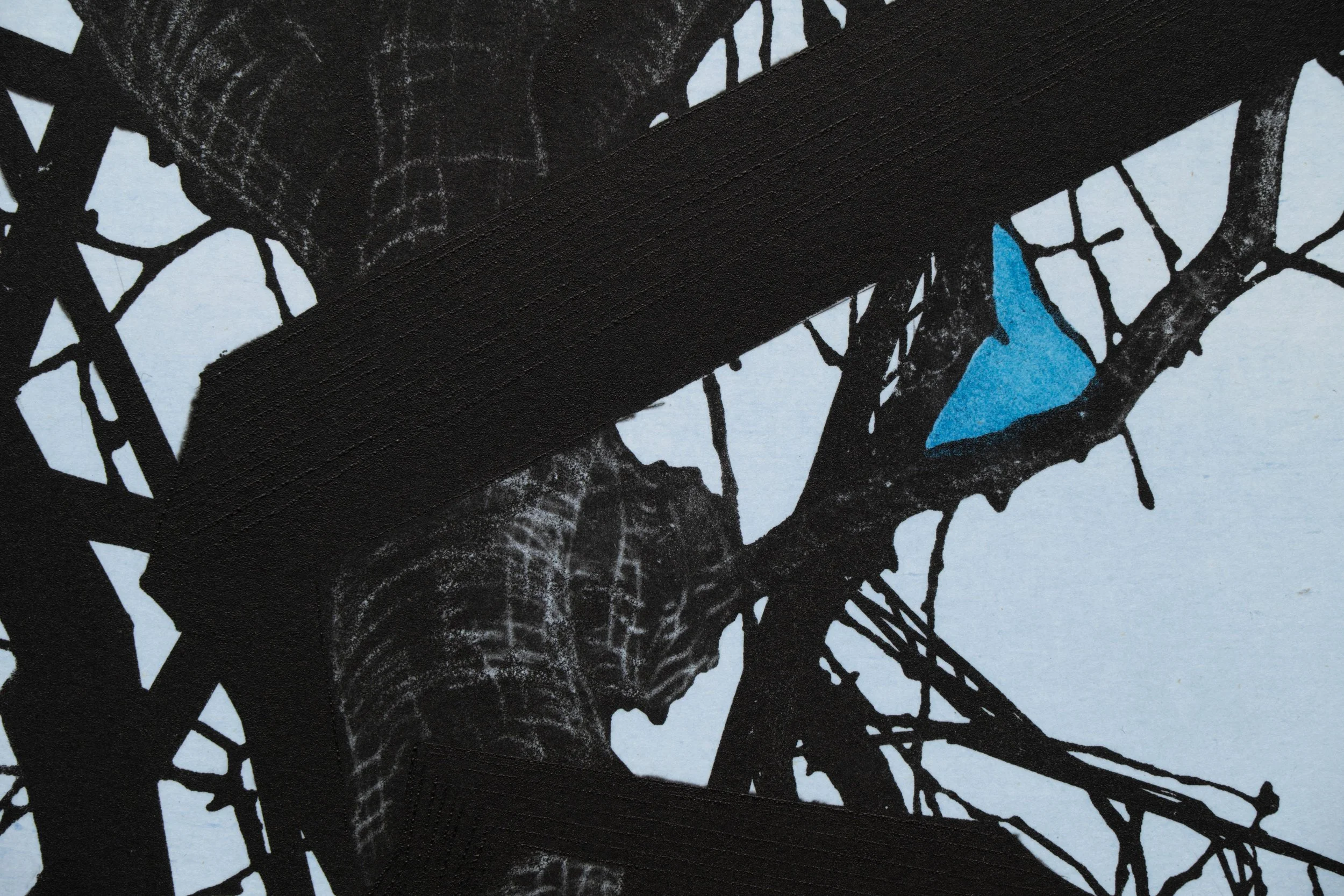
Highpoint Editions is pleased to release Skycatcher, a new print by New Mexico-based artist Nicola López. In this ambitious intaglio print, the hybrid landscape depicted reflects the impact of human intervention alongside nature’s tenacious ability to adapt.


Nicola López’s work exists at the intersection of human-built environments and “Nature,” exploring how these two realms collide, echo, and intertwine. Her landscapes reconfigure, distort, and merge familiar worlds—urban, technological, botanical, and geological—to create spaces that are at once mysterious, disorienting, beautiful, and unsettling.


In Skycatcher, López reflects on her place within a complex and overwhelming, yet deeply cherished world, examining the nature and consequences of human “progress,” and imagining what resilience might look like amid profound change. The print points to the fragility of the world we inhabit and have helped build, while also highlighting its mystery and tenacious beauty.

The composition of the piece emulates a perspective one might encounter when looking upward through a tree’s canopy, where intertwining branches merge with skeletal architectural forms. The relationship between tree and structure remains intentionally ambiguous: it is unclear whether one grew around the other, whether the form emerged as a hybrid, or whether each began independently before becoming inextricably entangled.

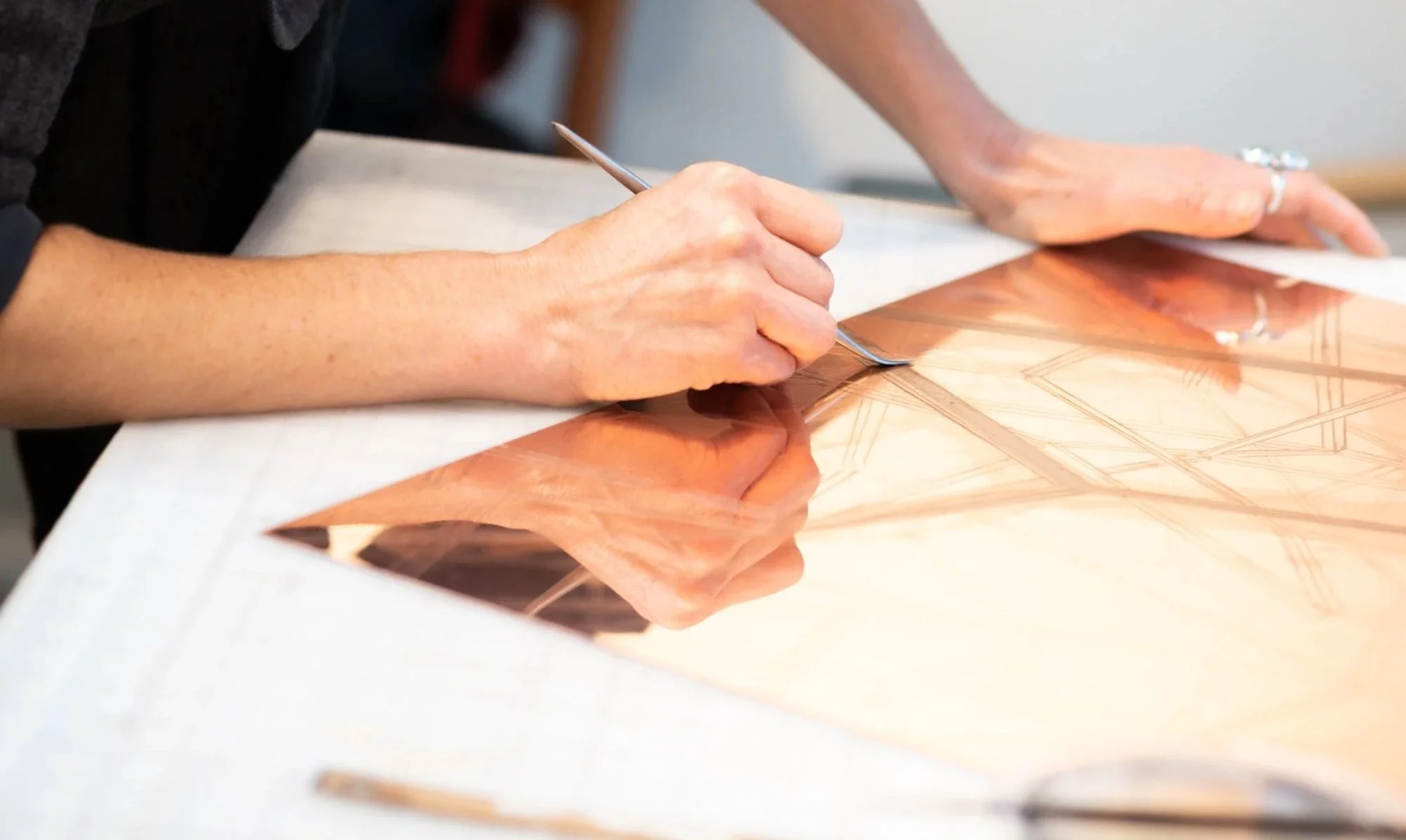
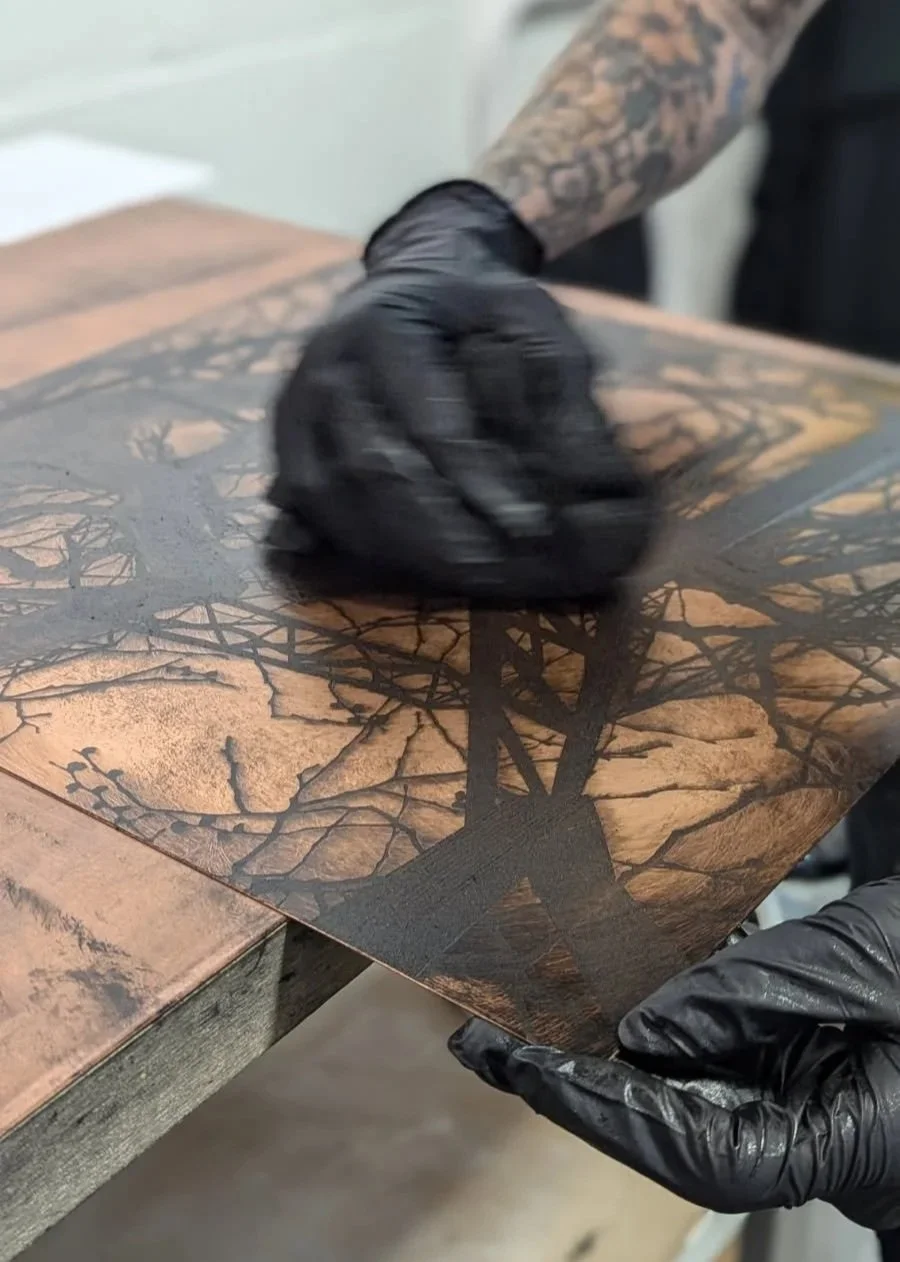
The conceptual tension in López’s work mirrors her approach to process. From the outset of her collaboration with Highpoint Editions, López was intent on immersing herself fully in intaglio techniques—drawing on extensive prior experience while pushing the medium through rigorous technical exploration. She experimented broadly, combining methods and utilizing different processes to achieve deep, expressive marks alongside curving, natural figures. The image’s dark, industrial framework was created using aquatint to produce a dense, velvety black. Engraved lines were added to raise the paper’s surface, deepening the tonal presence and enhancing the texture, and areas within the tree branches were selectively burnished to introduce organic nuance.

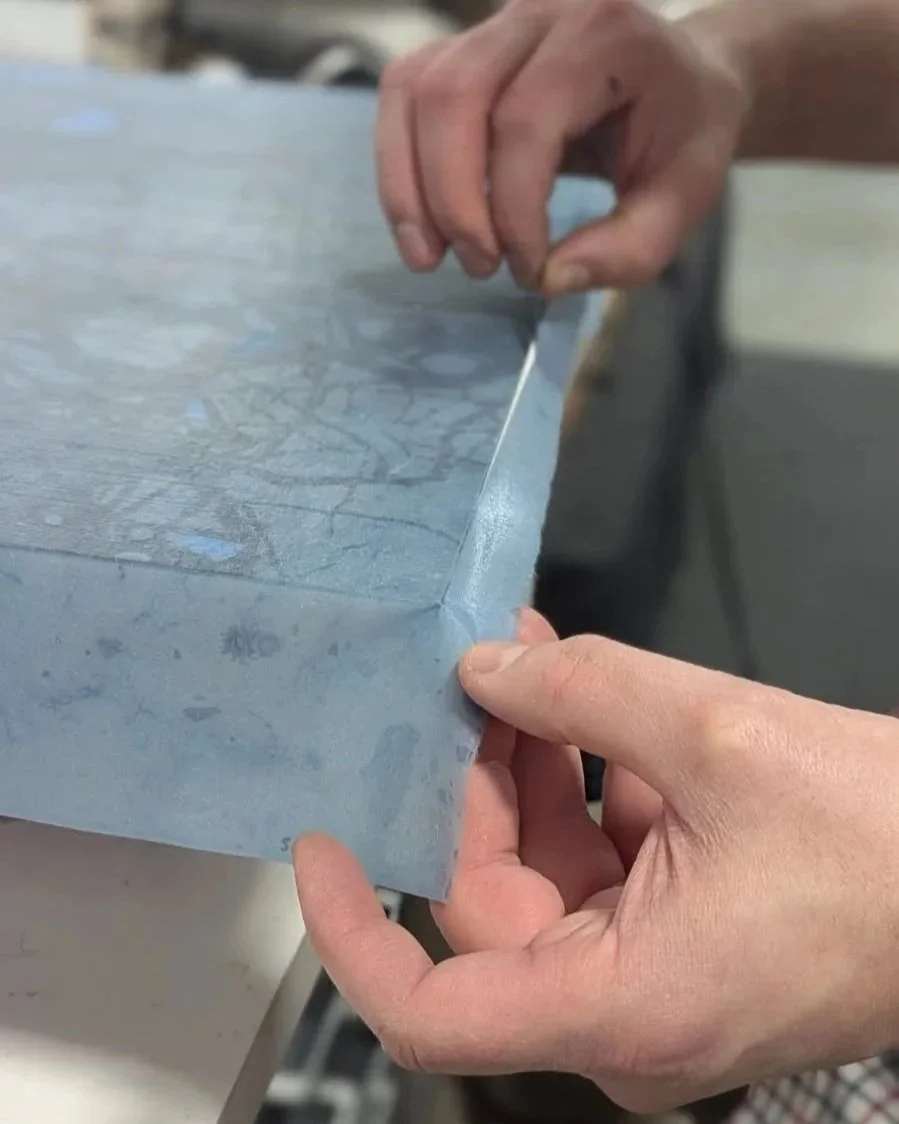
The black silhouette divides the sky into discrete shapes, forming a net in which fragments of sky are framed, caught, or cradled. The sky feels alive—pulsing with varied, intense shades of blue—yet also appears as if it could be shattered, its shards suspended midfall. To achieve these lozenges of color, López used watercolor on an early proof to help decide which tones of blue to accentuate. After initial attempts using lithography and pochoir proved challenging, the final solution emerged in intaglio and five separate blue ink colors. The blue of the sky is expansive: the image’s foundation lies in a collé sheet adhered with tinted wheat paste, producing a subtle, atmospheric hue that could not be achieved through dye or pigment alone.

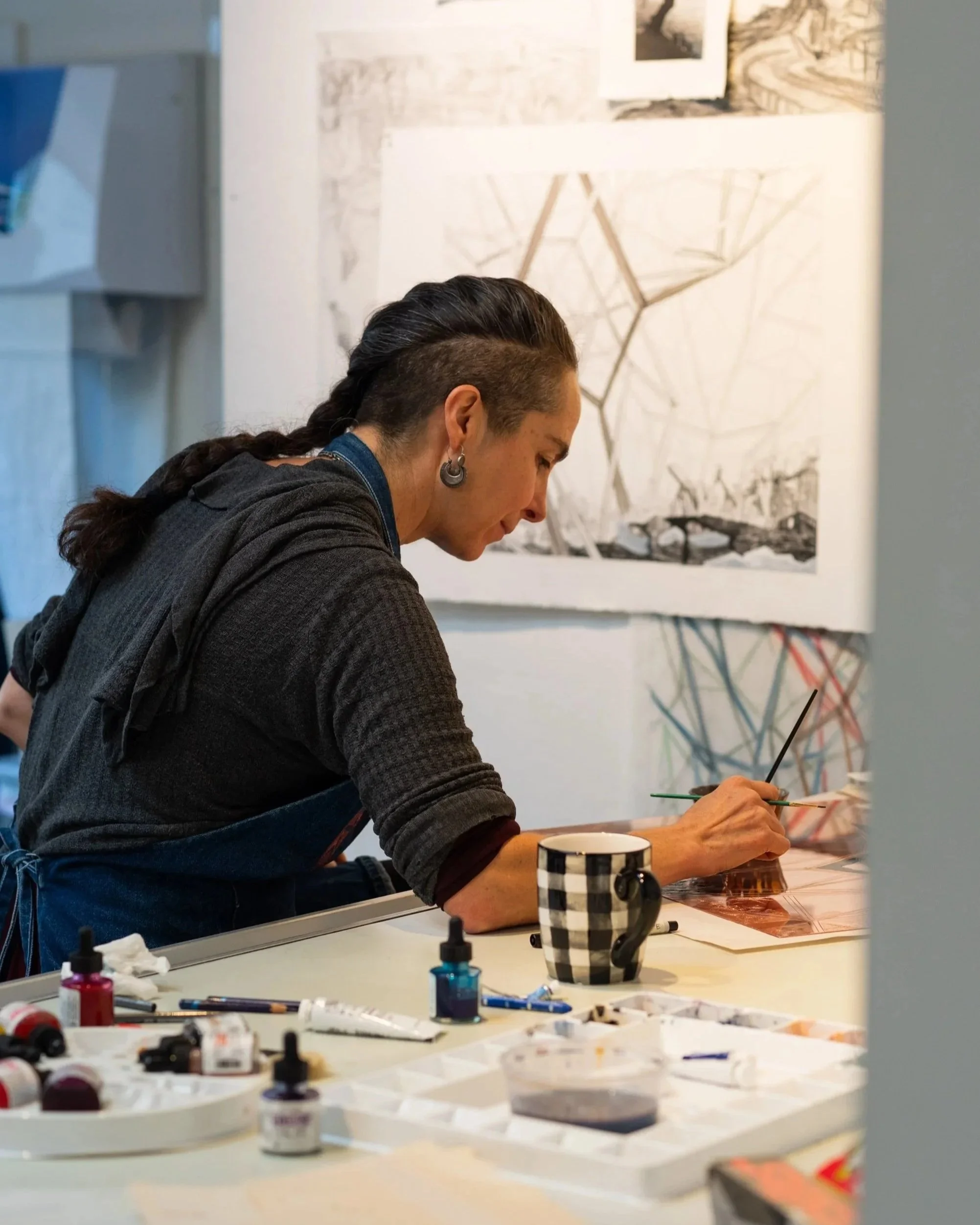
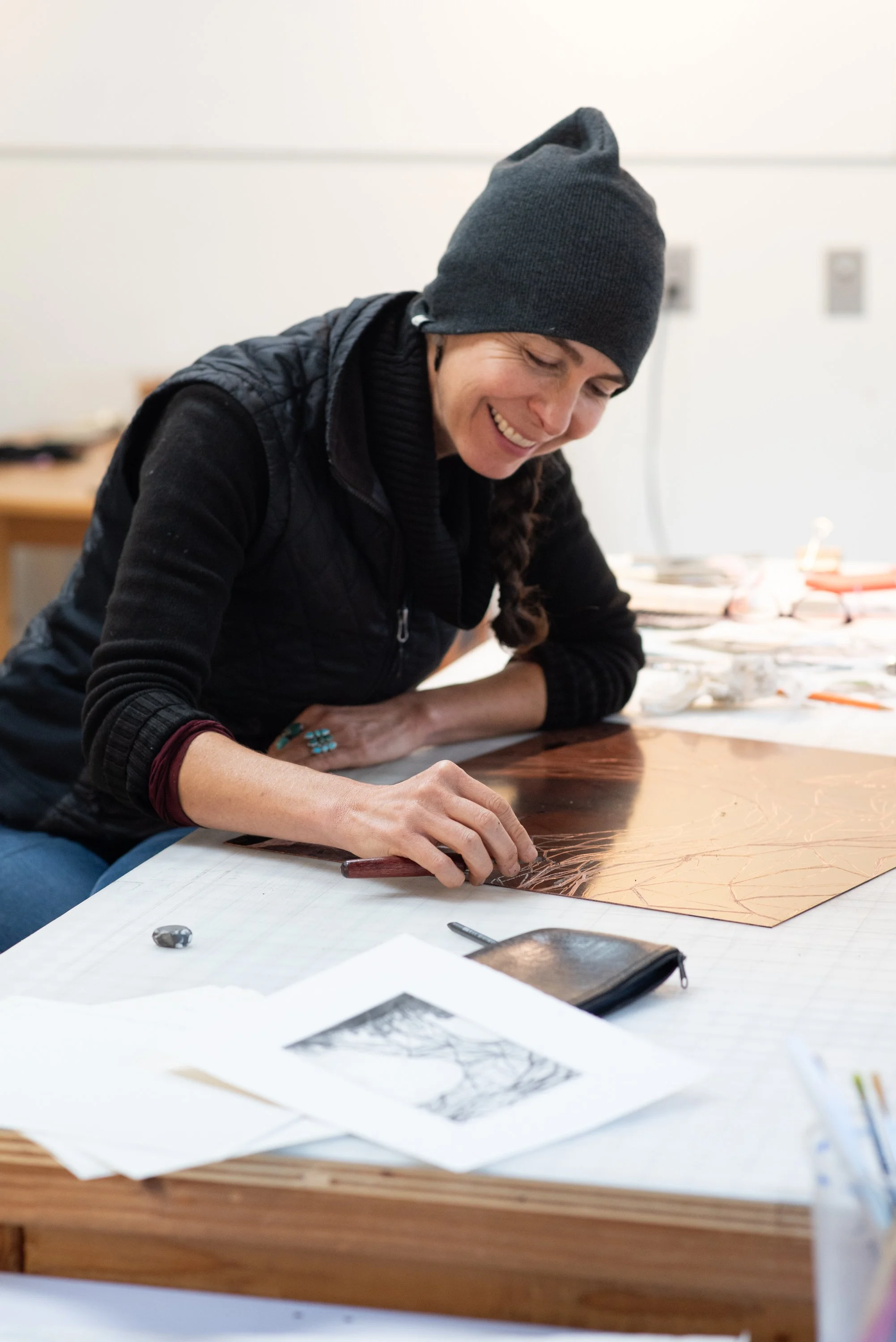
López working on a plate in the Highpoint Editions Studio

An early proof using a dyed chine collé sheet being cut to the size of the plate. This process created too dark and uneven of a tone in the sky.

López preparing a plate in the Highpoint Editions Studio

Every stage of Skycatcher’s development demanded meticulous attention, from the exacting marks made by López on the plate, to the complex inking and wiping process. The print’s substrate—Revere Polar White Suede— is now irreplaceable, as the Magnani mill was destroyed in an earthquake in 2016. The paper plays a crucial role in the print’s success, holding the engraved marks with exceptional clarity and depth.

Wiping of the copper plate after inking

Through both concept and process, the print embodies López’s ongoing exploration of the power of confrontation between nature and human-made systems: revealing beauty, vulnerability, and endurance in equal measure.


Nicola López examines and reconfigures contemporary landscapes through drawing, printmaking, site-specific installation, sculpture and video. Her work points to connections and rifts between our human-constructed world and the systems and cycles of nature. She engages architecture and urban structure as ever-accumulating evidence of human aspirations and failures, often contrasting and intertwining them with geological and organic formations. Her work draws on anthropology, architecture, urban planning and historical and fictional explorations of utopia/dystopia. It leans heavily into material process, intentionally bringing joy, improvisation, and care into the work as it reflects on human patterns of extraction and construction.

López has participated in several residencies and received grants and fellowships including a NYFA Fellowship in Drawing/Printmaking/Book Arts, a grant from the Joan Mitchell Foundation, a Fellowship at the American Academy in Rome, and a 2024 Guggenheim Fellowship. Her work is held in prominent institutional collections and has been exhibited throughout the United States and internationally, including at the Metropolitan Museum of Art, MoMA and the Guggenheim Museum in NY, the Los Angeles County Museum of Art, the Museo Rufino Tamayo in Mexico City, the Denver Art Museum, Nevada Museum of Art, the Albuquerque Museum, and the Inside-Out Museum in Beijing.


For availability and to purchase Skycatcher, email our Gallery Director Alex Blaisdell alex@highpointprintmaking.org

Villalongo and Highpoint Interviewed on MPR

Five prints from Highpoint Center for Printmaking in Minneapolis are a part of the "Data Consciousness: Reframing Blackness in Contemporary Print" exhibit in New York.

Courtesy of Argenis Apolinario

Nina Moini of Minnesota Public Radio recently interviewed artist William Villalongo and Highpoint Gallery Director Alex Blaisdell for Minnesota Now about Highpoint’s project with Villalongo and its inclusion in the exhibition Data Conciousness at the Print Center New York.

“Prints from a Minnesota studio are among those on display as a part of novel exhibit at the Print Center New York. The project, called “Data Consciousness: Reframing Blackness in Contemporary Print,” is inspired by the ground-breaking data visualization work of W.E.B. Du Bois presented at the 1900 Paris Exposition, which sought to present various aspects of Black life after Reconstruction.

This contemporary exhibit draws on updated data from official records, archives and oral testimonies to provide a contemporary look into the same themes explored by Du Bois.

MPR News host Nina Moini talked with one of the artists behind the show, William Villalongo, along with Alex Blaisdell, gallery director at Highpoint Center for Printmaking in Minneapolis.”

Read or listen to the interview here!

Raven Chacon in An Indigenous Present

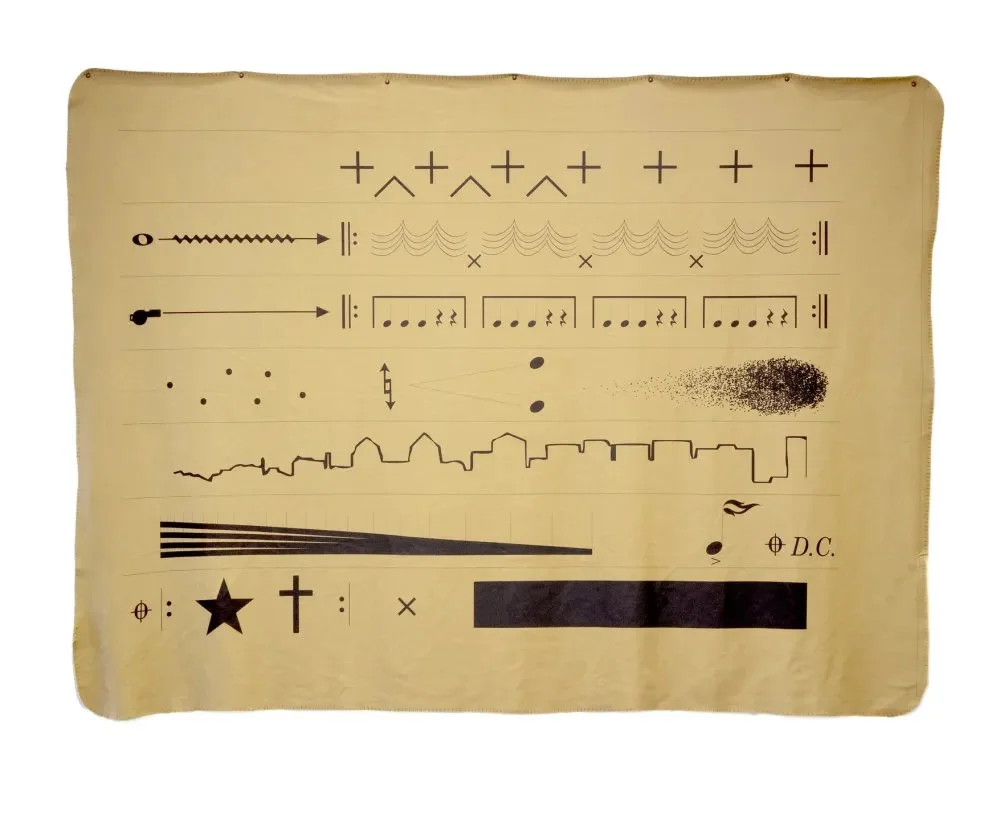
Highpoint Editions Artist, Raven Chacon is featured in a new exhibition titled An Indigenous Present. This exhibit spans 100 years of modern and contemporary Indigenous work and “includes new commissions and significant works by 15 artists who use strategies of abstraction to represent personal and collective narratives, describe specific and imagined places, and build upon cultural and aesthetic traditions. Co-organized by artist Jeffrey Gibson and independent curator Jenelle Porter, the exhibition offers an expansive consideration of Indigenous art practices that highlights a continuum of elders and emerging makers, and premieres newly commissioned site-specific works by Raven Chacon, Caroline Monnet, and Anna Tsouhlarakis.” This show is organized into five interconnected thematic sections that begin with a focus on the work of George Morrison and Mary Sully, two important forebears in the development of contemporary Indigenous art during the first half of the 20th century. The exhibition will begin it’s tour in Boston, and will then be shown at the Frist Art Museum before making it’s way to the Frye Art Museum in Seattle, come November, 2026.

Raven Chacon, American Ledger No. 1 (Army Blanket) (detail), 2020, score for performance, unique army blanket, digital print, 59 × 79".

An Indigenous Present debuts at the ICA (Oct 9, 2025 – Mar 8, 2026) before traveling to the Frist Art Museum in Nashville (June 26—September 27, 2026) and the Frye Art Museum in Seattle (November 7, 2026—February 14, 2027)

Andrea Carlson’s first museum survey at the Denver Art Museum

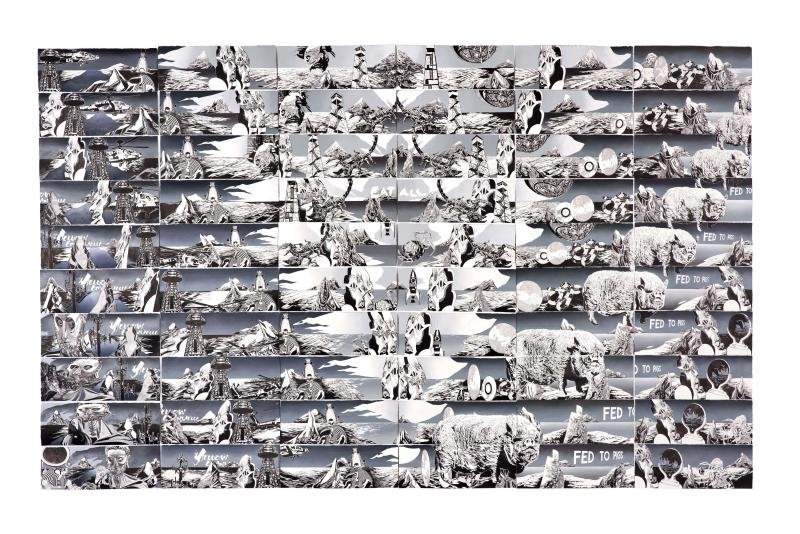
The Denver Art Museum is holding Highpoint Editions Artist Andrea Carlson’s first ever museum survey titled, A Constant Sky! “Carlson’s meticulous, multilayered art expands the narrative around how landscape and narrative function in a colonial space. By drawing objects from museum collections and placing them in her own landscapes, Carlson refuses the idea of a singular ownership and deconstructs what it means to be interpreted by others.

Andrea Carlson (descended from Grand Portage Ojibwe and European settlers, b. 1979), Ink Babel, 2014. Ink and oil on paper; 115 3/8 x 183 3/8 in. Collection Museum of Contemporary Art Chicago: Restricted gift of Emerge, 2021.12.a-hhh. © and courtesy of Andrea Carlson

The exhibition will be on view at the Denver Art Museum from October 5, 2025 until February 16, 2026

Learn more here.

Adebunmi Gbadebo Featured in Exhibition at The Ford Foundation Gallery

Credit: Sebastian Bach

Highpoint Editions Artist Adebunmi Gbadebo is featured in an exhibition titled Body Vessel Clay: Black Women, Ceramics & Contemporary Art at The Ford Foundation Gallery in New York!

The exhibition unites “three generations of groundbreaking Black women artists whose work with clay explores the medium’s multilayered cultural and political significance.” Featuring a selection of more than fifty works across a large variety of mediums including ceramics, film, photography, and archives, “the exhibition draws connections between the legacy of renowned Nigerian potter Ladi Dosei Kwali (1925-1984) and contemporary artistic practice. Through these lines of influence and innovation, the show traces how Black women artists have transformed the field of ceramics over the past seventy years—disrupting conventions, challenging hierarchies, and expanding the possibilities of clay as a medium.

On view September 10th through December 6th, 2025.

Learn more about the exhibition here!

Nicola Vassell Presents Solo Exhibition of Adebunmi Gbadebo

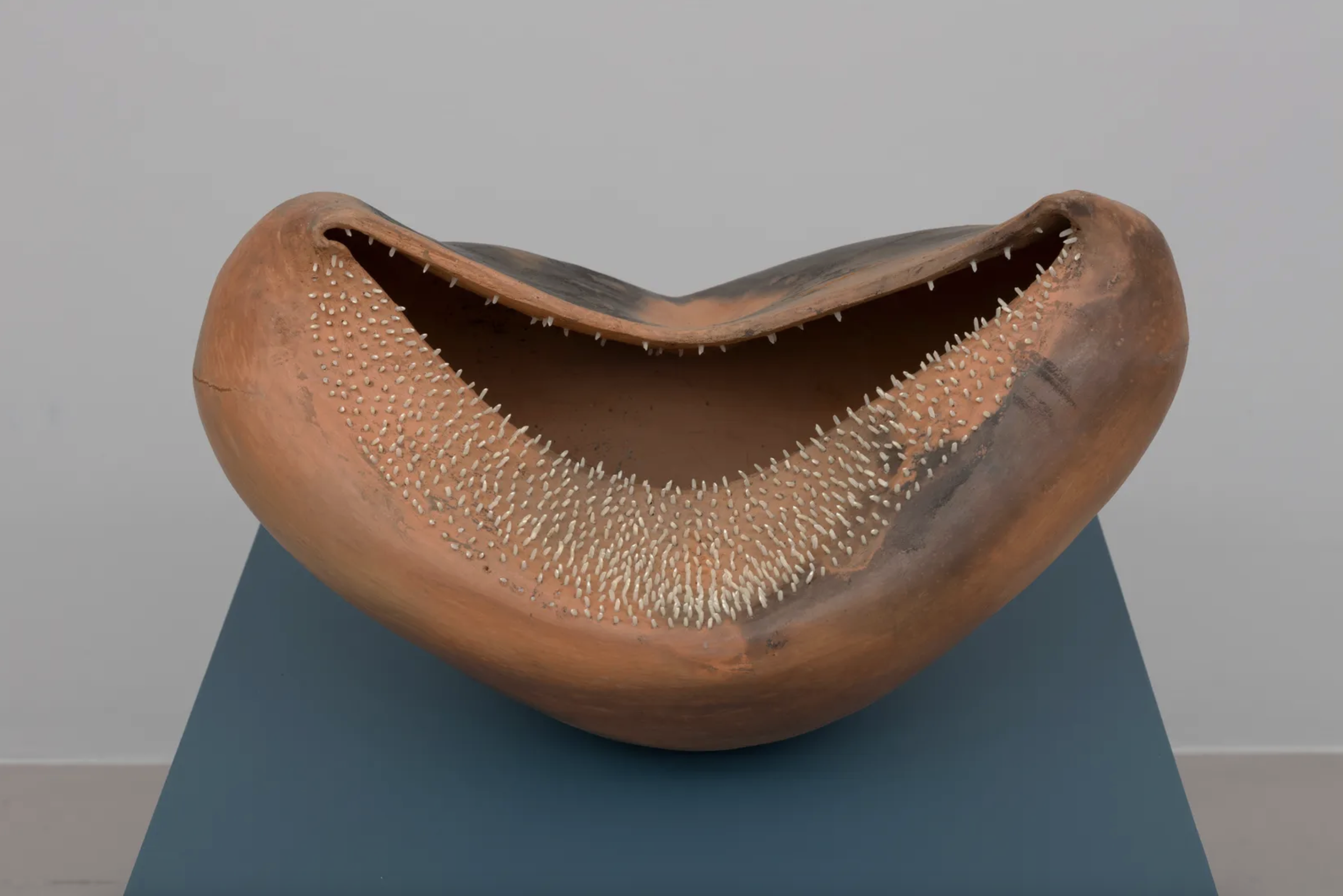
Adebunmi Gbadebo | Mary Weeks Bryant | 2025 | soil from True Blue Plantation (Fort Motte, South Carolina), Carolina Gold rice, pit-fired | 12 x 18 x 12 in

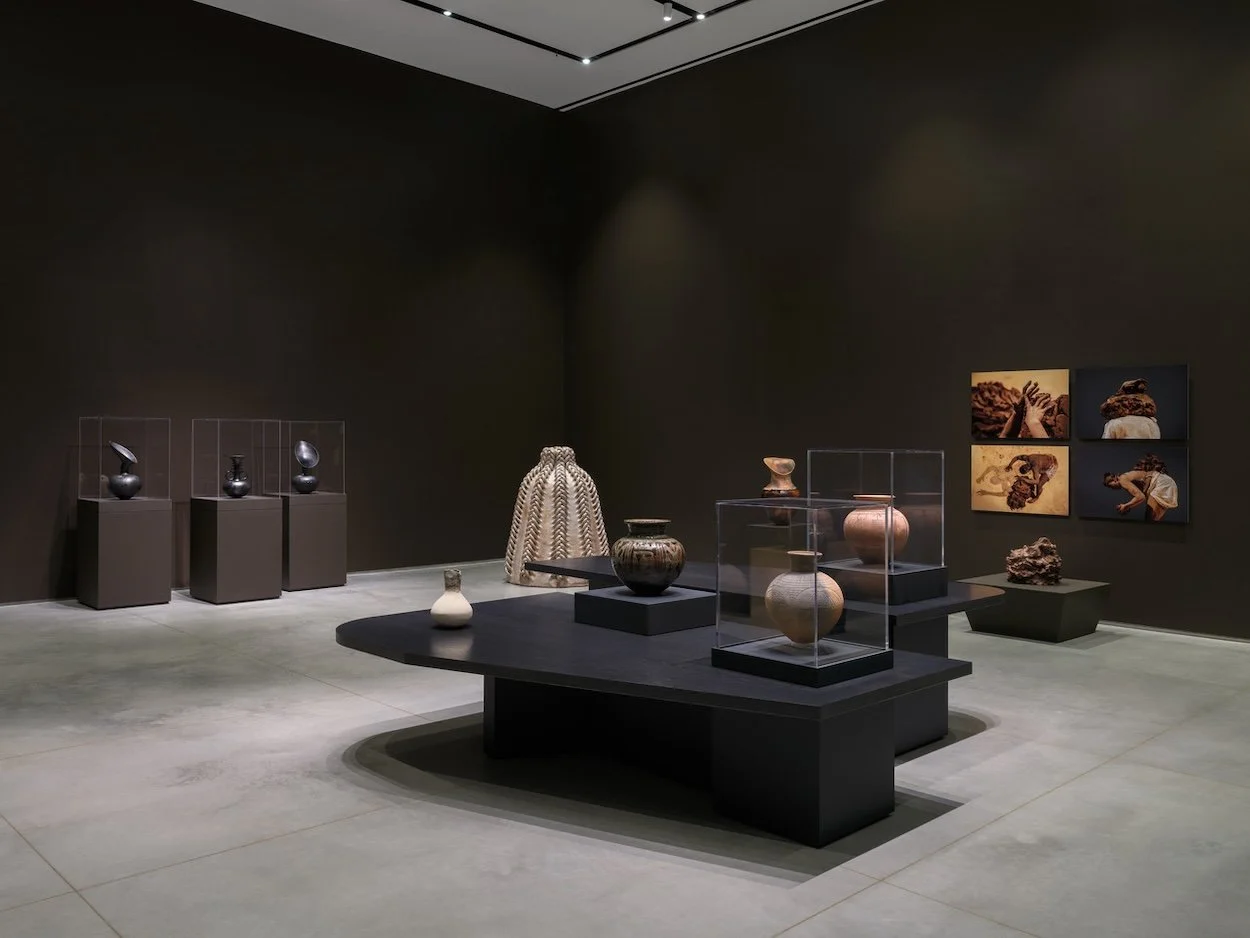
Highpoint Editions artist Adebunmi Gbadebo presents a new body of work in a solo exhibition titled Watch Out for the Ghosts at the Nicola Vassel Gallery in New York. “The title—a quote from Amiri Baraka’s poem The Why's and the Wise—echoes Gbadebo’s journey through loss, family history and reconnecting with the land they once inhabited. In bringing together works made in ceramic and paper along with a short film, this exhibition signals the evolution of the artist's conceptual practice and the deepening of her research into material and process.” - Nicola Vassel Gallery
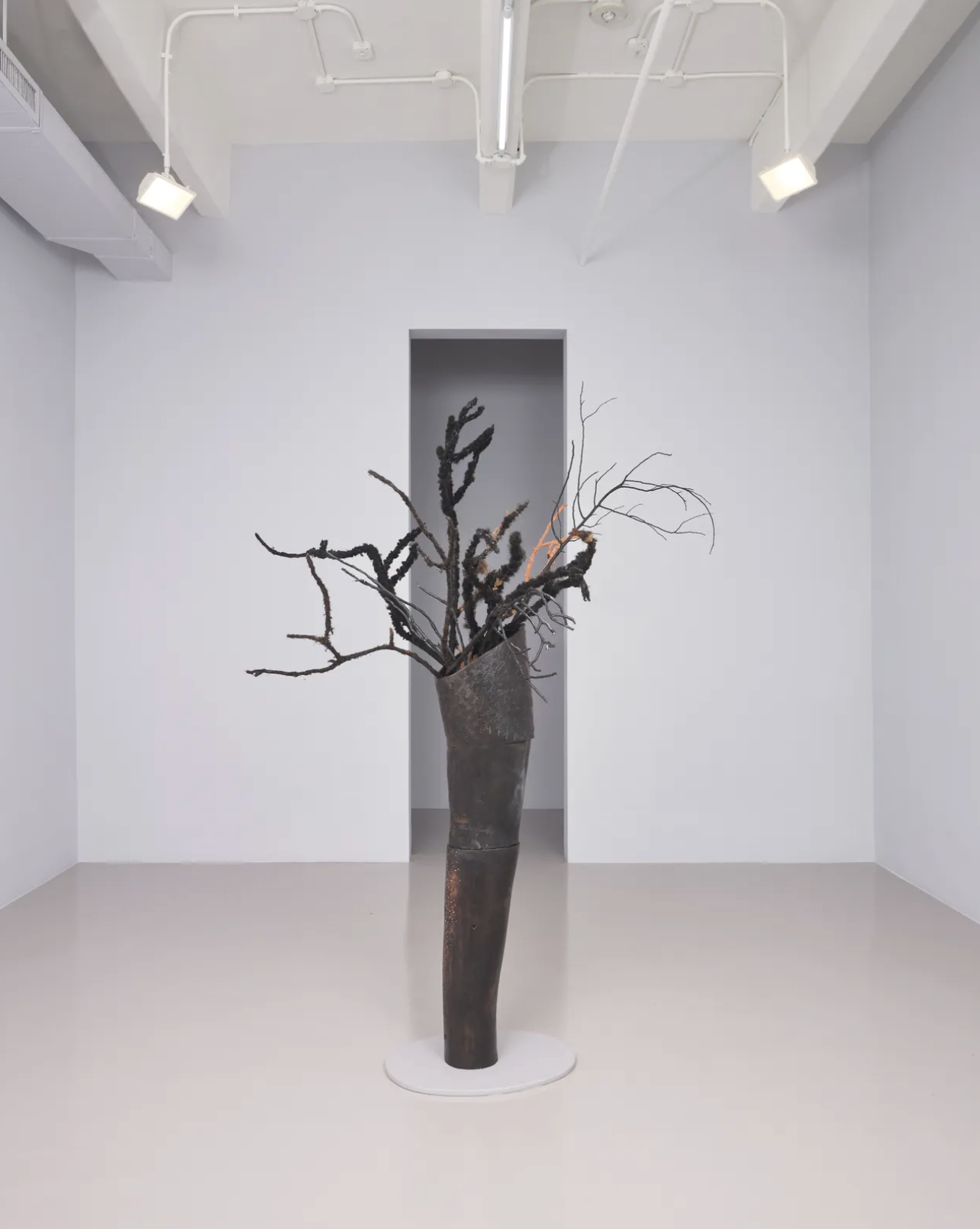
Adebunmi Gbadebo | Witness | 2025 | soil from True Blue Plantation (Fort Motte, South Carolina) human hair, cherry tree branches, shoe polish and Tung oil | trunk dimensions: 53 ½ x 13 in | overall dimensions: height 79 ½ in

“Upon learning of her ancestors' enslavement on True Blue plantation in Fort Motte, South Carolina, Gbadebo made the site a focal point of her work. For the past three years, she has hand dug soil from the cemetery that she then transforms into clay for her ceramic vessels. The works' unique sizes and anthropomorphic shapes instinctively develop as she hand builds each of them using a Nigerian and Cameroonian coiling technique. Beyond the soil which they are made of, Gbadebo’s vessels carry—inside them or on their surfaces—invocations of True Blue’s landscape, sometimes being filled with pine needles, Carolina gold rice or woven segments of donated hair, all while acting as bodies occupying space.”

The exhibition is on view from September 4th to October 18th, 2025.

Learn more about the exhibition here!

Printing in Black America Featured in Print Center New York Exhibition

Ahead of the official release of Printing Black America: Du Bois’s Data Portraits in the 21st Century by William Villalongo and Shraddha Ramani anticipated for Spring 2026, this monumental collaborative portfolio will debut in the exhibition Data Consciousness: Reframing Blackness in Contemporary Print at Print Center New York. The exhibition, curated by Tiffany E. Barber, will be on view in New York from September 18-December 13, 2025.
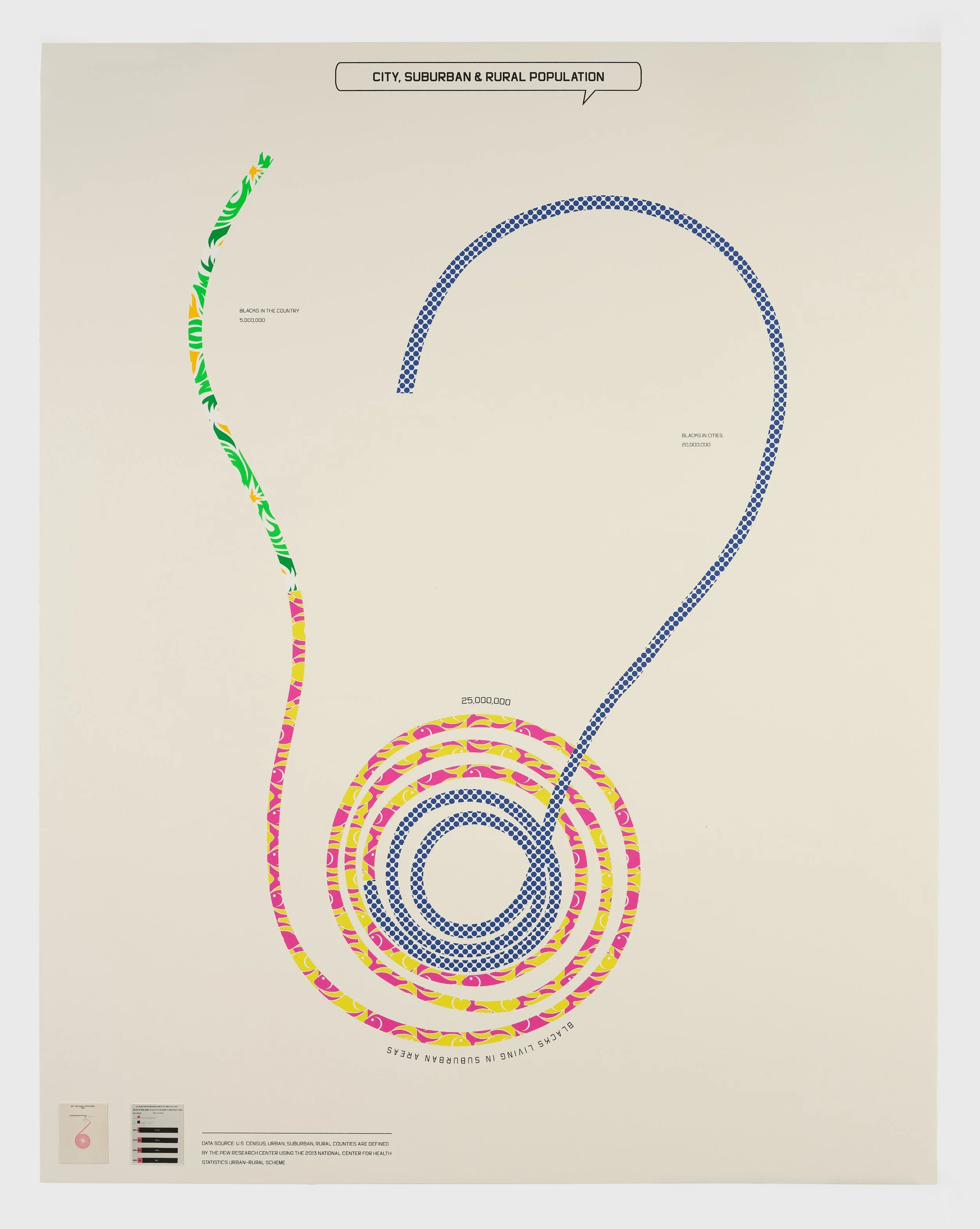
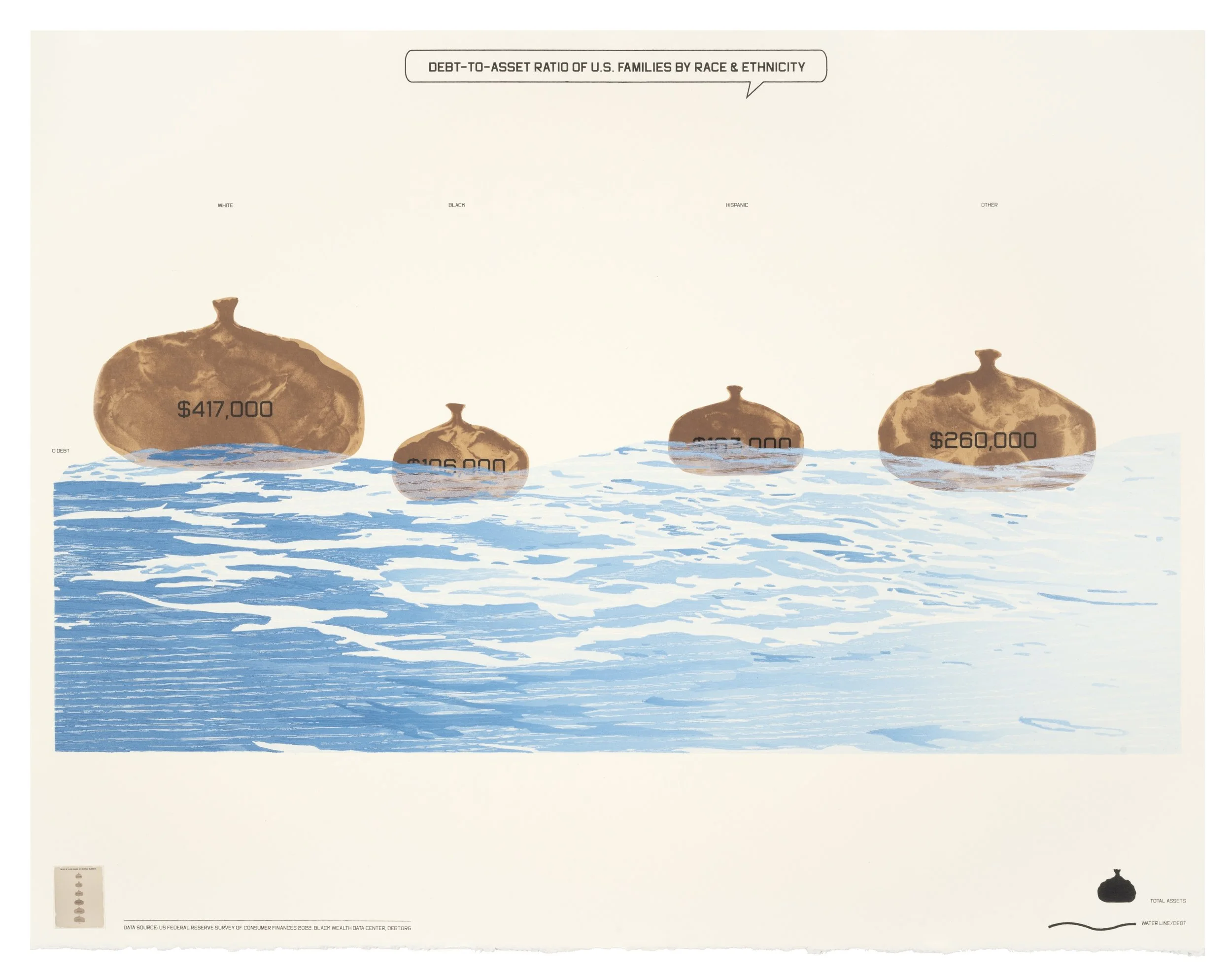
Sneak peek of the the prints published by Highpoint Editions.

Data Consciousness is conceptually and spatially anchored by this expansive, collaborative, and research-based print portfolio by artist William Villalongo and urbanist Shraddha Ramani. Their project, Printing Black America: Du Bois’s Data Portraits in the 21st Century, follows Du Bois’s ground-breaking approach to his iconic data visualization illustrations by using national data on Black life drawn from official records such as the 2020 U.S. Census as well as hyper-local oral testimonies and archives. The resulting portfolio of 30 images is produced in collaboration with six print publishers across the U.S.: Powerhouse Arts, Brooklyn; Graphicstudio, University of South Florida, Tampa; Island Press, Washington University, St. Louis; Highpoint Editions, Minneapolis; Paulson Fontaine Press, Berkeley; and Mullowney Printing Company, Portland, OR.

A select number of full portfolios of 30 prints and portfolios of prints published solely by Highpoint will be available in January. If you’d like to receive more information or reserve an edition, email our Gallery Director Alex Blaisdell at alex@highpointpritmaking.org.

Data Consciousness: Reframing Blackness in Contemporary Print brings together work by Black contemporary artists who explore expanded modes of printmaking to question the complex interplay between race, technology, and representation in our increasingly data-driven world. The exhibition features work by Tahir Hemphill, Julia Mallory, Silas Munro, Kameelah Janan Rasheed, and William Villalongo and Shraddha Ramani. It will run September 18—December 13, 2025 in the Center’s Jordan Schnitzer Gallery.

Data Consciousness is curated by Tiffany E. Barber, and its title references the concept of double consciousness articulated by the sociologist, historian, and activist W.E.B. Du Bois—the sensation and unreconciled striving of looking at and measuring oneself through the eyes of others. The exhibition also draws inspiration from Du Bois (1986–1963), who, at the 1900 Paris Exposition, presented a series of graphs, charts, maps, and photographs that visualized Black life after Reconstruction. Now considered important contributions to American design history and an early form of visual sociology and data science, Du Bois’s proto-modernist, hand-drawn infographics have had a profound impact in how we measure racial progress, and are of increasing relevance as the presence of data in daily life grows. The works on view in Data Consciousness—including prints, sculpture, installation, textile, and video—reframe Black contemporary art as a critical site for understanding how digital infrastructures amplify and constrain identity and autonomy.

Learn more about the exhibition here.


Events Surrounding the Exhibition

Opening Reception | Data Consciousness: Reframing Blackness in Contemporary Print

Thursday, September 18, 2025

6:00 PM 8:00 PM

Join us for the opening reception Data Consciousness: Reframing Blackness in Contemporary Print, an exhibition exploring how Black contemporary artists engage with expanded modes of printmaking to question the complex interplay between race, technology, and representation in our data-driven world. The exhibition features Tahir Hemphill, Julia Mallory, Silas Munro, Kameelah Janan Rasheed, and William Villalongo and Shraddha Ramani.

Data Consciousness Symposium

Saturday, September 20, 2025

2:00 PM 6:00 PM

The Cooper Union

On the occasion of the exhibition Data Consciousness: Reframing Blackness in Contemporary Print, this symposium gathers artists in the exhibition with multidisciplinary scholars to bridge past, present, and future thinking on the complex interplay of race, identity, data, and technology. Using the artworks and themes in the exhibition as a jumping off point, the symposium considers how Du Boisian legacies of art, design, literature, and sociology inflect contemporary cultural production, and explores the urgency of cultivating data consciousness in our present moment. The symposium is cohosted by Print Center New York and the Cooper Union School of Art.

Full program details will be announced on Print Center New York’s website in August.

IFPDA Print Month | Evening Viewing of Data Consciousness: Reframing Blackness in Contemporary Print

Thursday, October 9, 2025

6:00 PM 8:00 PM

Join us during IFPDA’s Print Month to celebrate the exhibition Data Consciousness: Reframing Blackness in Contemporary Print. The exhibition brings together work by Black contemporary artists who explore expanded modes of printmaking to question the complex interplay between race, technology, and representation in our increasingly data-driven world.

Remarks at 7pm will focus on the work that conceptually and spatially anchors the exhibition—an expansive, collaborative research-based print portfolio by William Villalongo and Shraddha Ramani called Printing Black America: Du Bois’s Data Portraits in the 21st Century.

Open to Print Center New York Members

Andrea Carlson Solo Exhibition at Kemper Museum of Contemporary Art

Highpoint Editions Artist, Andrea Carlson presents a Fall Exhibition at Kemper Museum of Contemporary Art in Kansas City. Her show, titled, Shimmer on Horizons, showcases work from Carlson that “actively reflects on the dispossession, assimilation and colonial erasure of several bands of Ojibwe People in northern Minnesota, and Native People in general. The exhibition includes works “in video and large wood sculpture showing us what a decolonized, revitalized Indigenous futurity looks like.”

Installation view, “Andrea Carlson: Shimmer on Horizons,” part of the Chicago Works exhibition series at the Museum of Contemporary Art Chicago, Aug. 3, 2024 – Feb. 2, 2025, now at Kemper Museum of Contemporary Art. (photo by Robert Chase Heishman)

On view August 29, 2025 through February 15, 2026

Learn more about the exhibition here.

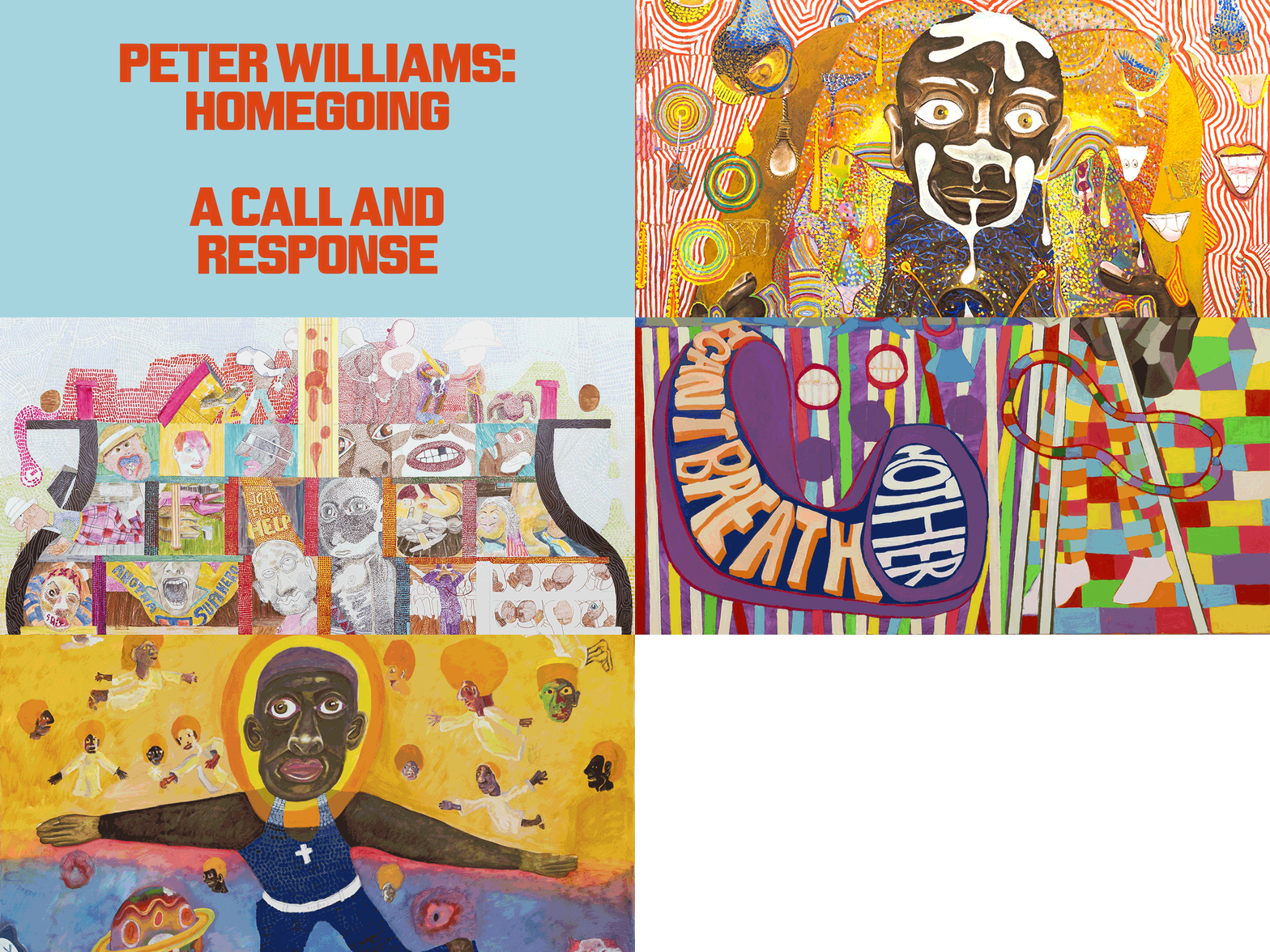
Seitu Ken Jones featured in Peter Williams: Homegoing–A Call and Response

Front Reflection and Side Reflection by Seitu Ken Jones will both be featured in Peter Williams: Homegoing–A Call and Response at Minnesota College of Art and Design from August 22 through Nov 1, 2025. Learn more about the exhibition here!

Opening Reception: Friday, September 5, 2025 6:00–8:00 p.m.

Peter Williams: Homegoing–A Call and Response celebrates the life, legacy, art, and motifs of artist and MCAD alumnus Peter Williams ’75 (1952–2021). To mark his recent passing and honor his life’s work, this group exhibition features a selection of Williams’ iconic paintings alongside those of fellow Black creatives, serving as a moment of remembrance and connection. Rooted in themes of history, presence, and liberation, Peter Williams: Homegoing moves beyond a retrospective into an active call-and-response through the cultural practice of “homegoing”–a memorial celebration of life, legacy, and freedom in the Black community.

Keisha Williams, Director and Curator of MCAD Gallery, states, “This exhibition marks the first time Williams’ work will be displayed in this context with fellow Black artists from Minnesota, which amplifies and serves as an offering for Williams' and our collective liberation. Through a chorus of artists' voices, it’s a symbolic and literal welcome back to MCAD, honoring his dedication to depict the presence and resilience of Black culture.”

Participating Artists include Ta-coumba T. Aiken ’74, Leslie Barlow MFA ’16, Sayge Carroll, Candice Davis ’18, Douglas R. Ewart, Russell M. Hamilton, Christopher E. Harrison, Maiya Lea Hartman, Leeya Rose Jackson, Seitu Ken Jones, Nia-Symonne, Lamar Peterson, Bobby Rogers ’14, seangarrison, Jovan C. Speller, and Peter Williams ’75.

Front Reflection and Side Reflection

Seitu Ken Jones, 2025

Lithograph on Rives BFK White paper

Edition of 7

Image: 33 ½ x 25 ½ inches

Paper: 40 ½ x 32 inches

Click here for availability or Email our Gallery Director Alex Blaisdell alex@highpointprintmaking.org

Learn more about Seitu’s prints here.

Nicola López is interviewed by Southwest Contemporary

Nicola López at work in her studio. Courtesy the artist.

Highpoint Editions artist, Nicola López is interviewed for a Southwest Contemporary studio visit article. 

“Known for her expressive, graphic works that bring metallic urban landscapes to life, López’s often-architectural subjects twist and turn as if they might unfold off the paper, canvas, or hinges and bound towards the viewer. Think sharp geometry, cool tones, and being confronted by the formidable nature of many metropolitan structures—a quality one might otherwise grow numb to after living in cities.”

Nicola López working on Stratigraphy 5. Courtesy the artist.

After returning to her hometown In Santa Fe after nearly thirty years in New York, Lopez reflects on whether or not “the visual languages defining these two divergent places somehow exist in harmony.” Read more here!

Front Reflection and Side Reflection by Seitu Ken Jones

Front Reflection and Side Reflection

Seitu Ken Jones, 2025

Lithograph on Rives BFK White paper

Edition of 7

Image: 33 ½ x 25 ½ inches

Paper: 40 ½ x 32 inches

Click here for availability or Email our Gallery Director Alex Blaisdell alex@highpointprintmaking.org

Highpoint Editions is pleased to release Front Reflection and Side Reflection, two new lithographs by Minnesota-based artist Seitu Ken Jones. Inspired by the Zealy Daguerreotypes, these prints are Jones’s first with Highpoint Editions and exemplify a fierce dignity and resilience in response to a troubled history and continued adversity.


About Front Reflection and Side Reflection

Source imagery including an image of one of the Zealy Daguerreotypes and an image of the artist’s Great Grandfather.

In 1976, a set of photographs from 1850 was discovered in a Harvard University storeroom. The daguerreotypes were commissioned by Harvard Professor Louis Agassiz, who was an adherent of “scientific racism”, to prove the inferiority of Black people. The photographs were taken by Joseph T. Zealy and are now known as the Zealy Daguerreotypes. The seven subjects of the photographs were enslaved Africans who lived in South Carolina, and were posed in both clothed and nude positions.

For the last 10 years, Seitu Ken Jones has painted and created a series of self-portraits that recall the experiences of African American men over the last 400 years. Inspired by the Zealy Daguerreotypes, Seitu’s prints mirror the degrading and disturbing images captured by the photographer. “Each daguerreotype reveals an individual, deeply dignified and expressive. Their hurt, contempt, fatigue, utter refusal are unequivocal,” says Parul Sehgal of the original images.1 In each of Seitu’s self-portraits, he reveals himself in the most dignified and resilient manner of those whom he honors. Jones places himself as the subject and the documentarian, recontextualizing the images as a symbol of humanity, history, and a continued fight for freedom and liberty.

Detail of Front Reflection

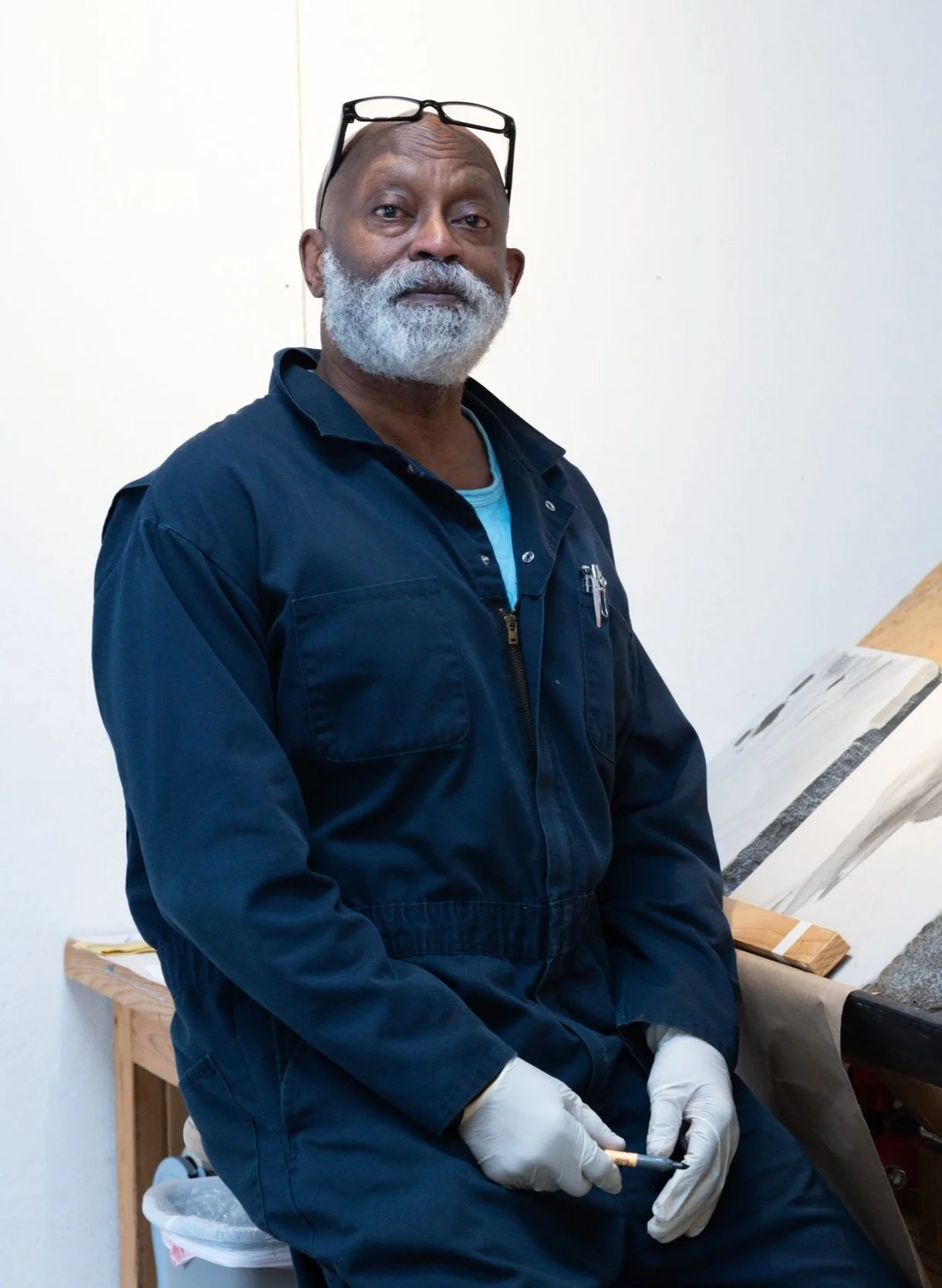
Assistant Printer Brian Wagner preparing the stone for Side Reflection

Each layer of the 7-run lithograph calls attention to the process. The outer borders mimic the irregular edges of the lithographic stones the artist drew on to create the portraits. While the coloring of the background can also be viewed as referencing the sepia tones of an aged daguerreotype, each layer is an homage to the materials used in processing lithographic stones. The layers of brown were matched to both the liquid asphaltum used before inking the stone, and the color of the stone after a thin layer of gum arabic has been buffed in to preserve the image. The transparent grey layer that makes up the background echoes the cool grey of the lithographic stone. The black of the lithographic crayon drawing is also iconic to the lithographic process and legacy; furthering these prints’ place as a contemporary reflection of historical statements and processes.

Lead Printer-in-Residence Judith Baumann and Assistant Printer Brian Wagner printing one of the layers of Front Reflection.

Earlier proofs of Front Reflection and Side Reflection in the studio.

Seitu Ken Jones signing Side Reflection on May 6th, 2025


Seitu Ken Jones (b. 1951) is a Saint Paul, Minnesota based artist whose interdisciplinary practice works to restore our Beloved communities by blending art, food, conversation and beauty. Working on his own or in collaboration, Jones has created over 40 large-scale public art works. He's been awarded a Minnesota State Arts Board Fellowship, a McKnight Visual Artist Fellowship, a Bush Artist Fellowship, a Bush Leadership Fellowship, and a National Endowment for the Arts - Theater Communication Group Designer Fellowship. Seitu was awarded a Loeb Fellowship at the Harvard Graduate School of Design and was the Artist-in-Residence in the Harvard Ceramics Program. He was Millennium Artist-in-Residence for 651 Arts in Brooklyn, NY, and was the first Artist-in-Residence for the City of Minneapolis. In 2014, he integrated artwork into three key stations for the Greenline Light Rail Transit in the Twin Cities.

A 2013 Joyce Award, from Chicago's Joyce Foundation allowed Seitu to develop CREATE: the Community Meal, a dinner for 2,000 people at a table a half a mile long. The project focused on access to healthy food and community conversation. Beyond art making, Seitu worked with members of his neighborhood to create Frogtown Farm, a 5-acre farm in the heart of the City of Saint Paul. He is the recipient of the 2017 Distinguished Artist Award from the McKnight Foundation. His 2017 HeARTside Community Meal in Grand Rapids, MI was awarded the Grand Juried Prize for ArtPrize Nine. A retired faculty member of Goddard College in Port Townsend, WA. Seitu has a BS in Landscape Design and an MLS in Environmental History from the University of Minnesota.

For availability and to purchase Front Reflection and Side Reflection, email our Gallery Director Alex Blaisdell alex@highpointprintmaking.org